Jeju’s 15-Minute Electricity Market Expands with VPPs and Two-Way Bidding, Putting Nationwide Renewable-Energy Markets to the Test
- Input
- 2026-09-14 15:26:38
- Updated
- 2026-09-14 15:26:38
【Financial News Jeju=Reporter Yong-bok Jeong】 The next phase of South Korea’s electricity-market reform is beginning in Jeju Province, where renewable energy accounts for more than 24% of power generation. Following the introduction of a 15-minute real-time market and a renewable-energy bidding system in 2024, the province is linking a long-duration battery energy storage system (BESS) central contract market, two-way demand-and-supply bidding, and virtual power plants (VPPs) to create a structure that absorbs renewable-energy variability through the market.
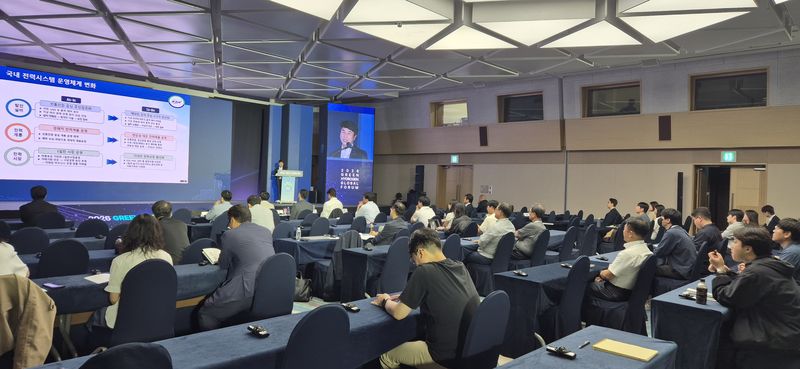
According to Jeju Special Self-Governing Province, the “Innovation and Implementation Strategies for Jeju’s Electricity Market in the Renewable-Energy Era” session was held at Hall Halla of the International Convention Center Jeju on the 14th. It was part of the “2026 Green Hydrogen Global with Distributed Energy Forum,” which runs from the 14th to the 16th.
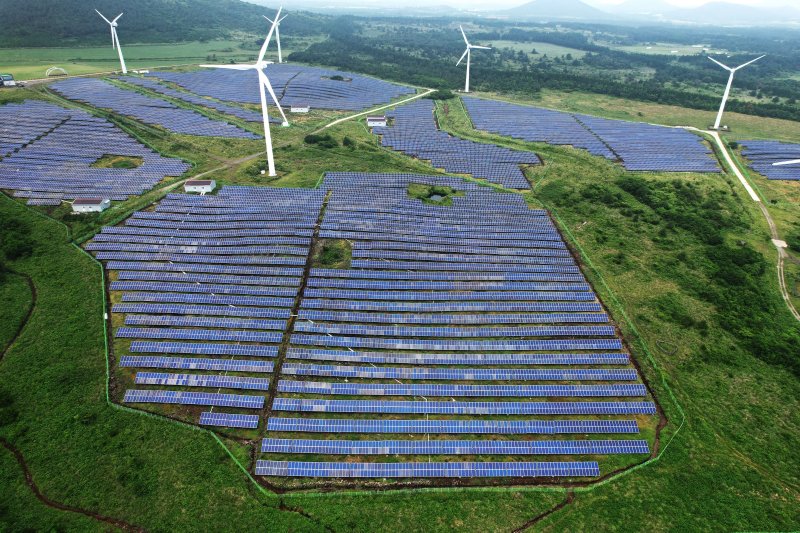
Renewable energy accounted for 24.3% of Jeju Province’s power generation as of the end of 2025. Because solar and wind power output can change rapidly depending on weather conditions, it is important to operate the system in a way that closely matches electricity production with consumption in real time.
Under the existing electricity market, trading plans were primarily based on demand and generation forecasts made one day in advance. As the share of renewable energy rises, the gap between forecast and actual generation can widen.
That is why Jeju Province has operated a 15-minute real-time market since June 2024. The system readjusts for electricity demand and supply every 15 minutes, correcting errors in day-ahead forecasts during actual operations. Renewable-energy generators also participate in a bidding system by submitting their expected output to the market.
The Korea Power Exchange (KPX) assessed that output curtailment has eased and price signals reflecting actual supply-and-demand conditions have emerged since the introduction of the real-time market, reserve market and renewable-energy bidding system.
Gi-Yeol Ok, head of the Energy Transition Division at KPX, said at the session, “Jeju Province is a test bed for the nationwide expansion of renewable energy,” and explained the results of the electricity-market pilot projects operating in Jeju Province and the direction of future reforms. The next step is to expand a market centered on power-generating units into one that also includes storage and consumption.
KPX presented expanded volume and price bidding on the demand side, a transition to price bidding for all generators, and more advanced two-way VPP bidding as the direction of future reforms.
One of the key elements is the VPP. A virtual power plant uses information and communications technology to connect small-scale resources scattered across different locations—including solar and wind facilities, ESS and electric vehicles—and operate them as if they were a single power plant. Individual facilities are often too small to participate in the electricity market, but aggregating multiple resources allows them to adjust generation and consumption and participate in the market.
The potential is even greater in regions such as Jeju Province, where renewable energy accounts for a large share of generation. When wind and solar output is high, electricity can be stored in ESS or electric vehicles and used later when power is scarce or prices are high. Equipment such as heat pumps, whose electricity consumption can be shifted, can also be used as demand-response resources.
Cha Byeong-hak, CEO of VPPlab, introduced examples involving the operation of a standalone ESS power plant linked to Jeju’s distribution network and demonstrations of alternatives to expanding the power grid. Rather than continually building new transmission and distribution lines as electricity demand rises, such alternatives improve the efficiency of the existing grid by using ESS, demand management and distributed energy.
Cha explained, “Connecting flexible resources such as ESS, electric vehicles and heat pumps to two-way bidding could help stabilize the power grid while creating additional revenue for participants.”
Long-duration BESS is another pillar of Jeju Province’s electricity-market reform. Storing surplus renewable electricity and releasing it when needed can reduce fluctuations in wind and solar output. Jeju Province is building a long-duration BESS central contract market.
A central contract system secures a revenue structure through contracts covering a set period, addressing the difficulty of recovering the investment costs of large-scale storage facilities through market prices alone.
The direction of Jeju Province’s electricity-market reform is shifting from a market that “reduces surplus electricity” to one that “stores surplus electricity, changes when it is consumed, and converts it into value.”
Electric vehicles are not limited to serving as a means of transportation. As technologies expand that can adjust charging times and, in the future, exchange electricity between vehicle batteries and the grid, electric vehicles themselves could become distributed storage resources.
This also has important implications for residents. If a system is established that allows consumers who own electric vehicles, ESS or heat pumps to participate in the electricity market through VPPs, they could earn new income in return for adjusting when they use electricity.
However, significant challenges remain before this can become a real revenue model for residents. Rules must be established on which resources should receive compensation and how much, as well as standards for transactions and settlement. Methods for information exchange and control standards between the distribution system operator managing KEPCO’s distribution network and VPP operators must also be defined.
Sufficient financial incentives are also needed to encourage electric vehicles, heat pumps and other resources to participate in the market. If residents earn little despite providing their equipment, it will be difficult to expand participation.
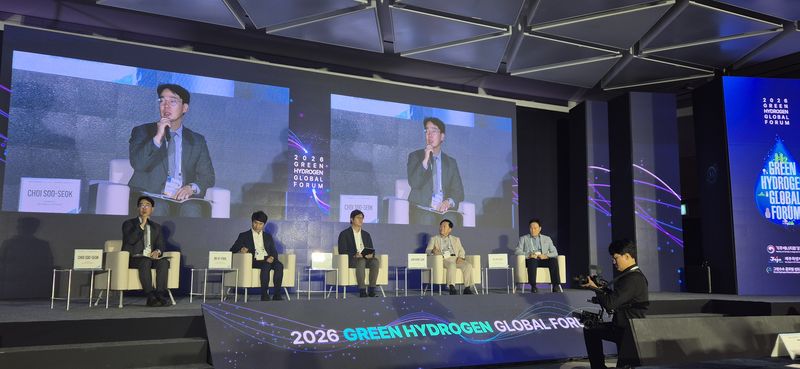
These issues were also a major focus of the panel discussion. Moderated by Professor Choi Su-seok of Jeju National University (JNU), the discussion included Ko Hee-sang, principal researcher at the Korea Institute of Energy Research (KIER), Kim Hong-sam, CEO of Botari Energy, and the presenters. They discussed the results of Jeju Province’s electricity-market pilot projects and the conditions for nationwide expansion.
Participants agreed on the need to improve market systems to promote distributed energy, remove bottlenecks in the VPP business, ensure interoperability between distribution system operators and VPPs, and establish compensation systems that encourage the participation of flexible resources used in daily life, such as electric vehicles and heat pumps.
A key question is whether the market system developed in Jeju Province can spread nationwide. For the same system to work on the mainland grid, which is far more complex than Jeju’s in terms of grid scale and generation mix, pricing and settlement systems and grid-operation standards must be changed together.
As the first region to experience a 24.3% renewable-energy share, Jeju Province has become a testing ground for nationwide electricity-market reform. Whether the model combining a 15-minute real-time market, VPPs and BESS leads to actual grid stability and income for residents is expected to determine whether it will spread nationwide.
[email protected] Yong-bok Jeong Reporter