Three Livestock Public Institutions to Merge... Jeju’s Special Disease-Control Authority to Remain, Local Organization Restructuring a Variable
- Input
- 2026-09-14 14:40:35
- Updated
- 2026-09-14 14:40:35
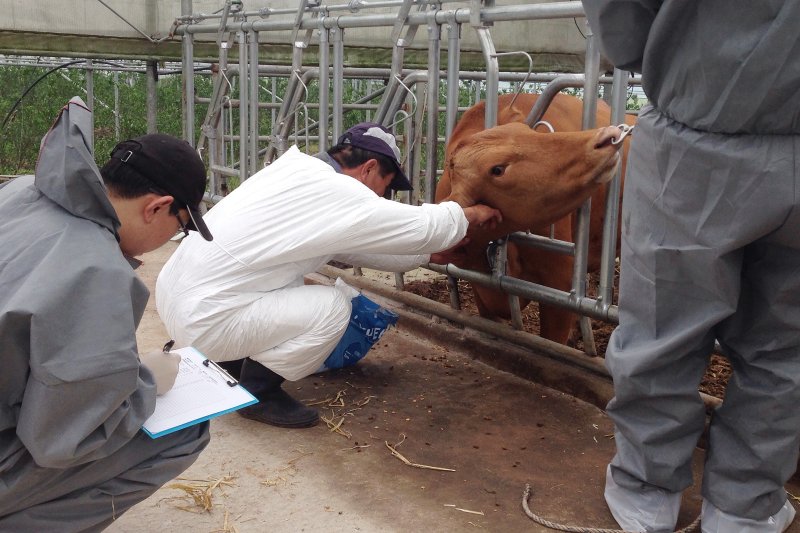
【Financial News Jeju=Reporter Yong-bok Jeong】 The government plans to merge three public institutions responsible for livestock product grading, livestock disease control, and the livestock environment into one organization. However, the governor of Jeju Province’s special authority over livestock disease control under the Jeju Special Act will remain separate from the current merger plan. The key variable in Jeju is how the field-support organizations of national public institutions, including the KAPE Jeju Branch and the Livestock Health Control Association’s Jeju Provincial Headquarters, will be reorganized within the new integrated corporation.
According to the Ministry of Agriculture, Food and Rural Affairs (MAFRA) and other sources on the 14th, the government is pursuing a plan to merge the Korea Institute for Animal Products Quality Evaluation (KAPE), the Livestock Health Control Association, and the Livestock Environment Management Institute into a tentatively named Korea Livestock Promotion Corporation.
The core objective is to bring together the livestock hygiene, disease control, environmental management, and quality functions currently divided among the three institutions, thereby creating a single point of contact for farmers and reducing overlapping administrative support functions.
KAPE handles livestock product grading, traceability management, and the provision of distribution information. The Livestock Health Control Association carries out field operations, including inspections of disease-control conditions, disease-control support, and assistance with slaughterhouse inspections. The Livestock Environment Management Institute is responsible for environmental matters such as the recycling of livestock manure and livestock odors.
The plan is to connect within one institution functions that are currently divided among different agencies from the production stage onward, including smart livestock farming, traceability management, disease control and hygiene, and livestock manure management. Inspection and grading functions are also separated during the slaughtering and distribution stages.
In Jeju, however, the government’s organizational restructuring and the province’s statutory authority over disease control need to be viewed separately.
To preserve its disease-free status, the Jeju Special Act grants the governor of Jeju Province separate authority to take necessary disease-control measures for livestock and livestock products transported into or out of Jeju, including inspections, quarantine, and bans on transportation.
Some matters concerning the qualifications, appointment, and commissioning of livestock disease-control officers may also be determined by Jeju Province ordinances. Accordingly, Jeju Province operates separate ordinances on livestock disease control and on disease control for livestock and livestock products transported into or out of the province.
The Livestock Health Control Association that the government plans to merge is not the statutory disease-control authority held by the governor of Jeju Province. As a public institution under MAFRA, it supports field implementation, including surveillance, disease-control assistance, and livestock product hygiene management.
Therefore, even if the Korea Livestock Promotion Corporation is launched, the merger plan announced so far would not eliminate or return to the central government the governor’s special disease-control authority under the Jeju Special Act.
The point of interest in Jeju is the public institutions’ local field network. KAPE maintains a separate Jeju Branch among its 10 branches nationwide. According to the official organizational status of the Jeju Branch, 15 employees currently work at four locations.
Six employees are stationed at the Jeju Branch office, five at the Jeju Livestock Cooperative Livestock Products Auction Market, one at Healthy Chicken Agricultural Cooperative Corporation, and three at Jeju LPC. Because employees are directly assigned to the auction market and slaughtering and distribution facilities, the Jeju Branch functions strongly as a field network for livestock product grading, traceability, and distribution management.
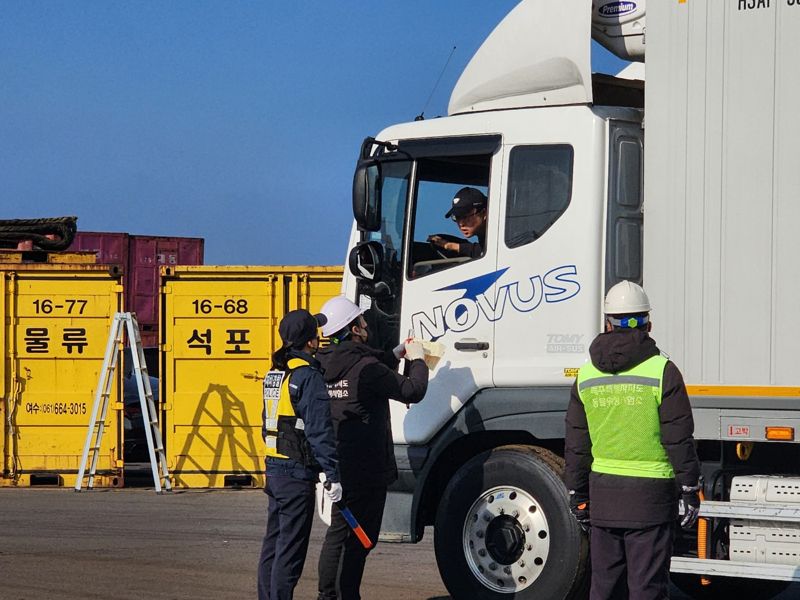
The Livestock Health Control Association also operates a separate Jeju Provincial Headquarters. Its nationwide organization consists of one headquarters, nine provincial headquarters, 43 offices, and three quarantine offices. The Jeju Provincial Headquarters operates as an independent regional organization in Jeju City.
It has not yet been decided whether the Jeju Branch and the Jeju Provincial Headquarters will each be maintained after the merger or combined into a single Jeju regional organization.
The importance of Jeju’s field organizations has also been demonstrated in the recent response to lumpy skin disease. After the first cases in the province were confirmed at two Korean cattle farms in Jeju on the 8th, Jeju Province launched an emergency disease-control operation. It secured enough vaccine for 42,500 animals and is vaccinating all cattle in the province by the end of this month.
Unlike the mainland, Jeju operates a disease-control system that separately manages the movement of livestock, livestock products, and vehicles into and out of the province. When a disease occurs, the province’s own disease-control administration, field support from national public institutions, and assistance from central agencies such as the Animal and Plant Quarantine Agency work together. Therefore, even after the new corporation is launched, it will be important to determine how the governor’s authority under the Jeju Special Act will work together with the field-support functions of national institutions.
The same applies to the livestock environment sector. In Jeju, livestock manure, livestock odors, and low-carbon livestock farming are being addressed as regional issues. If the Livestock Environment Management Institute’s functions are incorporated into the integrated corporation, disease control, environmental management, and traceability and quality information could be linked within one institution.
For farmers, this could also reduce the inconvenience of following separate procedures with different institutions for livestock disease control, environmental management, and traceability management.
On the other hand, if the institutional merger focuses only on reducing administrative support staff and also cuts field personnel responsible for grading and disease-control support in Jeju, it could conflict with the merger’s stated goal of strengthening field response capabilities.
MAFRA has presented a plan to efficiently redeploy to the field the personnel secured by combining overlapping administrative functions.
The government will also guarantee the employment succession of existing employees. It plans to operate an “Integration Promotion Task Force” beginning this month and consult with labor unions on organizational and functional adjustments, based on the principle of improving compensation and benefits.
Legal revisions will follow as well. The government plans to enact the tentatively named Korea Livestock Promotion Corporation Act and revise the Livestock Industry Act, the legal basis for KAPE; the Act on the Prevention of Contagious Animal Diseases, related to the Livestock Health Control Association; and the Livestock Manure Act, related to the Livestock Environment Management Institute.
In Jeju, the key issue in this organizational restructuring is how effectively the national public institutions’ local field organizations can be connected while maintaining the province’s special autonomous disease-control system and preserving existing field personnel.
Park Soon-yeon, head of MAFRA’s Planning and Coordination Office, said, “The integration of these public institutions is meaningful because it will efficiently link dispersed functions and reorganize agricultural policy services around users.” Park added, “We will establish a field-oriented agricultural policy delivery system and create changes that farmers and the public can feel.”
[email protected] Yong-bok Jeong Reporter