Jeju Island Budget Survey: 52.6% Expect Fiscal Conditions to Worsen Next Year... Environment, Welfare, and Safety Prioritized
- Input
- 2026-09-14 14:10:44
- Updated
- 2026-09-14 14:10:44
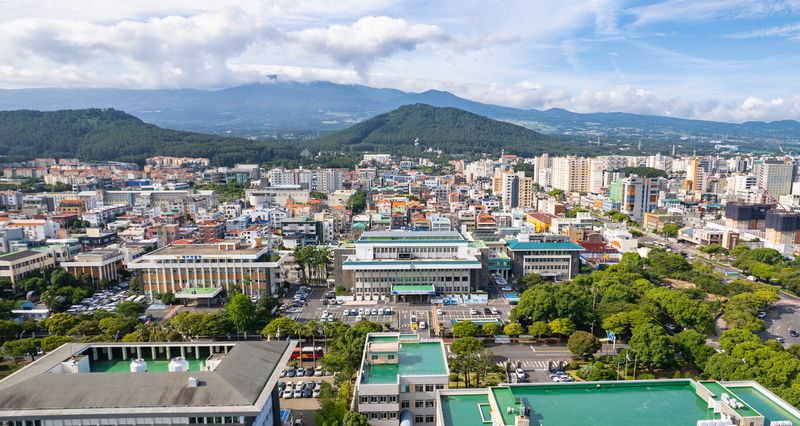
[Financial News Jeju = Reporter Jeong Yong-bok] When Jeju residents were asked where to prioritize spending from the province's limited financial resources, they selected the environment, social welfare and health, and safety. Many also responded that if fiscal austerity is unavoidable, expenses for events and festivals, as well as private subsidies, should be cut first. As 2027 marks the first main budget formulation of the 9th popularly elected Jeju provincial government, attention is focused on how much of residents' demands for areas closely related to daily life and fiscal restructuring will actually be reflected in the budget proposal.
According to Jeju Special Self-Governing Province on the 14th, 1,317 people participated in the survey titled "Suggestions for the 2027 Budget Formulation," conducted by the province. The survey was conducted over four weeks, from July 5 to August 4, combining an online survey using QR codes and the Jeju Special Self-Governing Province website with on-site surveys at civil service offices in the province, administrative cities, and eup, myeon, and dong offices.
Among the priority investment areas, the environment ranked first at 16.3%. Social welfare and health followed at 12.8%, and safety at 12.4%. The top three sectors were the same as last year.
Education accounted for 11.7%, followed by industry, business and energy at 11.5%, and transportation and logistics at 11.4%, showing similar levels. Agriculture, forestry and marine fisheries accounted for 7.0%, culture, sports and tourism for 6.7%, general administration for 5.8%, and land and regional development for 4.4%.
The detailed demands by sector made residents' budget needs even clearer. In the environmental sector, the expansion of green spaces and ecosystem conservation ranked first at 26.8%, followed by climate change response and carbon neutrality projects at 24.9%.
In the safety sector, the improvement of disaster-prone areas was the top priority at 39.1%. Establishing the foundation for an integrated disaster and safety system also recorded 30.1%.
In the social welfare sector, support for childbirth and childcare ranked first at 38.2%, followed by the establishment of an integrated care system by life stage at 22.8%. In the health sector, strengthening public medical facilities and the emergency medical system accounted for 46.4%, nearly half. In the industry, business and energy sector, job creation and employment and entrepreneurship support ranked first at 40.6%. Fostering the renewable energy industry accounted for 22.6%.
In the transportation and logistics sector, improving the parking environment and expanding public parking lots accounted for 35.1%, while improving the public transportation environment accounted for 26.3%. In land and regional development, expanding the supply of public rental housing ranked first at 31.2%. In tourism, discovering local content and new tourism products ranked first at 42.3%, followed by upgrading infrastructure and services to accommodate tourists at 28.0%.
Along with demands for increased budget allocations, there was also considerable anxiety about the fiscal situation. A total of 36.0% of respondents said Jeju Island's fiscal situation next year would "slightly worsen" compared with this year, while 16.6% said it would "worsen significantly." Combined, the two responses amounted to 52.6%. A total of 32.3% said it would be "similar to this year."
When asked how to secure fiscal capacity, 52.9% of respondents chose expenditure efficiency. The largest share favored securing available resources by restructuring existing spending. Increasing tax revenue through the collection of delinquent local taxes ranked second at 30.3%.
Respondents were also asked where cuts should be made first if fiscal austerity became unavoidable. Reducing expenses for events and festivals ranked first at 36.2%, followed by reducing private subsidies at 27.6%. This reflects a demand to reassess priorities, beginning with existing projects, subsidies and event-related spending rather than automatically increasing new projects.
This survey was a participatory survey conducted to gather residents' opinions during the Jeju Special Self-Governing Province budget formulation process. Because participants were recruited through QR codes, the website and civil service offices, the survey differs in nature from general public opinion polls based on random sampling.
Nevertheless, the fact that the environment, welfare and safety were selected as the top investment sectors for the second consecutive year, along with the strong preference for detailed projects directly connected to daily life—such as emergency medical services, disaster-prone areas, and childbirth and childcare—will be an important consideration in compiling next year's budget.
The 2027 budget is the first main budget through which the 9th popularly elected Jeju provincial government will concretize its policy direction.
The residents' survey did not only reveal demands for increased spending. More than half expected fiscal deterioration and called for expenditure efficiency, as well as adjustments to spending on events and festivals and private subsidies. The province faces the simultaneous task of securing funds for people's livelihoods and future investment while reordering the priorities of existing spending.
Yang Je-yoon, head of the Planning and Coordination Office of Jeju Special Self-Governing Province, said, "As 2027 marks the first main budget of the 9th popularly elected Jeju provincial government, we will do our utmost to formulate a budget that residents can feel the impact of, reflecting the diverse opinions gathered through the survey to revitalize the local economy and lay the foundation for future growth."
[email protected] Jeong Yong-bok Reporter