[Exclusive] Funding for Semiconductor Performance Bonuses Alone Could Reach 40 Trillion Won, Set to Grow Further Next Year... Samsung Electronics Reexamines Compensation System
- Input
- 2026-09-14 17:00:00
- Updated
- 2026-09-14 17:00:00
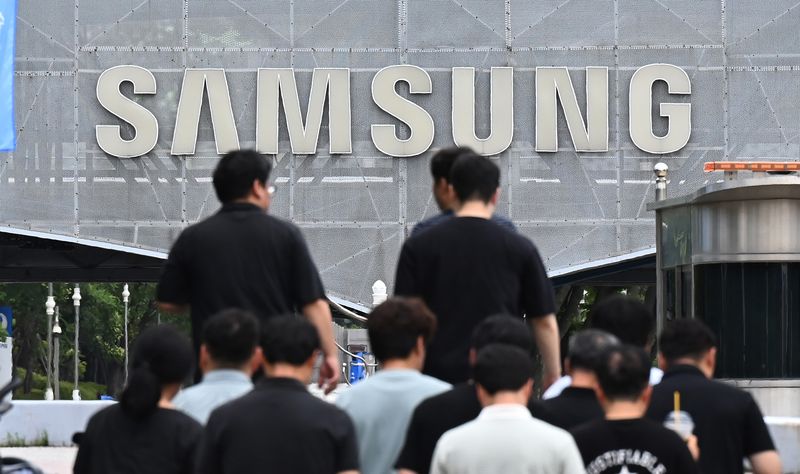
[Financial News] Samsung Electronics, which reached a wage and collective bargaining agreement with its labor union in May after prolonged negotiations over performance bonuses, is reexamining its overall performance compensation system, according to sources. With the funding for performance bonuses in the Device Solutions Division potentially swelling to around 40 trillion won this year amid a sharp increase in earnings, the company is also reviewing the financial burden of expanding compensation and the system’s sustainability.
According to business sources on the 14th, Samsung Electronics conducted consulting on its performance evaluation and compensation system through global consulting firm Alvarez & Marsal (A&M) after reaching the wage and collective bargaining agreement. A&M personnel were dispatched for about four weeks to examine various ways to pay performance bonuses and analyze the impact of each method on the company’s finances, sources said.
This is the first time Samsung Electronics has hired A&M to review its performance and compensation system. The company had previously relied on global human resources and organizational consulting firms such as Mercer for advice on personnel and compensation, but it has now taken a different approach. While Mercer specializes in human resources areas such as employee compensation, job management and performance management, A&M provides broader financial and management advisory services, including corporate finance and management efficiency.
A business source said, "While previous external consulting focused on examining the performance and compensation system from an HR perspective, this time the company appears to have also reviewed financial aspects, including the actual costs it would have to bear depending on how performance bonuses are paid. Since the size of the bonuses could increase significantly, the company seems to have assessed the impact of various payment methods."
Samsung Electronics’ labor and management concluded a wage agreement in May after nearly six months of difficult negotiations, creating a special management performance bonus for the Device Solutions Division. Under the structure, company stock is paid using 10.5% of business performance as the funding source, with 40% allocated across the division and 60% allocated to individual business units. Based on the earnings outlook at the time, which was in the 300-trillion-won range, an employee in the Memory Business earning an annual salary of 100 million won was estimated to receive performance bonuses of up to around 600 million won, combining the special management performance bonus and the existing Overperformance Incentive (OPI). Some analysts also expect annual operating profit this year to exceed 400 trillion won. As the funding for the special management performance bonus alone could reach around 40 trillion won, employees in the Memory Business expect their bonuses to exceed the initially projected 600 million won and rise to more than 700 million won per person.
The financial burden is expected to grow further next year. According to FnGuide, the consensus forecast for Samsung Electronics’ annual operating profit next year, based on securities firms’ estimates, is around 553 trillion won. If the semiconductor supercycle continues, compensation linked to earnings will inevitably continue to increase.
The consulting is also understood to have examined the widening gap in performance bonuses among business units caused by differences in earnings, as well as issues of compensation fairness.
While bonuses for the Device Solutions Division are expected to increase substantially, the Device eXperience (DX) Division, which oversees the finished-goods businesses, is struggling. It recorded an operating loss of 800 billion won in the second quarter, its first such loss since its launch. As rising component prices, including those of memory products, have increased cost pressures, the company is internally discussing the possibility that the division may not receive the excess profit performance bonus (OPI), formerly known as Profit Share (PS), for the next several years.
An industry source said, "While maintaining the principle of differentiated compensation based on performance, the company will inevitably face growing concerns over its compensation system because it must also consider fairness among divisions, employees’ acceptance of the system and the financial burden the company can afford to bear."
[email protected] Soo-bin Lim, Jun-seok Kim Reporter