Cesco Designated as KOLAS-Accredited Testing Laboratory for Microplastics Analysis
- Input
- 2026-09-14 11:21:09
- Updated
- 2026-09-14 11:21:09
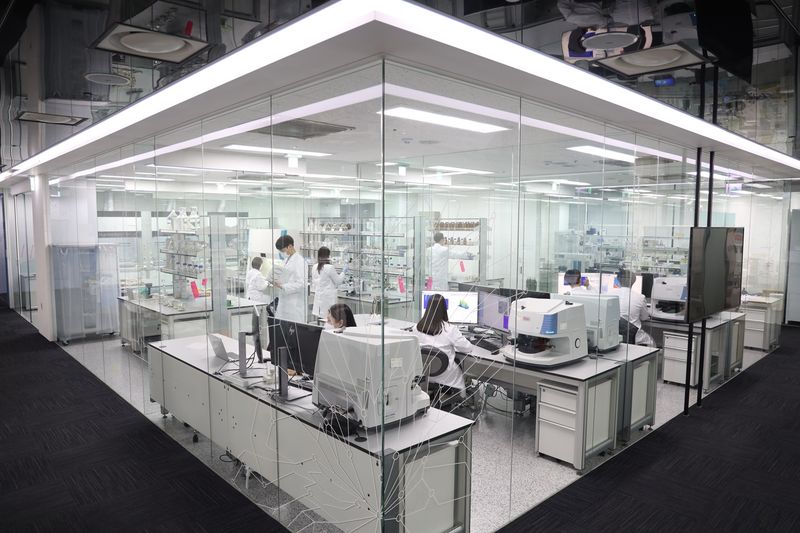
Cesco announced on the 14th that its Foreign Matter Analysis Center had expanded its Korea Laboratory Accreditation Scheme (KOLAS) accreditation scope to include microplastics analysis in water.
The Foreign Matter Analysis Center has secured technology capable of analyzing ultrafine particles as small as approximately 200 nm. It has also worked with specialized institutions, including the Ministry of Food and Drug Safety and the National Institute of Environmental Research, to develop and validate testing methods for microplastics in water and food.
Beyond simple detection, the center precisely analyzes sample characteristics, including particle size, material, and shape. It is also conducting research to identify the stages at which microplastics arise by comparing manufacturing and processing procedures.
International joint research is also expanding. This year, Cesco was selected as a participating institution for a research project under Horizon Europe, the European Union’s research and innovation program. It is conducting joint research with 19 research institutions in 10 countries, including the United Kingdom, France, and Spain. Over the next four years, the company plans to identify the pathways through which microplastics and nanoplastics arise in food and beverage manufacturing processes and develop technologies to monitor and control them.
Cesco explained that the expanded KOLAS accreditation scope will enable it to connect its accumulated research and development capabilities with accredited testing based on international standards. Going forward, it plans to expand its research into the characteristics and causes of microplastics by broadening the scope of analysis beyond water to include food and beverages, containers, and packaging materials.
A center official said, "Because microplastics are extremely small and exist in various forms and materials, testing methods and analytical technologies suited to the characteristics of each sample are important. With the expansion of our KOLAS accreditation scope, we will strengthen our accredited testing capabilities and continue advancing microplastics and nanoplastics analysis technologies through joint research in Korea and abroad."
[email protected] Kim Hyun-cheol Reporter