"Don't Let the Absence of Pain Fool You"—What Warning Signs Can a Small Lump in the Neck Send? [Health Talk]
- Input
- 2026-09-14 11:09:32
- Updated
- 2026-09-14 11:09:32
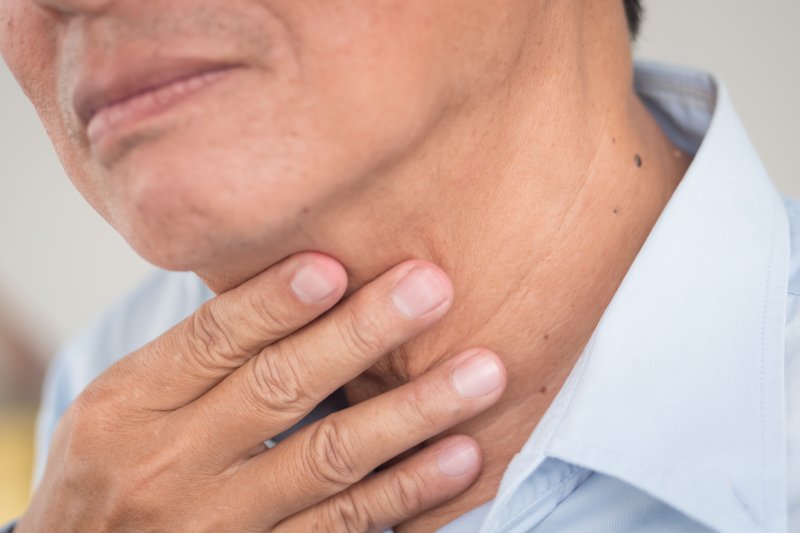
[Financial News] It is easy to dismiss a painless lump in the neck or armpit as insignificant. However, if it persists or gradually grows without causing pain, lymphoma, a type of blood cancer, should be considered.
September 15 is World Lymphoma Awareness Day. Lymphoma is a blood cancer caused by the abnormal proliferation of lymphocytes, which are responsible for immune function. According to the National Cancer Registration Statistics, 12,782 patients were diagnosed with major blood cancers—multiple myeloma, lymphoma, and leukemia—in 2023. Lymphoma patients accounted for more than half of that total, at 6,465.
Professor Lee Hyun-jung of Kyung Hee University Hospital said, "Although it is difficult to identify a single cause of lymphoma, it is known to develop due to acquired factors, with accumulated genetic mutations influencing its onset. In particular, as people age, these mutations can build up, while immune surveillance, which removes abnormal cells, can weaken. This may increase the risk of developing lymphoma."
Be Alert When a 'Painless Lump' Is Accompanied by Systemic Symptoms
The most common symptom of lymphoma is swollen lymph nodes. Symptoms vary depending on where the disease develops, but tumors in lymph nodes close to the skin—such as those in the neck, armpits, or groin—may be felt as lumps. However, lymph nodes can also temporarily swell because of infection or inflammation, so it is important to monitor whether the swelling persists and whether other symptoms occur alongside it.
Professor Lee explained, "When lymph nodes swell because of an infection or inflammation, symptoms such as pain or tenderness, or redness of the surrounding skin, may occur. As the underlying cause improves, the lymph nodes may also shrink again. By contrast, lymph node enlargement caused by lymphoma may persist without pain or gradually increase in size."
When swollen lymph nodes are accompanied by systemic symptoms—including unexplained fever, night sweats severe enough to soak clothing or bedding, or unexplained weight loss—it is necessary to undergo testing to determine the exact cause.
Professor Lee stated, "Although lymphoma is a blood cancer, it grows in the form of tumors, making it difficult to diagnose through routine blood tests alone. For an accurate diagnosis and to identify the specific subtype, imaging tests such as ultrasound or CT scans are needed, along with a biopsy that directly examines tissue taken from a suspected lesion."
Lymphoma is broadly divided into Hodgkin lymphoma and non-Hodgkin lymphoma. More specifically, there are more than 60 different types. Some lymphomas progress slowly over several years, while others advance rapidly within a few months and require prompt treatment.
From Chemotherapy to CAR T-Cell Therapy, Treatment Options Expand
Professor Lee said, "Treatment strategies for lymphoma are determined by considering the type of lymphoma, the stage of the disease, and the patient's overall condition. In addition to conventional chemotherapy, various treatments—including targeted therapy, cellular immunotherapy, radiation therapy, and hematopoietic stem cell transplantation—can be combined."
Treatment options have also expanded in recent years. For some lymphomas that relapse after treatment or do not respond sufficiently to existing therapies, CAR T-cell therapy is being used. The treatment involves collecting the patient's own T cells and modifying them to recognize and attack cancer cells.
Professor Lee noted, "CAR T-cell therapy can provide another treatment option for patients who have not achieved sufficient results with existing treatments and for those who cannot undergo hematopoietic stem cell transplantation. Because lymphoma has a relatively high relative survival rate compared with other blood cancers, it is important to focus on preventing infections and maintaining physical strength alongside active treatment, and to continue regular medical visits and follow-up tests after treatment."
[email protected] Medical Reporter Lee Myung-jin Reporter