Samsung Electronics, SK hynix Reel Amid High Oil Prices and Interest Rates [Stock NOW]
- Input
- 2026-09-14 09:45:02
- Updated
- 2026-09-14 09:45:02
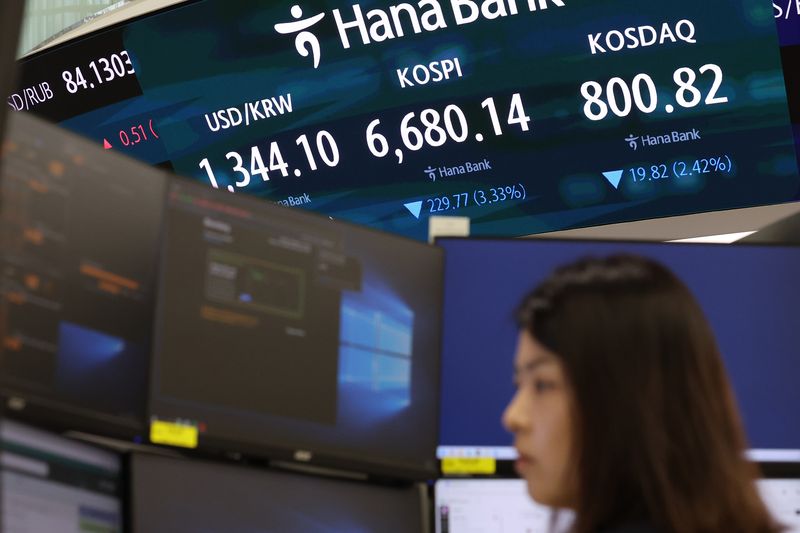
[Financial News] Samsung Electronics and SK hynix plunged in early trading on the 14th, sending the KOSPI Composite Index down more than 3%.
With international oil prices above $100 a barrel and U.S. Treasury yields nearing 5%, the burden of high oil prices and interest rates has weighed on South Korea’s stock market. Large-cap semiconductor stocks, which lead the KOSPI Composite Index, have suffered steeper losses and are driving the index lower.
As of 9:39 a.m., Samsung Electronics was trading at 251,500 won, down 3.08% from the previous session, while SK hynix had plunged 5.41% to 1.714 million won. Selling pressure was concentrated in major semiconductor stocks, with Samsung Electronics preferred shares also falling 3.54%.
The KOSPI Composite Index consequently fell to 6,683.45, down 3.28% from the previous session. By sector, electric and electronics stocks recorded the steepest decline, falling 4.01%. Manufacturing stocks (-3.58%), insurance stocks (-3.50%), large-cap stocks (-3.46%), and construction stocks (-3.23%) also weakened across the board.
The market views the recent simultaneous rise in oil prices and interest rates as having fueled risk aversion across the stock market. iM Securities analyzed that, with West Texas Intermediate (WTI) crude again above $100 a barrel and U.S. consumer and producer prices in August slightly exceeding expectations, the possibility of a Federal Reserve rate hike in September had increased.
If high oil prices persist, inflationary pressure will intensify, potentially adding to upward pressure on U.S. interest rates. In particular, if U.S. Treasury yields remain high, foreign investors’ preference for risk assets could weaken, putting further pressure on foreign investor flows in South Korea’s stock market.
One positive factor is that expectations for a favorable semiconductor cycle remain intact. iM Securities analyzed that expectations for strong semiconductor industry conditions had supported the won despite recent oil-price uncertainty, a sharp rise in U.S. Treasury yields, and net foreign selling of stocks.
[email protected] Kang Jung-mo Reporter