Saudi Pipeline Damage Cuts Global Crude Supply by 4%... Concerns Over Oil Prices and U.S. Treasury Yields Reaching Record Highs
- Input
- 2026-09-14 13:50:01
- Updated
- 2026-09-14 13:50:01
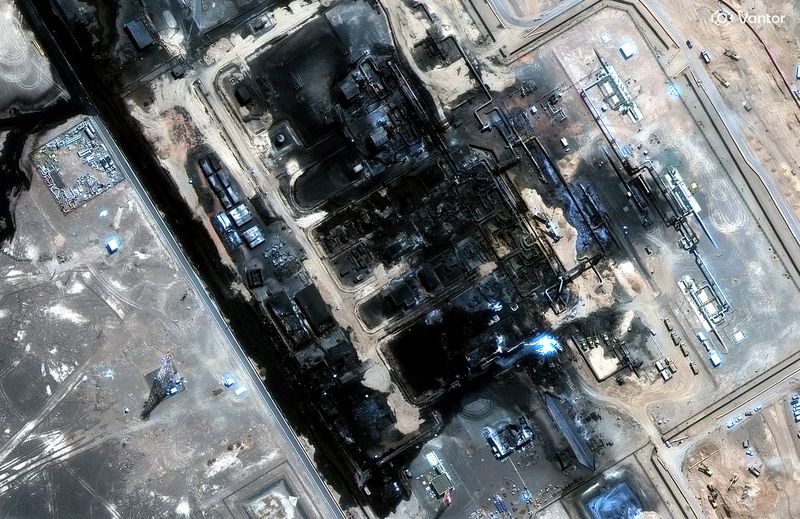
[Financial News] A warning has been issued that Saudi Arabia’s crude oil inventories for export could run out if it fails to restart a key pipeline linked to the Red Sea within days. As a result, up to 4% of the world’s oil supply is at risk of being cut off. Uncertainty in the region is also growing after talks between Iran and Gulf states in Oman on the Strait of Hormuz were abruptly canceled.
Foreign media reported on May 13 (local time) that damage to Saudi Arabia’s east-west pipeline in a drone attack on May 11 had further worsened global oil supply concerns. Oil prices could rise to record levels, driving up global inflation, while U.S. Treasury yields could also climb to record highs. The governments of Saudi Arabia and Iraq both claim that an Iran-backed armed group in Iraq carried out the pipeline attack.
International oil prices rose that day. As of 7:27 a.m. Korea time, West Texas Intermediate crude oil (WTI) futures were up 2.8% from the previous trading day at $102.87, while Brent crude futures had risen 3.1% to $107.87.
Saudi authorities have not provided a clear explanation of the exact extent of the damage to the suspended pipeline or when repairs could be completed. Estimates vary, with some predicting that repairs will take at least five to six weeks, while others believe the pipeline could be restored sooner by transporting some crude oil in parallel.
As transport through the Strait of Hormuz became more difficult, Saudi Arabia had been using its East-West oil pipeline across the Arabian Peninsula to reroute about 4 million barrels of crude oil per day to Yanbu Port on the Red Sea coast. With the Saudi pipeline also shut down, Yanbu Port has only five to seven days’ worth of crude inventories remaining. Stockpiles at Egypt’s Ain Sokhna and Sidi Kerir are also expected to run out soon without the pipeline being restarted. Exports to Asia are also expected to be disrupted, as Houthi rebels control both the Bab-el-Mandeb Strait at the entrance to the Red Sea and Yemen’s coastline.
Saudi Arabia’s crude oil supply has already fallen to its lowest level in 30 years because of transport disruptions through the Strait of Hormuz and the Red Sea. According to data from the Organization of the Petroleum Exporting Countries (OPEC), Saudi Arabia’s crude oil production in August stood at 6.2 million barrels per day, down sharply from 10.9 million barrels per day in February before the war. The International Energy Agency (IEA) forecasts that global crude oil supply will decline by 5.7 million barrels per day, or 6%, this year.
Meanwhile, a meeting scheduled to take place in Oman that day between Iran and Gulf states to discuss the Strait of Hormuz was abruptly postponed. Oman’s Foreign Minister Badr Albusaidi said, "We continue to work to promote dialogue that supports stability and sustained cooperation in our region." CNN reported that Iran had signaled to neighboring countries that it was willing to resume nuclear negotiations with the United States if the Strait of Hormuz issue were resolved, adding that reopening the waterway could serve as a starting point for ending the war and resolving the nuclear issue.
If the Saudi supply reduction continues for an extended period, oil prices—which have already reached record highs—and global inflationary pressures are expected to intensify, while volatility in financial markets is likely to increase further. The U.S. Consumer Price Index (CPI) rose 3.4% year on year in August, unchanged from the previous month, but gasoline prices rose 3.9% during the period, placing an additional burden on consumers.
CNN reported that rising oil prices since the war with Iran began in late February have added about $800 (approximately 1.08 million won) to the cost of living for each U.S. household. Higher oil prices are pushing up U.S. Treasury yields, and the Federal Reserve System (Fed) is increasingly likely to raise interest rates as early as this week to mitigate the impact of rising prices.
[email protected] Yoon Jae-jun Reporter