Termination of Navy Hotel Contract for Misuse of Operating Expenses Invalidated... Court Says "No Intentional Accounting Fraud"
- Input
- 2026-09-14 09:20:36
- Updated
- 2026-09-14 09:20:36
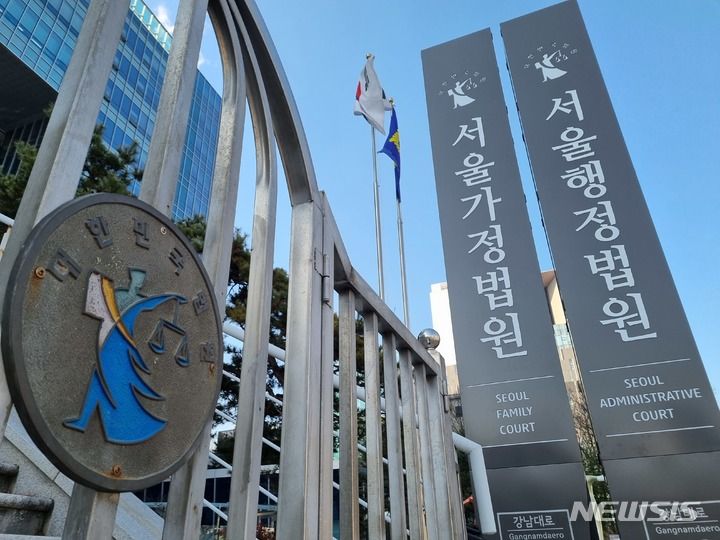
[Financial News] A court has ruled that terminating the management-consignment contract immediately was invalid, even if the operator of a wedding hall at the state-owned Navy Hotel committed accounting irregularities, such as using part of the operating expenses for personal purposes.
According to legal sources on the 14th, the Seoul Administrative Court’s Administrative Division 3, presided over by Chief Judge Ho Seong-ho, ruled in favor of A in a lawsuit filed against the Republic of Korea (Navy) seeking confirmation that the termination notice was invalid.
A is the management-consignment operator who ran a wedding hall for 12 years at the Navy Hotel, a state-owned property in Yeongdeungpo District, Seoul. After a regular audit in 2025, the Defence Installation Agency notified A that the contract was being terminated and demanded that A vacate the premises, claiming that the requirements for immediate termination had been met.
The Navy cited three grounds for termination. It said that approximately 58.7 million won out of total operating expenses of 116.4 million won had been spent for unauthorized purposes, that purchase costs had been overstated without deducting supplier discounts, and that A had allowed a partner company to conduct business without authorization.
A challenged the decision, filing suit while arguing, "Even if some of the alleged grounds are recognized, they were not intentional misconduct." A also claimed, "Immediate termination violates the principles of proportionality and protection of legitimate expectations and constitutes an abuse of authority intended to exclude the trustee."
The court ruled in A’s favor. It explained, "The contractual grounds for immediate termination, such as 'intentional misconduct' or 'serious defects, including embezzlement or misappropriation,' must be interpreted strictly as active deceptive conduct that fundamentally undermines the relationship of trust."
None of the three grounds presented by the Navy was accepted. The court acknowledged that operating expenses had been used for personal purposes, including meals for family members and acquaintances. However, it noted that there had been no concealment, such as fabricating false receipts, and that police had decided not to refer the related fraud allegations for prosecution. The court also found that immediate termination was difficult to justify given the Navy’s previous practice of responding to unauthorized use by seeking reimbursement or corrective action.
Regarding the failure to deduct supplier discounts, the court found that the issue could concern the propriety of the accounting treatment but was difficult to regard as intentional misconduct. It took into account that the reduction had been made with the supplier’s consent, had not been obtained through deception, and had been repaid in full after the issue was raised.
The court also found that the partner company’s business activities were an ancillary use carried out under A’s management and constituted an operating arrangement contemplated by the consignment contract, rather than unauthorized occupation. It further determined that the Navy’s newly raised suspicion that someone else was the actual owner was not an original ground for termination and was insufficiently supported by evidence.
The court ruled, "Because none of the lawful grounds for termination asserted by the defendant has been established, the termination notice in this case is invalid."
The Republic of Korea decided to appeal the first-instance ruling. The appeal is currently pending before Seoul High Court.
[email protected] Chang-hoon Lee Reporter