Stablecoin Regulations Set to Tighten? “Concerns Over Undermining the Foreign Exchange Management System” [Crypto Briefing]
- Input
- 2026-09-14 09:16:01
- Updated
- 2026-09-14 09:16:01
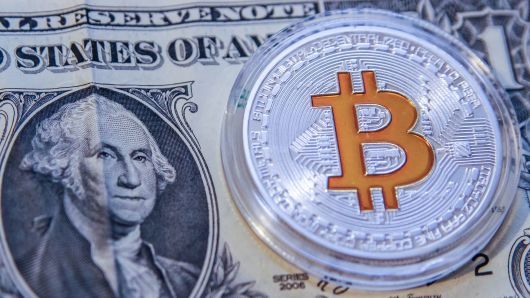
[Financial News] Financial authorities in South Korea and abroad have moved to tighten regulations on stablecoins. The move is seen as an effort to reduce the risk that stablecoins could undermine the existing foreign exchange management system.
According to Xangle, a virtual asset data platform, on the 14th, the Securities and Exchange Commission of Thailand announced new regulations on stablecoin transactions.
Thailand’s proposed rules would restrict deposits and withdrawals through digital asset service providers to verified accounts and wallets. The country also plans to set a daily stablecoin deposit and withdrawal limit of approximately 5 million baht per person per provider, equivalent to about 203 million won. However, the limit would not apply to transfers between regulated providers in Thailand that comply with the Travel Rule. The Securities and Exchange Commission of Thailand said the measures are intended to reduce risks related to money laundering, cybercrime and evasion of regulations governing cross-border fund transfers.
South Korea’s Financial Intelligence Unit (FIU), under the Financial Services Commission (FSC), is closely monitoring a new service that allows users to purchase domestic gift certificates with offshore-issued stablecoins, in cooperation with the Financial Supervisory Service.
Blockchain company IQ launched an online shopping mall selling mobile gift certificates usable at domestic retailers such as OLIVE YOUNG and Daiso. Payments were made with KRWQ, a crypto asset issued by the company. KRWQ is a stablecoin pegged one-to-one to the Korean won and jointly developed by Frax and IQ. The company actively promoted the service, including by distributing press releases, but it has now suspended operations. On Web3 service Unifi and decentralized exchanges (DEXs), users can purchase mobile gift certificates usable in South Korea with coins issued by JPYC, an issuer of yen-denominated stablecoins.
This effectively creates a “workaround” for using offshore-issued stablecoins in South Korea. The FSC believes that a structure allowing users to purchase and transfer gift certificates that are easy to cash out in Korea with crypto assets acquired without customer due diligence could be exploited for money laundering. The FSC said it takes the matter seriously and warned that offshore operators are also subject to the Act on Reporting and Using Specified Financial Transaction Information if they conduct business targeting users in South Korea.
Even advanced countries that established stablecoin frameworks early have emphasized that stablecoins must be distributed within their domestic regulatory jurisdictions. European authorities have also instructed crypto asset exchanges in the European Union (EU) not to handle stablecoins that do not comply with the EU’s Markets in Crypto-Assets Regulation (MiCA).
Lee Seung-ho, a senior research fellow at the Korea Capital Market Institute, noted, “Stablecoins provide a channel through which numerous individual traders can participate in cross-border transfers or illegal and speculative transactions quickly and conveniently without going through foreign exchange banks.” He added, “There are concerns that the current foreign exchange management system, which has operated around foreign exchange banks, could be undermined.”
[email protected] Han Young-jun Reporter