Deepnoid’s Post-Interpretation Medical AI Review Proves Effective, Raising Sensitivity in Seoul National University Hospital Study
- Input
- 2026-09-14 08:55:49
- Updated
- 2026-09-14 08:55:49
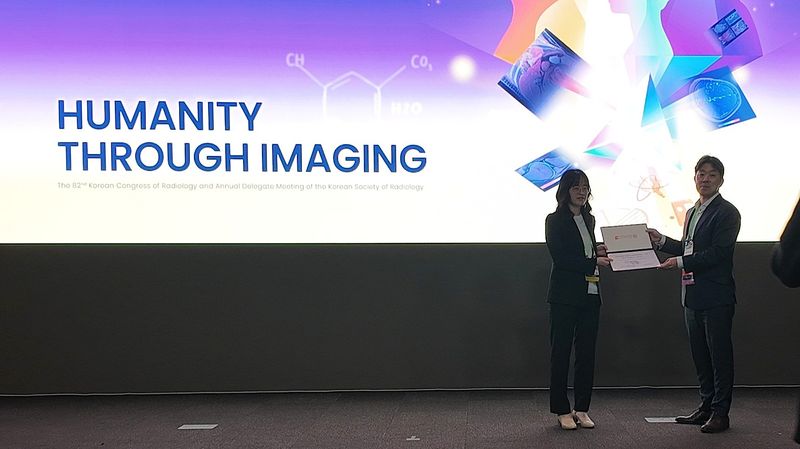
[Financial News] Medical artificial intelligence (AI) company Deepnoid has proposed a way to use medical AI in which the system filters only for possible errors after a physician has completed an interpretation, rather than intervening beforehand. The approach has drawn attention because it raised sensitivity while preserving the independence of the initial reading.
According to Deepnoid on the 14th, a joint study on AI-assisted double reading of chest X-rays by a team led by Professors Hwang Eui-jin and Jiyoung Song of Seoul National University Hospital was selected for the Best Abstract Award at KCR 2026, the academic conference of The Korean Society of Radiology.
In the study, after a specialist completed the initial reading, the AI compared the report with the images and flagged only cases with possible omissions or discrepancies for re-review. Unlike conventional systems that present findings before interpretation, the AI did not influence the physician’s initial judgment and instead served as a “second reader.”
The researchers conducted a multi-reader study involving six specialists and 775 chest X-rays. On average, the AI selected only 16.1% of all cases for re-review, and the original reports were actually revised in 30.7% of those cases.
Mean reading sensitivity rose significantly from 32.3% to 37.6%. Overall accuracy remained largely unchanged, at 84.5% versus 84.8%, while AI review added an average of 3.3 seconds per case.
Rather than reviewing every image again, the AI selected only cases with possible abnormalities, limiting the additional workload for medical staff. The study also showed that interpretation could be supplemented while reducing the automation bias that may arise when AI results are presented first.
Jiyoung Song, a professor at Seoul National University Hospital, said, “We will continue researching ways to use AI to improve the completeness of interpretations while preserving physicians’ independent judgment.”
Building on the study, Deepnoid is expanding beyond image-interpretation assistance into a medical AI business that supports hospitals’ overall interpretation workflows.
Meanwhile, the medical AI industry views the key to commercialization as not only competing over interpretation accuracy, but also determining how naturally AI can fit into healthcare professionals’ actual workflows. In particular, the approach used in this study—re-reviewing only necessary cases without interfering with clinicians’ initial judgments—is seen as a way to reduce the burden of adopting AI in clinical settings.
[email protected] Kim Kyung-ah Reporter