Japanese Government Publishes World Heritage Booklet, 'Deletes' Forced Mobilization of Koreans on Hashima and Sado
- Input
- 2026-09-14 06:32:35
- Updated
- 2026-09-14 06:32:35
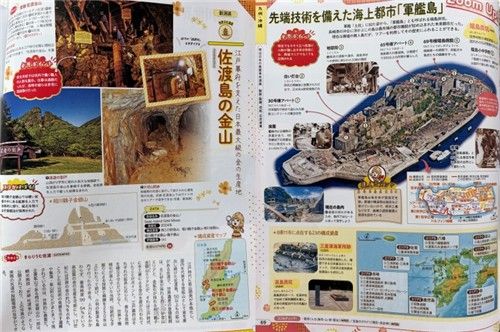
[Financial News] The Japanese government has once again published a World Heritage guidebook that omits historical mistakes.
Even during this time, it has faced criticism for failing to properly disclose the fact that forced labor of Koreans took place, contrary to the promise made at the time the modern industrial facilities were listed as a World Heritage Site.
To commemorate the 75th anniversary of Japan’s admission to UNESCO, an information booklet introducing the country’s World Heritage sites has been published and is currently on sale at bookstores across Japan as of the 14th.
According to CBC News, this booklet, titled "A Tour of UNESCO World Heritage Sites in Japan," was published as part of a commemorative project promoted by Japan's Ministry of Education, Culture, Sports, Science and Technology. Local governments associated with the World Heritage sites cooperated in its production.
The book contains information on a total of 26 cultural and natural heritage sites, excluding the 'Ancient Capital of Asuka and Fujiwara' in Nara Prefecture, which was inscribed at the 48th UNESCO World Heritage Committee meeting last July.
This book introduced the 'Sites of Japan's Meiji Industrial Revolution' (listed in 2015), which includes sites of forced labor of Koreans, and the Sado Gold Mine (listed in 2024), without mentioning historical issues at all.
The booklet focuses only on introducing the Sado Gold Mine as a famous gold mine during the Edo period, stating that it was Japan's largest gold production site that supported the Edo Shogunate and that the gold mined here in the 17th century accounted for about 10% of the world's gold.
Japan has faced criticism for attempting to highlight only the Edo period—which allows it to escape historical issues—rather than its entire history, including the Japanese colonial period, during the process of pursuing the inscription of the Sado Gold Mine as a UNESCO World Heritage Site. It appears that this book has adopted the same strategy.
Over 1,000 Koreans Forced into Labor... Guidebook Distorts History by Claiming "Received Extremely High Wages"
The Sado Gold Mine was famous as a gold mine during the Edo period, but after the Pacific War began in earnest, it was mainly used as a mine to secure war materials such as copper, iron, and zinc, and more than 1,000 Koreans were mobilized for labor.This book also states that "models of craftsmen working inside the mine are on display" inside the Sado Gold Mine historic site, which leads to the interpretation that it attempted to erase Korean laborers as the subjects of mine labor and highlight Japanese skilled workers.
The book downplays the fact that Koreans who were forcibly conscripted were not properly paid, stating, "Although the work was harsh, they were receiving extremely high wages at the time."
In response to Japan breaking its promises to the international community following the inscription of the Sites of Japan's Meiji Industrial Revolution and Sado Gold Mine as World Heritage Sites, the Korean government has been holding memorial services for the victims separately from Japan for three consecutive years since the inscription of Sado Gold Mine.
Last July, the 48th UNESCO World Heritage Committee adopted a resolution stating that the Japanese government must improve its practices because it failed to properly disclose the fact that forced labor of Koreans took place at the time of the Sado Gold Mine's inscription as a World Heritage Site.
[email protected] Lee Seok-woo, International Specialist Reporter