Kia Corporation Throws Its Hat Into Europe’s Mainstream Commercial Vehicle Market with Large PBV ‘PV7,’ Unveiled in Hanover [IAA 2026]
- Input
- 2026-09-14 17:50:00
- Updated
- 2026-09-14 17:50:00
■Targeting the midsize van market with the PV7
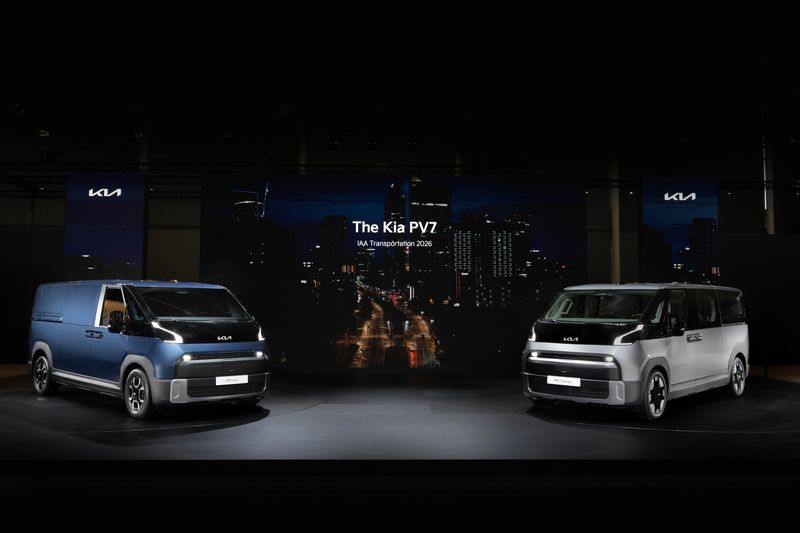
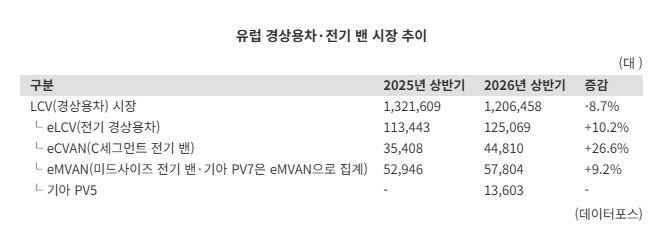
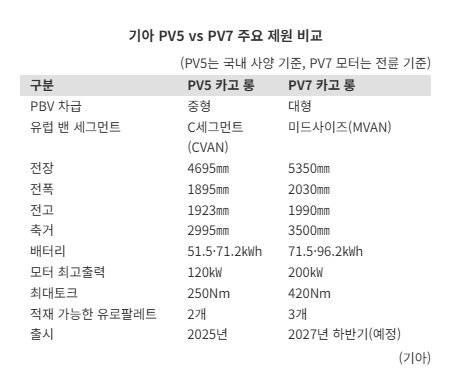
Kia is targeting the heart of Europe’s van market. According to market researcher Dataforce, Europe’s midsize electric van (eMVAN) market totaled 57,804 units in the first half of this year, up 9.2% from the same period a year earlier. That exceeded demand in the C-segment electric van (eCVAN) market, which totaled 44,810 units during the same period. Although the Kia PV5 ranked first in market share in the C-segment, the larger demand was concentrated elsewhere.Kia has responded by introducing the PV7, which is larger than the midsize Kia PV5. The PV7 is considered a large vehicle within Kia’s own PBV lineup, but by European LCV standards, it is classified as a mainstream midsize van. The PV7 measures 5,350 mm in length, 2,030 mm in width excluding the outside mirrors, 1,990 mm in height, and has a 3,500 mm wheelbase. Compared with the European L2 (long-wheelbase) Kia PV5, it is 655 mm longer overall and has a wheelbase that is 505 mm longer. Its width and height have also increased by 135 mm and 67 mm, respectively.
The difference in vehicle size is also clear in cargo capacity. The long-wheelbase Kia PV7 Cargo offers 6.1 cubic meters of cargo space under VDA standards and can carry up to three Euro pallets measuring 1,200 × 800 mm. That is one more pallet than the Kia PV5 Cargo can accommodate.
■Launch scheduled for 2027, with lineup expanding to the Kia PV9
The exterior features a one-box silhouette incorporating Kia’s design philosophy, Opposites United. It is also equipped with a large-capacity battery and an 800V charging system based on E-GMP.S (Electric-Global Modular Platform for Service), a dedicated electric vehicle platform. The battery is available in 71.5 kWh and 96.2 kWh capacities for the Standard and Long Range models, respectively. The Long Range version can travel more than 460 km on a single charge under the European WLTP standard, based on Kia’s own measurements for the Cargo Long model. With ultra-fast charging of up to 350 kW, the battery can be charged from 10% to 80% state of charge (SoC) in the mid-20-minute range. Propulsion is provided by a front-wheel-drive motor producing a maximum output of 200 kW and peak torque of 420 Nm.Kia plans to launch the Kia PV7 Passenger Long and Kia PV7 Cargo Long first in South Korea and Europe in the second half of 2027, then roll out 23 derivative and conversion models in global markets in stages. The company also plans to expand the lineup to the Kia PV9 by 2029, aiming to move closer to its goal of selling 232,000 PBVs globally each year and 14 electrified models, including three PBVs, by 2030.
Kia President and CEO Song Ho-sung said, "The PV7 presents the next step in our journey toward personalized mobility. By offering a vehicle that can flexibly respond to customers’ diverse businesses, best-in-class electric vehicle performance, and PBV-dedicated services, we will provide a comprehensive business solution that enhances customers’ productivity, flexibility, and long-term ownership value."
The size of Kia’s exhibition area also stood out. The hall hosting Kia’s booth brought together major global LCV manufacturers, including Stellantis Pro One, Ford Pro, Renault, Mercedes-Benz Vans, and Toyota, making it one of the most fiercely contested areas of the show. Kia occupied a 1,531-square-meter space, approximately 464 pyeong, larger than Renault’s 1,200-square-meter booth and Stellantis Pro One’s 1,000-square-meter space.
[email protected] Dong-chan Kim Reporter