Dubai Crude Surges 21% in One Week; Refining Margins Fall by $7.2—Hana Securities
- Input
- 2026-09-14 05:59:00
- Updated
- 2026-09-14 05:59:00
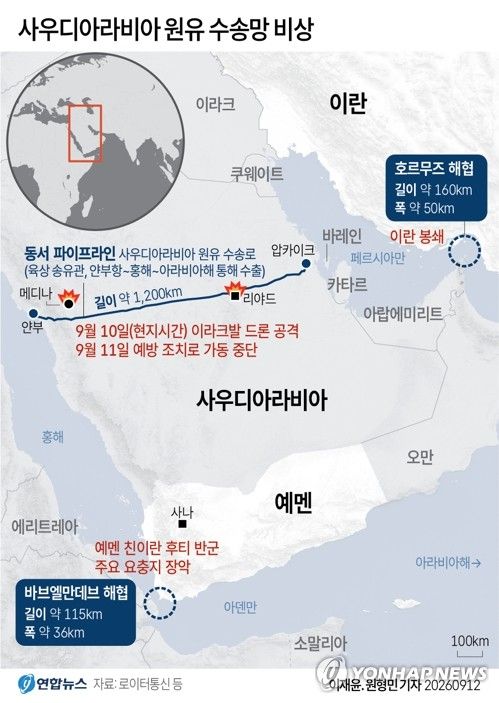
[Financial News] Concerns over disruptions to crude-oil transportation through the Red Sea and Saudi Arabia have driven Dubai crude prices up by more than 20% in one week, raising the possibility of greater short-term cost pressures on South Korean refiners. Although domestic crude-oil imports have recovered, profitability could come under pressure if higher crude prices, Very Large Crude Carrier (VLCC) freight rates and insurance premiums cannot be fully passed on to domestic prices.
On the 14th, Hana Securities maintained its 'overweight' rating on the refining sector. The brokerage said its outlook for favorable medium- to long-term refining-industry conditions remained unchanged, taking into account delays in restoring Russian refining facilities. However, it warned that continued Red Sea risks could weigh on short-term earnings and share prices through surging Dubai crude prices and freight rates. Its weekly top picks in the energy and chemical sectors were OCI Holdings, Hanwha Solutions, SK Innovation and S-Oil.
According to Hana Securities analyst Yoon, West Texas Intermediate crude oil (WTI) rose 9.4% week on week to $100.05 per barrel last week, while Dubai crude climbed 21.3% to $123.66. As Dubai crude rose more sharply than WTI, the complex refining margin fell by $7.2, or 21.4%, from $33.6 to $26.4 per barrel. Refining margins have declined for six consecutive weeks.
Hana Securities analyzed that uncertainty surrounding Middle Eastern crude-oil transportation has increased as the Houthis have taken control of a base near the Bab-el-Mandeb Strait and operations on Saudi Arabia's east-west pipeline have been disrupted. In addition, the number of vessels capable of transporting crude from the Middle East has declined, pushing up VLCC freight rates and increasing the crude-import cost burden for Asian refiners.
Domestic crude-oil supply and demand, however, remain stable. According to the Korea Petroleum Association, domestic crude-oil imports, which had fallen to approximately 64.5 million barrels in April, recovered to 93.18 million barrels in July, up 9.8% from the same month a year earlier. The association said government support for crude-oil supply and demand, along with strategic-reserve oil swaps, contributed to stabilizing supply.
The issue is procurement costs rather than the volume secured. Analyst Yoon said that with the maximum prices for gasoline and diesel set at 1,784 won and 1,773 won per liter, respectively, refiners may find it difficult to fully reflect rising costs in domestic selling prices if Dubai crude and transportation costs increase rapidly. This means that domestic sales profitability could deteriorate even if crude-oil supplies continue.
Analyst Yoon stated, "Our view of favorable medium- to long-term refining-industry conditions remains unchanged," adding, "We need to be mindful of the possibility that continued Red Sea risks could lead to a short-term correction in share prices."
[email protected] Kim Mi-hee Reporter