[Exclusive] Foreign Workers at Risk: 27 Injured Daily and 100 Killed Annually
- Input
- 2026-09-14 06:00:00
- Updated
- 2026-09-14 06:00:00
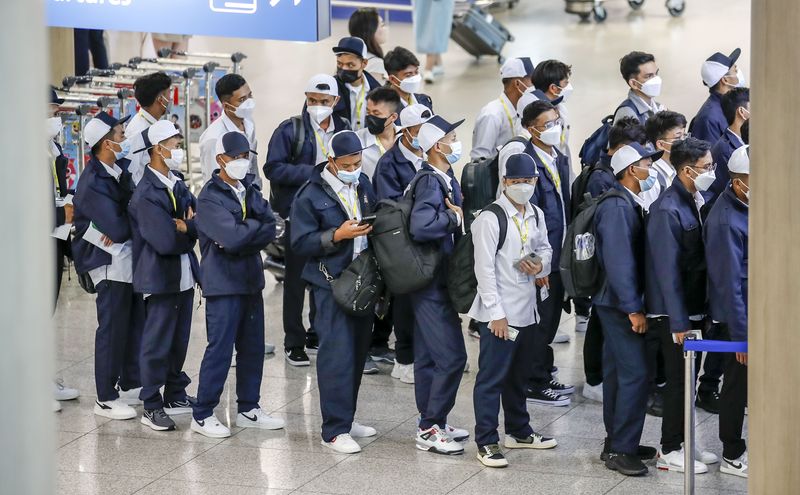
[Financial News] Nearly 30 foreign workers are injured at industrial sites every day, while around 100 lose their lives each year, a report has found. The number of foreign workers injured in industrial accidents has surged by nearly 20% over the past four years, yet the government has not even determined the accident figures by visa status or language used. Critics say that while foreign workers have become essential personnel at industrial sites, the government’s safety management network remains full of blind spots.
According to an analysis of data submitted by the Ministry of Employment and Labor (MOEL) to Kim Gi-hyeon, a People Power Party lawmaker on the National Assembly Committee on Climate, Energy, Environment and Labor, the number of foreign workers injured in industrial accidents rose from 8,286 in 2022 to 8,792 in 2023, 9,219 in 2024 and 9,872 in 2025. The figure increased by 19.1%, or 1,586 people, in four years. Based on last year’s figures, an average of about 27 foreign workers suffered industrial accidents at worksites each day.
The number of deaths stood at 108 in 2022, 112 in 2023, 114 in 2024 and 99 in 2025, remaining around 100 each year. In the first quarter of this year alone, 30 people died in industrial accidents. By nationality, ethnic Koreans from China accounted for the largest group last year, at 4,877, followed by China with 896, Vietnam with 623 and Uzbekistan with 506. Although industrial accidents are increasing rapidly, the government’s efforts to assess conditions at worksites and its management system have failed to keep pace.
The foreign-worker industrial accident statistics submitted by MOEL are limited to figures by nationality. Because visa status and language are not distinguished during enrollment in industrial accident insurance, there are no detailed statistics showing accidents by language or whether workers were legally registered or undocumented. This makes it difficult to determine which workers, holding what visa status and using which language, were involved in accidents. As a result, the government faces limitations in developing accident-prevention measures that reflect the circumstances of foreign workers.
There were also significant year-to-year differences in inspections and administrative measures at workplaces employing large numbers of foreign workers. In 2024, MOEL inspected 2,072 such workplaces and issued 5,821 corrective measures at 1,613 of them, but imposed no fines. This year, by contrast, it inspected 246 workplaces, issued 918 corrective measures at 210 of them, and imposed a total of 96.87 million won in fines in 96 cases. The average fine was about 1 million won per case.
The main violations involved basic industrial safety standards, including precautions required for fire-risk work, protective devices to prevent contact with circular-saw blades, preliminary surveys and the preparation of work plans, bans on dismantling protective devices, and protection of live parts of electrical machinery and equipment. Given the wide gap between the scale of corrective measures and administrative penalties, experts say the effectiveness of inspection and penalty standards for workplaces employing foreign workers should be reviewed.
Kim said, “The increase in industrial accidents cannot be resolved simply by increasing the number of labor inspections. A systematic, comprehensive plan is urgently needed to eliminate workplace hazards at their source.” He emphasized, “As foreign workers have become essential personnel at industrial sites, the government must promptly establish a sophisticated industrial accident database that also covers undocumented workers, along with a comprehensive, government-wide safety management system.”
[email protected] Kim Gyeong-min Reporter