'The Biggest Since the IMF Crisis': Frozen Job Market for People in Their 20s as Employment Falls Faster Than the Population
- Input
- 2026-09-13 22:13:14
- Updated
- 2026-09-13 22:13:14
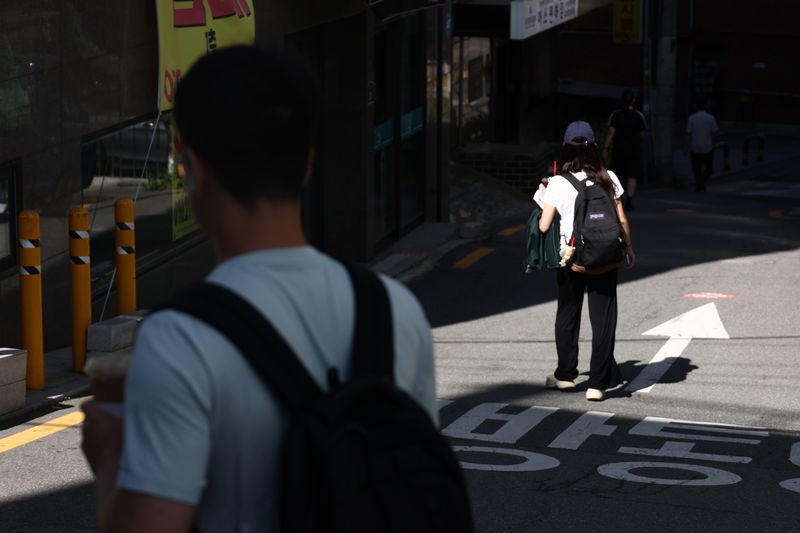
[Financial News] The number of employed people in their 20s has fallen by more than 190,000 this year, marking the sharpest decline since the IMF crisis. As employment has declined faster than the population, the employment rate for people in their 20s has fallen below 60% for the first time in five years.
According to the Korean Statistical Information Service (KOSIS) on the 13th, the average monthly number of employed people in their 20s from January through August this year was 3.279 million, down 193,000 from 3.472 million during the same period last year.
This was the largest decline since 1998 (-550,000), when the effects of the IMF crisis were particularly severe. It exceeded the declines recorded in 2009 (-142,000), during the global financial crisis, and in 2020 (-111,000), when the impact of COVID-19 was significant. After increasing in 2021 and 2022, employment among people in their 20s began to decline in 2023, with the drop widening each year.
The trend cannot be attributed solely to population decline. During the same period, the population in their 20s fell 3.5% from a year earlier, but the number of employed people plunged 5.6%, highlighting the weakness in employment. As a result, the employment rate for people in their 20s fell 1.3 percentage points from a year earlier to 59.1%. The rate has fallen below the 60% mark for the first time in five years, since 2021 (56.7%).
The impact was particularly pronounced among people in their early 20s, aged 20 to 24. Their average monthly employment fell by 114,000 to 924,000, while their employment rate dropped to 41.3%, the lowest level on record since 2000, the earliest year for which comparable statistics are available. The employment rate among people in their late 20s, aged 25 to 29, who are in the prime age for entering the workforce, also declined to 71.1%. By contrast, the population and employment of people in their 30s both increased, producing gains for five consecutive years and an employment rate of 80.9%.
Experts say that delayed entry by young people into the labor market lies behind the contrasting employment indicators for people in their 20s and 30s. As the period spent preparing for employment grows longer, they say, the age at which people begin full-scale economic activity is shifting from their 20s to their 30s.
Jung Ji-woon, a senior research fellow, and Lee Hae-yang, a researcher at the Korea Research Institute for Vocational Education and Training (KRIVET), warned of the adverse effects of prolonged delays in entering employment in a recently published study. The researchers stated, "The longer the delay in employment among people in their early 20s, the greater the risk that they will be unable to get a foothold in the labor market and become entrenched in an inactive state such as 'taking time off.'" They recommended, "Measures are needed to connect young people to the labor market at an early stage through work experience and training."
[email protected] Park Ji-hyun Reporter