'Shin Military Faction Five' Last Survivor Jeong Ho-yong Dies Without Ever Apologizing for May 18
- Input
- 2026-09-13 21:46:07
- Updated
- 2026-09-13 21:46:07
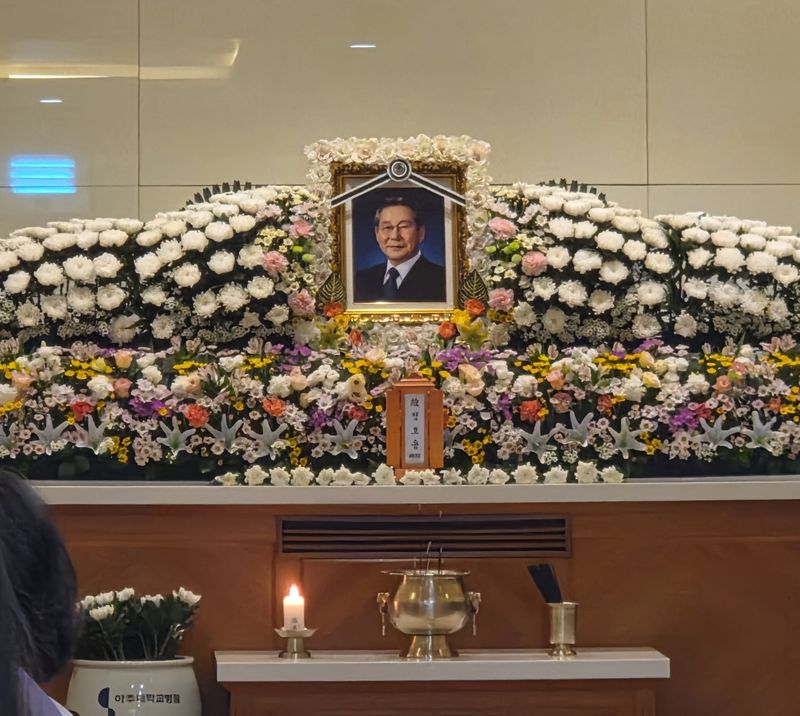
[Financial News] Jeong Ho-yong, a former minister of national defense and former commander of the Special Warfare Command, Republic of Korea Army, who was a key figure in the 1979 12/12 Military Insurrection and the bloody suppression of the 1980 Gwangju Democratization Movement, died on the 13th at the age of 94. The last surviving member of the 'five key figures of the new military faction,' he died without ever apologizing for May 18 or helping establish the truth about it.
Jeong died that morning while receiving treatment at a general hospital in Seoul. His funeral was arranged at Ajou University Hospital in Suwon.
Born in 1932, Jeong was a classmate of former presidents Chun Doo-hwan and Roh Tae-woo in the 11th class of the Korea Military Academy. Along with Chun Doo-hwan, Roh Tae-woo, former Army Chief of Staff and martial law commander Lee Hee-sung, and former Army Vice Chief of Staff Hwang Yeong-si, he is regarded as one of the five key figures of the new military faction.
While serving as commander of the 50th Division in 1979, Jeong took part in the 12/12 Military Insurrection and assumed command of the Special Warfare Command, Republic of Korea Army, the very next day. During the May 18 Democratization Movement, he commanded the subordinate 3rd, 7th and 11th Airborne Brigades, which formed the core of the bloody suppression in Gwangju. He visited Gwangju at least three or four times during the uprising. His responsibility for supporting the martial law forces' operation to re-enter the Jeollanam-do Provincial Government on May 27, 1980—Operation Sangmu-Chungjeong—was later recognized through rulings by the Supreme Court of Korea and others.
Jeong rose rapidly under the protection of the new military faction's power. After retiring as a four-star Army chief of staff, he served successively as minister of home affairs and minister of national defense in 1987, near the end of Chun Doo-hwan's administration. He was also elected as a lawmaker for Daegu Seo-gu Gap in the 13th general election in 1988, representing the Democratic Justice Party, and in the 14th general election in 1992 as an independent.
After democratization, however, he was indicted in 1996 on charges including participation in the 12/12 Military Insurrection and the suppression of the May 18 Democratization Movement. His seven-year prison sentence was finalized in 1997.
Throughout his life, Jeong consistently denied responsibility for the bloody suppression of May 18. He claimed, "My visits to Gwangju were for administrative and logistical support for subordinate units, and I had no command authority, so I had absolutely nothing to do with the order to open fire." In 2021, he also filed a petition with the May 18 Democratization Movement Truth and Reconciliation Investigation Commission, claiming that he had been made a scapegoat because of political pressure.
However, after analyzing relevant documents and testimony, the commission concluded that it was difficult to view Jeong as having been completely outside the chain of command. It confirmed that he chaired meetings on operational issues whenever he traveled to and from Gwangju and obtained and distributed supplies needed for the re-entry operation. Accordingly, in June, about a month before the commission was scheduled to conclude its work, it referred Jeong to prosecutors again on charges including murder for the purpose of insurrection.
With Jeong's death, all five key figures of the new military faction have now passed into history.
Kim Yong-man, a former standing director of the May 18 Seoul Memorial Foundation, criticized him, saying, "All those who committed grave wrongdoing died shamelessly, without confessing before history or accepting responsibility." Concerns are also growing that establishing the truth will become even more difficult, as the opportunity to directly verify the internal decision-making process—including the chain of command for issuing orders to open fire during May 18—through key figures of the new military faction has disappeared forever.
[email protected] Park Ji-hyun Reporter