"I Can't Lose the Last 5 kg"... Nam Bo-ra Also Experienced a Postpartum Weight-Loss Plateau [Health Talk]
- Input
- 2026-09-14 06:00:00
- Updated
- 2026-09-14 06:00:00
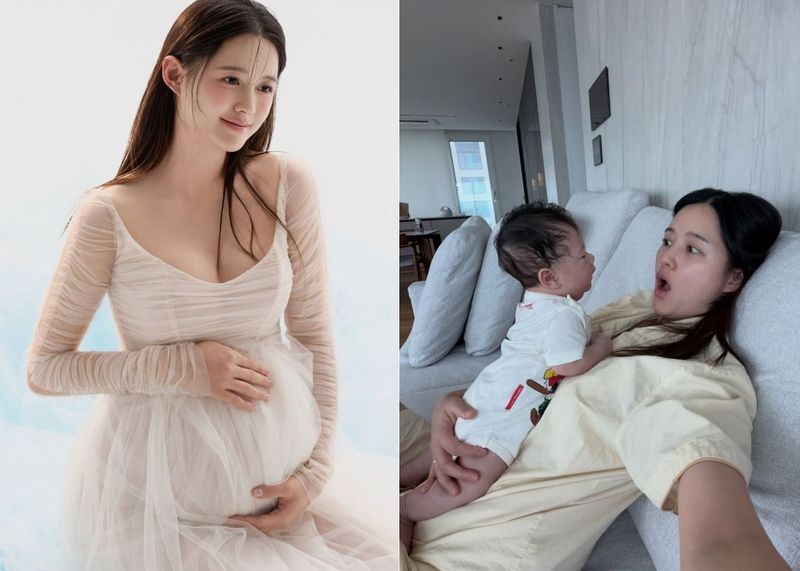
[Financial News] "The baby had left my womb, but I couldn't lose the weight and stayed puffy. I felt depressed."
Actress Nam Bo-ra, 36, who gave birth to a son last June, recently drew attention after sharing on social media how difficult it has been to manage her postpartum weight.
Nam Bo-ra recently shared an update on social media, saying that she had resumed exercising and still had about 5 kg to lose to return to her pre-pregnancy weight. She also said she planned to manage her weight through a combination of diet and exercise.
However, returning to one's pre-pregnancy body after childbirth is not easy. Losing weight after giving birth can be difficult in itself, and even after weight loss, excess fat does not necessarily decrease evenly in the areas one wants to target.
Why is postpartum weight loss so slow?
The difficulty of losing weight after childbirth is influenced by both the physical changes that occur during pregnancy and delivery and changes in daily life. During pregnancy, body fat increases to support fetal growth and prepare for breastfeeding. Even after childbirth, the body often does not immediately return to its pre-pregnancy state.
Changes in daily life after childbirth can also affect weight management. Yang Hyeon-seok, director of the 365mc Ilsan branch, said, "After childbirth, childcare often makes sleep and activity levels irregular, making it difficult to maintain a consistent exercise and diet routine."
The key to postpartum weight loss is to follow a sustainable approach consistently. Yang advised, "Rather than restricting exercise or food too aggressively from the beginning, it is better to gradually adjust daily meal and snack intake while taking into account the stamina needed for childcare." He added, "Starting with practical steps that can be incorporated into daily life, such as walking consistently even for short periods, is a realistic approach."
What are the options for body-shape concerns that remain after weight loss?
Even after losing weight following childbirth, concerns about body shape often remain. A common example is when certain areas do not return to their previous shape. Excess fat may remain around the lower abdomen, waist, or upper arms, making the body look different in clothes or creating an overall heavier silhouette.
Yang said, "Weight loss and changes in body shape do not necessarily occur at the same pace." He explained, "Pregnancy and childbirth can alter the distribution of body fat and body shape, so compared with before pregnancy, certain areas such as the abdomen, waist, or thighs may appear relatively more prominent."
He continued, "Losing a little more weight may be one way to reduce excess fat in specific areas." However, he added, "If you have already lost enough weight or see little change despite losing additional weight, you may also consider other options rather than pursuing excessive weight loss."
If concerns about a specific area persist, medical options may be considered. Yang said, "LAMS, a liposuction injection procedure, focuses not on reducing overall body weight but on selectively reducing areas that are difficult to address through weight loss alone." He added, "Because the procedure is relatively short and performed under local anesthesia, it may be one option for postpartum women who need to manage both childcare and their body shape."
He continued, "However, bruising or pain may occur in the treated area after the procedure, so the decision should be made after thoroughly consulting a specialist about the individual's health and degree of recovery after childbirth." He advised, "For those also caring for a child, it is advisable to consider the procedure's recovery process and its potential impact on daily life."
[email protected] Medical Specialist Jeong Myeong-jin Reporter