Despite Trump's '100% Tariff' Warning... BRICS Start De-dollarization?
- Input
- 2026-09-13 15:54:28
- Updated
- 2026-09-13 15:54:28
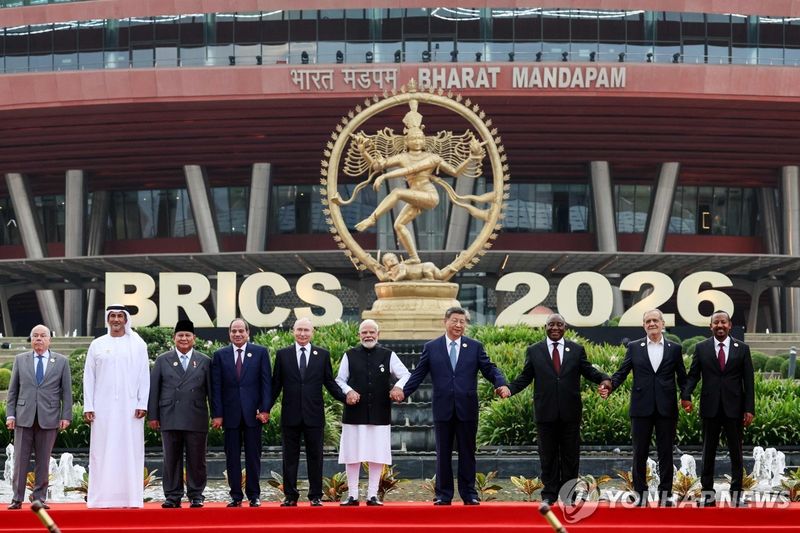
According to the website of India's Ministry of External Affairs on the 12th (local time), the "New Delhi Declaration," adopted as a result of the BRICS Summit held in New Delhi, included a clause acknowledging the efforts of the BRICS Payments Task Force (BPTF), which has been seeking practical solutions for efficient cross-border payment mechanisms. The declaration also stated that it "recognizes the work on studying the cross-border interoperability of payment and messaging channels, as well as discussions regarding trade settlements and investment promotion using local currencies among BRICS member countries." However, it toned down its rhetoric by stating that it "respects the priorities of each country and acknowledges that there is no one-size-fits-all approach."
Although this joint declaration did not explicitly mention the dollar and stated that it respects the priorities of each member state, it drew attention for confirming directions such as promoting payments using member states' local currencies. This is because the declaration specified that it "recommends that the task force continue to discuss practical solutions for cross-border payments among member states that are fast, cheap, more accessible, efficient, transparent, and secure." In this regard, the Hong Kong media outlet South China Morning Post (SCMP) assessed that "BRICS has moved toward de-dollarization."
On the other hand, according to The Times of India (TOI), Sudhakar Dhalella, India's Deputy Minister for External Affairs, drew a line at a press conference on the same day, stating, "Currently, there are no proposals for a single BRICS currency within BRICS." He explained, "Discussions on trade settlements using local currencies within BRICS have been ongoing for some time," adding that it is "not a new topic." He further stated, "I view local currency settlements as a practical mechanism to reduce transaction costs in bilateral trade," and added, "It is complementary to global payment systems and has been encouraged to advance world trade."
However, since then, confidence in the dollar has declined amid the imposition of unilateral reciprocal tariffs by the U.S. and the increase in U.S. debt; recently, countries such as China and Russia have been increasing their holdings of gold or other currencies instead of the dollar to reduce their dependence on the U.S. financial system.
[email protected] Hong Chae-wan Reporter