Vice Chairman Ha Jung-woo: "The AI Race Is an Energy Race"—Jeju Presents Clean Power and Autonomous Driving GX Solutions
- Input
- 2026-09-13 13:46:36
- Updated
- 2026-09-13 13:46:36
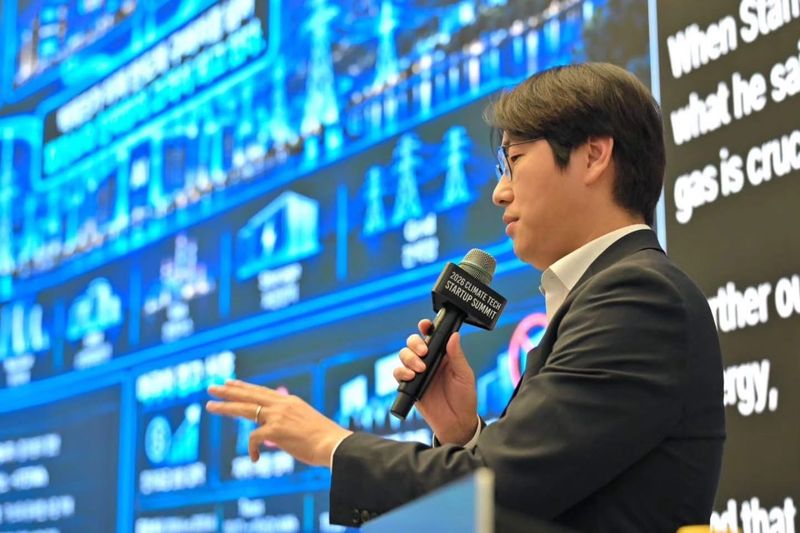
【Financial News, Jeju—Yong-bok Jung】 The National AI Strategy Committee has assessed that the core of the global AI power struggle is shifting from semiconductors and data to securing a stable power supply. It also presented a vision for Jeju, where renewable energy accounts for a high share of generation, to demonstrate green transformation (GX) technologies by combining AI, autonomous electric vehicles, energy storage systems (ESS) and distributed energy, then expand the model nationwide and into overseas markets.
According to the National AI Strategy Committee and organizers of the 2026 Climate Tech Startup Summit on the 13th, Ha Jung-woo, standing vice chairman of the National AI Strategy Committee, delivered a keynote speech titled "AI Powered by Energy" on the 10th at Kakao Space.1 on Cheomdan-ro in Jeju City.
The central message from Vice Chairman Ha Jung-woo was that "the AI race has already become an energy race."
Training and inference for AI models require large-scale computing facilities and substantial electricity. To strengthen the AI industry's competitiveness, it is necessary not only to secure computing equipment such as GPUs, but also the power grids, generation sources and storage facilities needed to operate them reliably.
Ha also emphasized the potential in the opposite direction. If electricity powers AI, AI can forecast generation and demand and optimize energy use, thereby accelerating the transition to clean energy, he explained.
He proposed that "AI, clean energy and climate tech should be combined to accelerate GX and develop a new deep-tech industrial ecosystem into a future growth engine for the nation."
GX refers to the green transformation of carbon-intensive industrial and energy structures into low-carbon systems through technological innovation. Ha's vision focuses on using AI not only as a new source of electricity demand, but also as a technology for improving the efficiency of power generation, storage and consumption.
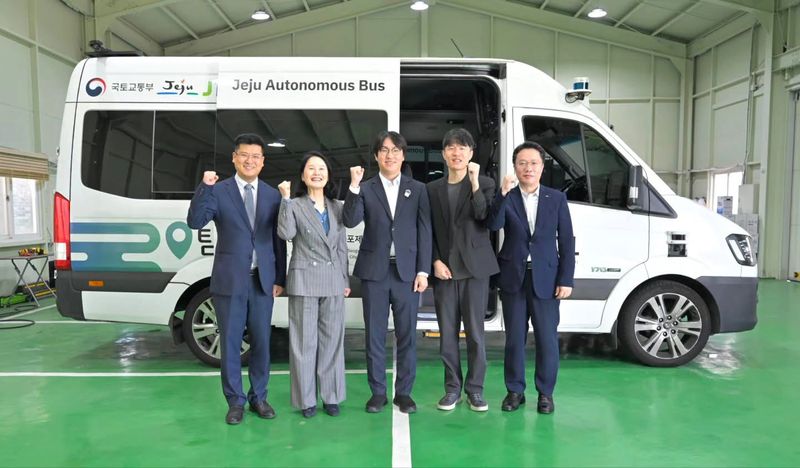
Jeju's high share of renewable energy is the reason it has been mentioned as a demonstration site for this model. According to Jeju Province, renewable energy accounted for 24.3% of electricity generation in Jeju in 2025, far above the national average of 10.6%. Because wind and solar power were deployed early, Jeju also experienced sooner than other regions the challenges that arise as renewable energy expands, including fluctuations in generation, power supply and demand, and output curtailment.
Ha believed that this environment could be connected to the AI industry. Autonomous electric vehicles, in particular, were presented as a key link. During his visit to Jeju, Ha personally test-drove a vehicle operated by autonomous-driving startup RideFlux. Traveling from Jeju Airport through urban roads and coastal roads near the airport to the company's garage, he examined how the vehicle recognized and responded to cars and pedestrians in real traffic conditions.
Ha assessed that Jeju offers favorable conditions for collecting real-world autonomous-driving data because rental cars used by tourists and local vehicles mix together, while driving environments range from urban streets to coastal roads.
He also presented a plan to connect electric vehicles with the energy system by combining autonomous electric vehicles with smart charging, V2G and distributed energy. V2G is a technology that sends electricity stored in an EV battery back to the power grid when needed. It treats electric vehicles not only as a means of transportation, but also as mobile energy storage systems.
Charging electric vehicles when renewable generation is high and using the stored electricity when power demand is high could help offset the variability of wind and solar power.
Ha described this as a GX ecosystem combining "AI × EV × Energy."
His remarks in Jeju continued at the Jeju AX Grand Transformation Vision Declaration Ceremony held the following day. Ha proposed operating the entire island of Jeju like one enormous energy storage system by connecting wind and solar power with AI data centers, ESS, electric vehicles and buildings.
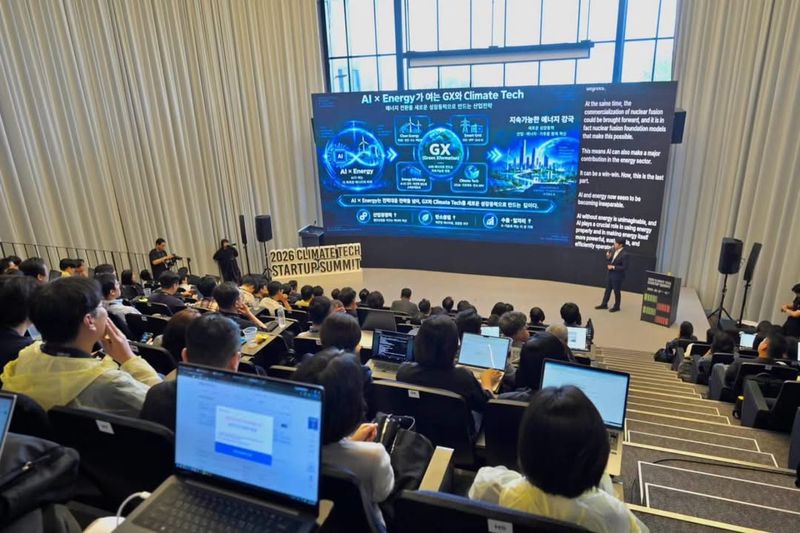
This vision also intersects with Jeju Province's AX strategy. Jeju Province has asked the government to prioritize the allocation of national GPU infrastructure, exempt the Jeju AX Grand Transformation project from a preliminary feasibility study, and designate Jeju as a demonstration region for the entire AI government lifecycle. It is also pursuing a plan for green AI data centers powered by renewable energy.
Ultimately, the model presented in Jeju links renewable energy generation, electricity consumption by AI data centers, ESS storage, autonomous electric vehicles and V2G into a single energy ecosystem.
The vision is to create a virtuous cycle in which clean energy supplies the electricity required by the AI industry, while AI is used in turn to manage renewable energy and improve efficiency in transportation and industry.
Ha also emphasized that technologies and data accumulated in local regions should not remain confined to Jeju. Autonomous-driving startups in Jeju and other regions should be able to collect real-world data, research and develop technologies, commercialize them, expand nationwide and enter overseas markets. The National AI Strategy Committee said it would support cooperation among local governments and relevant ministries.
However, the proposed combination of AI, autonomous EVs, V2G and distributed energy in Jeju has not yet been finalized as a specific national project.
Connecting autonomous vehicles to the power grid in practice will require solutions involving charging infrastructure, electricity-market rules, data links between vehicles and charging operators, and power-grid operating standards. AI data centers will also need sufficient power supplies, grid connections, investment entities and viable business models.
The next challenge is whether Jeju can connect its experience in renewable and distributed-energy demonstrations, accumulated earlier than in other parts of the country, to new industrial demand in AI and autonomous driving.
Ha said, "More autonomous-driving startups must be able to accumulate data in local regions, research and develop technologies, commercialize them, rapidly expand nationwide and enter global markets." He added, "The National AI Strategy Committee will also actively cooperate with local governments and relevant ministries."
[email protected] Yong-bok Jung Reporter