Lee Hyoung-il: "An Active Fiscal Role Is Needed... It Must Be Pursued in Harmony with Sustainability"
- Input
- 2026-09-13 13:48:20
- Updated
- 2026-09-13 13:48:20
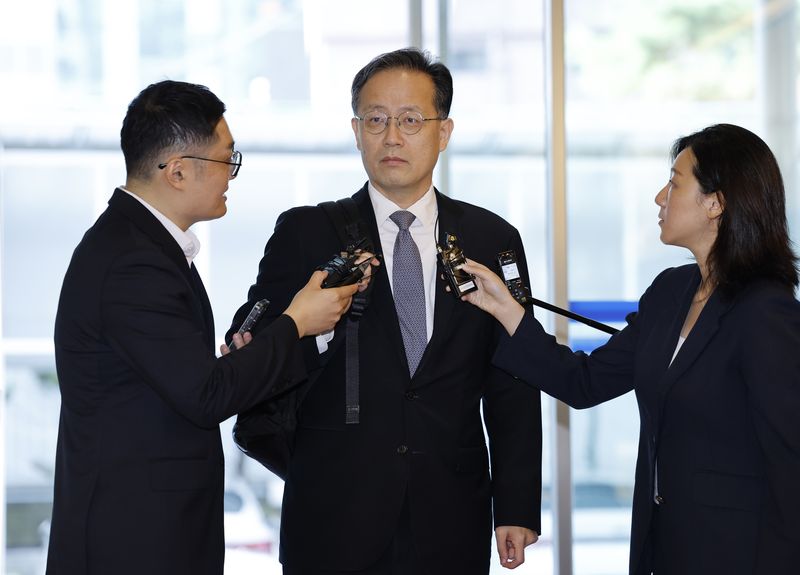
[Financial News] Lee Hyoung-il, nominee for deputy prime minister and minister of the Ministry of Economy and Finance, said on the 13th that active fiscal management is needed to respond to external uncertainties and structural problems.
In materials submitted to the National Assembly by the Ministry of Economy and Finance ahead of his confirmation hearing scheduled for the 15th, Lee said, "An active fiscal role is needed to respond to external uncertainties and structural problems in our economy."
He explained, "I agree that institutional mechanisms are needed to enhance fiscal sustainability," adding, "Excessive increases in government debt and mandatory spending can constrain fiscal space and negatively affect potential growth and the burden on future generations."
However, he stressed, "It is also necessary to consider that countries around the world are postponing or easing the application of fiscal rules following the COVID-19 pandemic," adding, "An active fiscal role and securing fiscal sustainability can be pursued in harmony through performance-based fiscal management and other measures."
He also argued that fiscal resources should be concentrated in areas that expand the economy’s supply capacity and strengthen its growth foundation. The aim is to create a virtuous cycle in which fiscal spending reinforces the growth base and, in turn, improves revenue conditions.
He gave a positive assessment of the current government’s fiscal management. He explained that this year’s and next year’s budgets focus on addressing structural problems facing the Korean economy, including improving the potential growth rate and reducing polarization.
Lee Hyoung-il said the government’s fiscal management since President Lee Jae Myung took office "appears to be producing results." He explained that this year’s and next year’s budgets "are being actively managed with a focus on addressing structural problems, such as expanding potential growth and easing polarization."
He also presented a plan to make a rebound in the potential growth rate and reducing polarization key economic priorities. Lee pledged, "If I take office as deputy prime minister, I will make a rebound in the potential growth rate and reducing polarization my top priorities, strengthen cooperation among ministries, and increase the speed and momentum of policy implementation."
Regarding polarization in particular, he diagnosed it as occurring in various forms through the cumulative and complex interaction of multiple economic and social factors. To overcome it, he expressed his determination to "actively pursue structural reforms across the economy, industry, and society at the same time."
Regarding the oil price cap system, he described it as a safeguard against the burden of fuel costs and rising logistics expenses. Lee said the system is "a safeguard that reduces the fuel-cost burden on the public and prevents a sharp rise in logistics costs," adding that the government would consider lifting it once uncertainty stemming from the Middle East is resolved and international and domestic oil prices stabilize.
[email protected] Kim Chan-mi Reporter