Small Businesses, Tourism, Youth and Transportation to Be Redesigned... Jeju Research Institute Completes Nine of 10 Strategic Tasks
- Input
- 2026-09-13 13:15:29
- Updated
- 2026-09-13 13:15:29
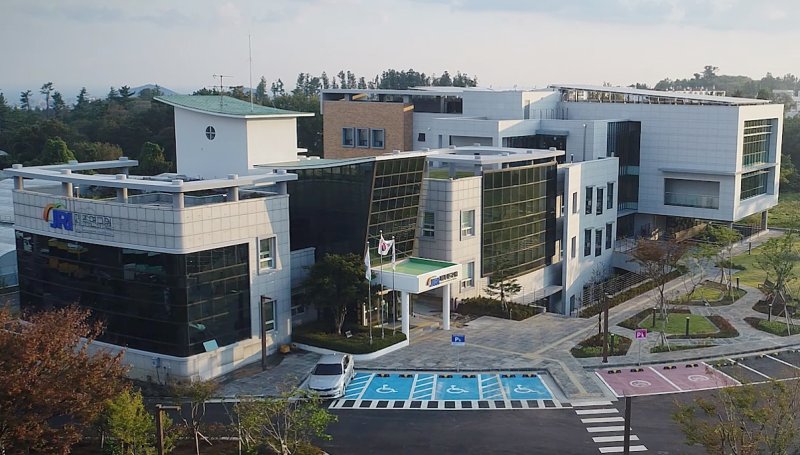
【Financial News Jeju = Reporter Yong-bok Jeong】 A series of policy studies aimed at redesigning issues that Jeju must address—from policies for local small businesses, tourism, youth and transportation to the 15-minute city, farmland and renewable-energy benefit sharing—has been completed.
According to the Jeju Research Institute on the 13th, the institute completed research on nine of this year’s 10 “Future Transition Strategic Tasks.” The remaining task, “Measures to Create a Cultural Ecosystem in Jeju City’s Old Downtown,” is scheduled for completion by the end of October.
Rather than simply producing reports in response to individual departments’ research requests, the Future Transition Strategic Tasks focus on identifying policy agendas that Jeju must address in the future and developing them into specific research projects.
The Jeju Research Institute is a publicly funded research institution established by Jeju Special Self-Governing Province under relevant laws and ordinances. Its statutory core duties include developing short- and long-term policies for regional development and conducting surveys and research on local issues. Given this role, the success of the latest studies will depend not on the publication of reports but on how extensively their findings are reflected in Jeju’s actual policies.
The institute selected policy agendas after holding agenda-development workshops involving researchers from various fields and reviewing them through its Research Advisory Committee. It then refined the research projects by gathering opinions from experts, field representatives and relevant departments of Jeju Special Self-Governing Province.
The process was also organized in sequence: “agenda development, opinion gathering, consultations with the provincial government, research implementation and use of results.” The aim was to establish contact with departments responsible for policy demand from the stage of setting research topics and continue with follow-up policy support after the research was completed.

The 10 tasks cover most of the local issues currently facing Jeju.
In the area of people’s livelihoods, the institute conducted a “Study on Policy Measures for Small Businesses in Jeju to Overcome the Livelihood Economy Crisis.” In tourism, it studied “Diagnosing the Structure of Jeju’s Tourism Market and Redesigning Policy Directions.” For youth policy, it conducted a “Diagnosis of Youth Policy in Jeju Special Self-Governing Province and Directions for Redesign.”
Transportation and urban policy were also key areas. The tasks included “Diagnosing and Redesigning Transportation Policy in Jeju Special Self-Governing Province” and “Analyzing the Effects of the Pilot Project in Jeju’s 15-Minute City Pilot District and Measures for Improvement.”
Farmland use and institutional improvements were addressed as a separate task. The approach linked an analysis of the current state of policy issues surrounding land use and the agricultural foundation in Jeju with institutional improvements.
In the energy sector, the institute took another look at Jeju’s renewable-energy benefit-sharing policy. Based on the concept of shared assets, it pursued a study proposing an “energy value accumulation account” model to accumulate the value generated by renewable energy for Jeju residents.
Payments for ecosystem services and resident self-governance systems were also included among the research subjects. The studies examined the policy performance and improvement directions of a Jeju-style payments-for-ecosystem-services system, as well as the current operation of resident self-governance and measures for institutional improvement.
The final task still underway is a plan to create a cultural ecosystem in Jeju City’s old downtown. Once the study is completed at the end of October, all 10 strategic tasks planned for this year will be finished.
More important than the number of tasks is how the research findings are used. After the studies are completed, the Jeju Research Institute plans to connect the results to Jeju’s policies through the JI Policy Forum and follow-up policy support. Completed research reports will also be released sequentially according to their publication schedules. For the goal of connecting research findings to “policy use” to produce results, the institute will need to present both the future rate of policy adoption and its record of institutional improvements.
The Jeju Research Institute also identified population, carbon neutrality, the energy transition, the regional economy and tourism as core areas of future strategic research in this year’s institutional operating direction. The 10 Future Transition Strategic Tasks represent the first group of projects to translate that direction into concrete research agendas.
Yoo Young-bong, president of the Jeju Research Institute, said, “The goal of the Future Transition Strategic Tasks is not to produce one more research report.” He added, “We will strengthen follow-up policy support so that research findings on issues directly connected to residents’ lives—including small businesses, tourism, youth, transportation and energy—lead to actual policy and institutional changes.”
Ultimately, the performance of this year’s 10 strategic tasks is expected to be judged not by “how many studies were conducted” but by “what was changed into policy.”
[email protected] Yong-bok Jeong Reporter