Nationwide Wage Arrears Surpass 1 Trillion Won; Jeju Tightens Payment Practices at Construction Sites Ahead of Chuseok
- Input
- 2026-09-13 12:08:29
- Updated
- 2026-09-13 12:08:29
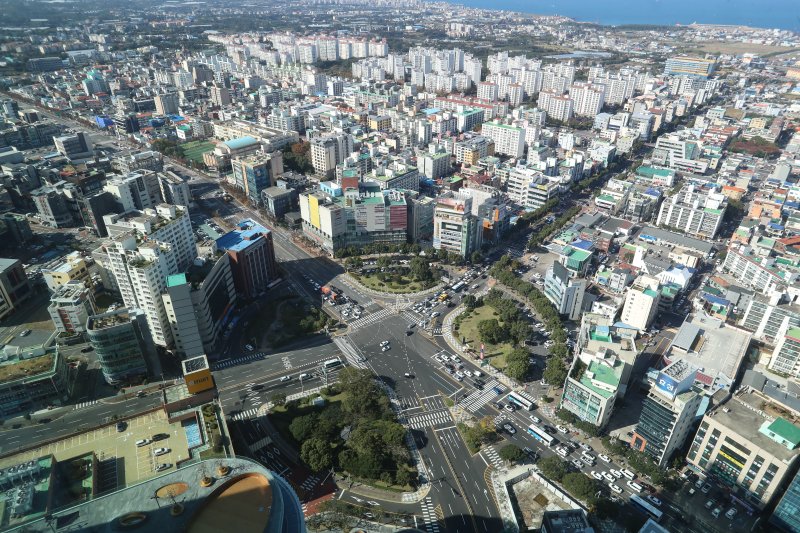
【Financial News Jeju = Jung Yong-bok】 With nationwide unpaid wages exceeding 1 trillion won through July this year, Jeju Special Self-Governing Province is conducting intensive inspections of payment practices for subcontracting fees, workers’ wages and construction-equipment rental fees at large construction sites ahead of Chuseok.
According to Jeju Special Self-Governing Province and the Ministry of Employment and Labor (MOEL) on the 13th, nationwide wage arrears totaled 1.0814 trillion won from January through July this year. The construction industry accounted for 196.6 billion won, the second-highest amount after manufacturing. Wage arrears across all industries in Jeju totaled 14.8 billion won during the same period.
Jeju Special Self-Governing Province has been inspecting public and private construction sites across the province from the 9th through the 17th.
The inspections cover three areas: subcontracting fees, construction workers’ wages and construction-equipment rental fees. Inspection teams formed by the province, Jeju City, Seogwipo City and the relevant project departments are conducting both on-site and document-based inspections.
Large-scale construction projects will be inspected in person. Public construction sites with total project costs of at least 10 billion won, private building projects with total floor areas of at least 3,000 square meters, and apartment construction projects subject to the Housing Act must undergo on-site inspections. Ordering and permitting departments are also drawing up separate plans to check payment practices at sites under their jurisdiction.
The inspections focus on the flow of construction payments from project owners to prime contractors, subcontractors and workers.
Jeju Special Self-Governing Province asked project and contract departments to expedite procedures for paying advance payments, progress payments and completion payments. It will also check whether the construction payments have reached subcontractors and workers before the holiday.
When arrears are identified, authorities will first demand payment and corrective action. Cases that cannot be resolved on-site or require additional measures will be reported to the labor office, and administrative action will also be pursued.
The province is also encouraging the use of electronic payment systems. Materials distributed by Jeju Special Self-Governing Province to prevent wage arrears explain how to use Clean Pay, which can be used in the private and public sectors, and Hadogeupjigi, which is focused on public works. These systems electronically manage payment procedures among project owners, prime contractors and subcontractors, allowing authorities to track the payment routes for subcontracting fees and wages.
The inspections come as construction work and employment in Jeju have recently expanded. Statistics from the Jeju Office of the National Data Agency show that construction orders in Jeju rose 464.2% in the second quarter from the same period a year earlier, led by civil-engineering projects. The number of people employed in the construction industry also increased by 7,000 in August from a year earlier, representing a growth rate of 31.5%. With construction volumes and the on-site workforce both increasing, the need to proactively check payment practices has grown.
The government is also stepping up its response to wage arrears. MOEL is inspecting about 8,000 workplaces nationwide that face a high risk of unpaid wages during a special settlement period ahead of Chuseok. The number of workplaces subject to inspection has increased by 2,000 from last year, with the construction industry among the main targets.
Hyun Joo-hyun, Director of the Urban Construction Bureau of Jeju Special Self-Governing Province, said, "Ahead of Chuseok, we will strengthen on-site inspections and efforts to encourage payment so that subcontractors and construction workers receive their money on time," adding, "Together with the relevant departments, we will manage the situation to ensure that no construction companies or workers suffer difficulties because of unpaid wages."
[email protected] Jung Yong-bok Reporter