The Foundry Market Expands, but Its Shift Toward TSMC Deepens... Attention Turns to Samsung Electronics’ Counteroffensive in the Second Half
- Input
- 2026-09-16 06:59:00
- Updated
- 2026-09-16 06:59:00
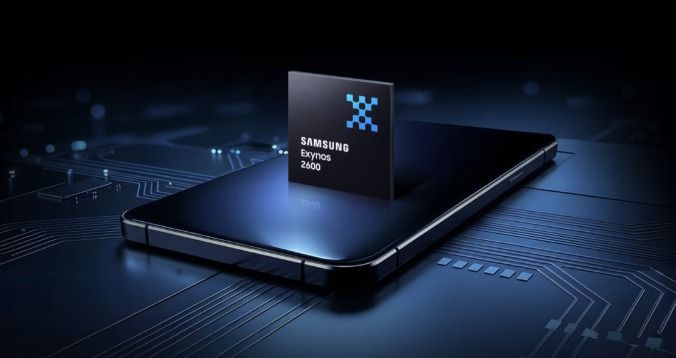
[Financial News] The global foundry market grew to a record size in the second quarter, driven by demand for artificial intelligence (AI) semiconductors. However, the market-share gap between Taiwan Semiconductor Manufacturing Company Limited (TSMC) and Samsung Electronics widened further. As TSMC strengthens its dominance in advanced processes centered on 3- and 5-nanometer technologies, Samsung Electronics plans to restore its performance in the second half through full utilization of its 4-nanometer line, price increases, and improved yields for its 2-nanometer process.
According to industry sources on the 16th, TSMC’s consolidated revenue in August reached 514.81 billion Taiwan dollars, or approximately $16.3 billion, up 53.3% from the same month a year earlier. It also rose 10.1% from July, setting a new monthly record. The increase came as orders for advanced processes expanded amid growing demand for AI accelerators and semiconductors designed in-house by major technology companies.
The global foundry market as a whole is also growing rapidly on AI demand. According to market researcher TrendForce, combined revenue for the world’s top 10 foundry companies reached a record $53.49 billion in the second quarter, up 11.5% from the previous quarter.
However, the market’s growth is increasingly concentrated around TSMC. TSMC’s market share rose from 72.3% in the first quarter to 72.5% in the second quarter, gaining 0.2 percentage points and firmly maintaining its lead. Samsung Foundry remained in second place, but its share fell from 6.5% to 5.9% over the same period, a decline of 0.6 percentage points. As a result, the market-share gap between first-place TSMC and second-place Samsung Electronics widened by 0.8 percentage points from the previous quarter.
TSMC is expanding revenue from advanced processes. In the second quarter, 3- and 5-nanometer processes accounted for 30% and 33%, respectively, of TSMC’s wafer revenue. Combined, they represented 63%. The 2-nanometer process, which began mass production in the fourth quarter of last year, also accounted for 3% of wafer revenue in the second quarter, beginning to make a meaningful contribution. TSMC plans to rapidly expand 2-nanometer production in the second half, so its advanced-process-centered revenue structure is expected to strengthen further.
Samsung Electronics is currently seeking to restore its foundry performance, centered on its 4-nanometer process. According to TrendForce, Samsung Electronics’ foundry revenue in the second quarter was approximately $3.26 billion, up 1.8% from the previous quarter. Demand for semiconductors for external customers, including Qualcomm, and base dies for high-bandwidth memory (HBM) increased, and the 4-nanometer line in Pyeongtaek is reportedly operating virtually at full capacity.
The recovery in demand is also leading to higher selling prices. According to industry sources, Samsung Electronics raised prices in July for new orders of chips produced using its 4-nanometer SF4 process. The increases were reportedly 10% to 15% for customers in the United States and China and 5% to 10% for Taiwanese customers. Wafer prices for 5-nanometer products also rose by 10% to 15%, while those for 8-nanometer products increased by approximately 10%.
The key to Samsung Electronics’ mid- to long-term counteroffensive in foundry operations is its 2-nanometer GAA transistor structure. Samsung Electronics expects the number of 2-nanometer projects it wins this year to more than double from the previous year. As large AI and high-performance computing (HPC) customers begin product design, the company plans to expand mass production of new mobile products using its second-generation 2-nanometer process in the second half. To narrow the market-share gap with TSMC, Samsung Electronics will need to stabilize its 2-nanometer yield and convert new orders into actual mass-production revenue.
Kim Dong-won, head of the research division at KB Securities, stated, “Samsung Electronics’ foundry yield for the 4-nanometer process has stabilized at above 80%, while the yield for its 2-nanometer GAA process is also improving rapidly, exceeding 70%.” He added, “As mass production of the low-power-specialized 4-nanometer process begins in earnest in the third and fourth quarters, the likelihood of a return to profitability is expected to increase further.”
[email protected] Park Ji-yeon Reporter