Bahrain Declares It Will Skip Hormuz Meeting on the 14th, Saying Diplomatic Ties with Iran Must Be Restored First
- Input
- 2026-09-13 01:21:00
- Updated
- 2026-09-13 01:21:00
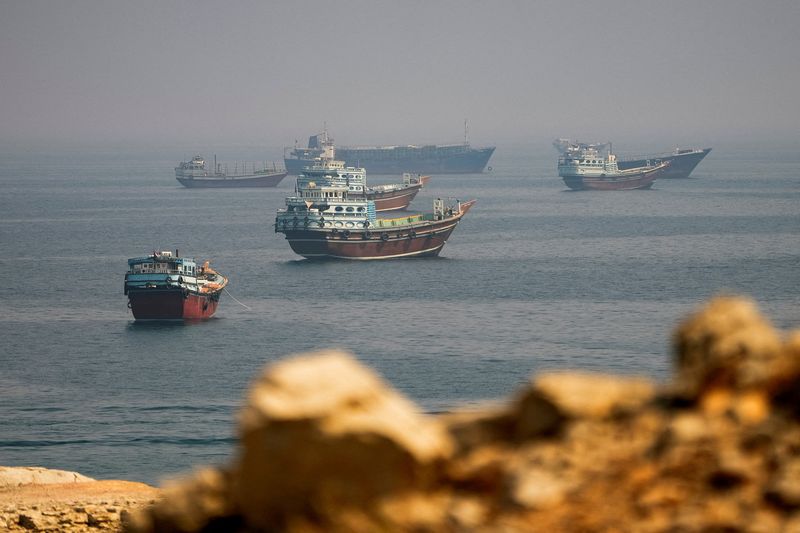
[Financial News] Iran and the Gulf states are scheduled to meet in Oman on the 14th to discuss shipping through the blocked Strait of Hormuz. Bahrain has preemptively announced that it will not attend. Prospects for an agreement are already divided within Iran, where some insist on collecting transit fees for passage through the strait, raising expectations that the meeting will face difficulties even before it begins.
According to major foreign media outlets on the 12th (local time), Bahrain’s Foreign Ministry announced that it would not participate as a party in any multilateral meeting involving Iran until diplomatic relations with Iran are restored.
Bahrain severed diplomatic relations with Iran in 2016, along with Saudi Arabia. Saudi Arabia normalized relations with Iran in 2023, but Bahrain has maintained the diplomatic rupture.
Bahrain’s Foreign Ministry conveyed its decision not to attend to Oman through official channels, directly criticizing Iran by saying, "Regional security and stability cannot be maintained through appeasement that turns a blind eye to the facts." Referring in particular to the recent drone attack on Saudi Arabia’s main oil pipeline, the East–West Crude Oil Pipeline, it noted, "Attacks on civilian and economic facilities remain a real threat." It also urged that the Strait of Hormuz be open to all vessels without discrimination, transit fees, or prior authorization.
Iran’s calculations, as a party to the talks, are also complicated. Iranian President Masoud Pezeshkian offered an optimistic outlook in an interview with local media in India, where he was attending the BRICS summit, saying, "An agreement with Oman on designating a joint shipping route in the Strait of Hormuz could be signed at the meeting on the 14th."
By contrast, a senior Iranian official told major foreign media outlets, "We will not reach the stage of immediately signing an agreement on the Strait of Hormuz with the Gulf states," tempering expectations. The official indicated that an immediate agreement would be difficult because Iran strongly wants to collect fees from vessels passing through the Strait of Hormuz, while Oman, the mediator, opposes the proposal.
Meanwhile, the Strait of Hormuz is a vital artery of the global energy system, carrying about 20% of the world’s crude oil and liquefied natural gas (LNG) shipments. Since entering a war with the United States and Israel in late February, Iran has strictly restricted the passage of commercial vessels, including oil tankers, through the strait.
[email protected] Park Ji-hyun Reporter