Lockheed Martin’s bid for redemption with a high-speed maneuvering helicopter hinges on the military’s “technology choice”
- Input
- 2026-09-14 13:36:20
- Updated
- 2026-09-14 13:36:20
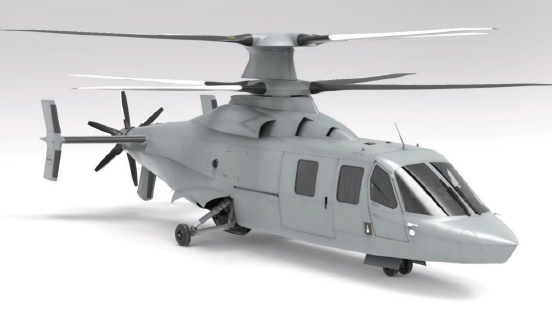
[Financial News] Sikorsky, the helicopter subsidiary of the world’s largest defense company, Lockheed Martin, has publicly proposed jointly developing a high-speed medium utility helicopter (HSMUH) with South Korea. Industry observers say the key issue is not price or technological competitiveness, but which “technology approach” the South Korean military chooses.
Sikorsky seeks redemption after being overlooked by the U.S.
According to industry sources on the 14th, Lockheed Martin is targeting the next-generation HSMUH program, which the South Korean military plans to field in the late 2030s. The company says joint development with Korea Aerospace Industries (KAI) would help South Korea advance its indigenous helicopter technology.Dylan Landis, Sikorsky’s Asia-Pacific general manager for new business development, proposed jointly developing the “X2 HSMUH” at a seminar held on the 9th by the American Chamber of Commerce in Korea (AMCHAM Korea) and Yoo Yong-won, a People Power Party lawmaker on the National Defense Committee. Sikorsky also promised technology transfer and supply-chain strengthening.
Sikorsky made the same proposal publicly two months ago. Ramsey Bentley, Sikorsky’s executive director overseeing new business, praised South Korea’s advanced weapons-system manufacturing capabilities and supply chain, expressing the company’s intention to build an ecosystem covering the design, production and logistics support of the X2 HSMUH.
Sikorsky’s overtures are driven by a desire for redemption. In 2022, the U.S. Army selected Bell Textron’s V-280 Valor for its Future Long-Range Assault Aircraft (FLRAA) program. Sikorsky’s SB-1 Defiant was not chosen.
Military options include coaxial, tilt-rotor and compound technologies; KAI is preparing for all three
The biggest technological difference between Sikorsky and Bell is their rotor configuration. Bell uses a “tilt-rotor” design, while Sikorsky uses “coaxial counter-rotating rotors.” A tilt-rotor aircraft has large rotors mounted at the ends of both wings. The rotors are oriented vertically for takeoff and landing and horizontally during flight, enabling both vertical takeoff and landing and high-speed flight. Sikorsky places two rotors together and adds a pusher propeller at the tail to generate thrust. The two rotors rotate in opposite directions to produce lift.The specific reasons the U.S. military selected the Valor have not been disclosed, but attention has focused on the performance gap. During test flights, Sikorsky’s X2 recorded a maximum cruising speed of 468 kilometers per hour, while the Valor reached 560 kilometers per hour.
The South Korean military is seeking a new helicopter to replace the UH-60, widely known as the Black Hawk. The target is to field it in the late 2030s. That is why Sikorsky is laying the groundwork by publicly proposing joint development, including technology transfer.
The key question is which technology approach the South Korean military will choose: coaxial counter-rotating rotors, tilt-rotors, or a compound configuration combining a main rotor, fixed wings and a pusher propeller. KAI is conducting preliminary research in collaboration with Sikorsky, Bell and Airbus Helicopters, which manufactures compound aircraft.
A KAI official told this newspaper, "All of the overseas companies are collaborating with their headquarters, but because our military has not yet decided on the technology approach, it is difficult to predict which company will be selected for the high-speed medium utility helicopter program."
[email protected] Yoon-ho Kim Reporter