Trump: "Iran War to End Just After November Midterms; Oil Prices Will Plunge"
- Input
- 2026-09-12 22:22:23
- Updated
- 2026-09-12 22:22:23
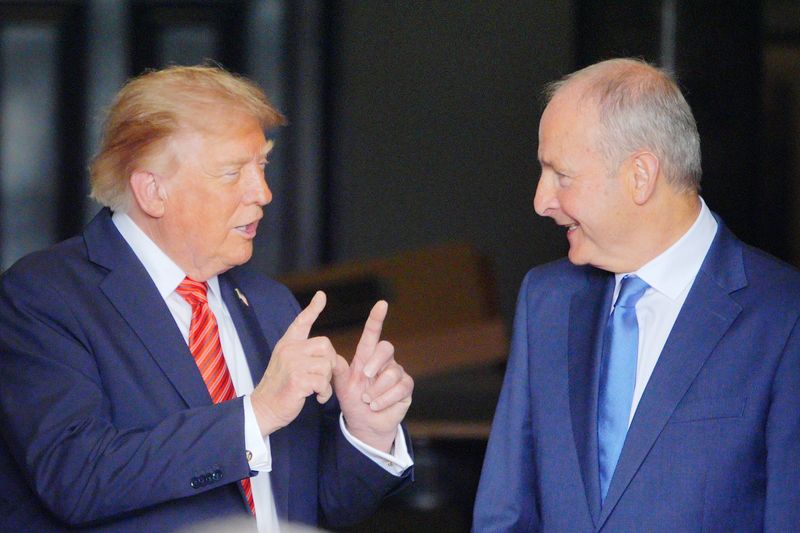
■ "War to end just after November midterms; oil prices will plunge"
According to The Wall Street Journal (WSJ) and other major foreign media outlets on the 12th (local time), President Donald Trump met reporters in Dublin during his visit to Ireland and said the war with Iran would end "very soon, perhaps just after the midterm elections."
President Donald Trump claimed, "Iran wants to hold out as long as possible to complicate the U.S. elections, but the people know this very well," adding, "Once the conflict ends, oil prices will fall sharply." He was reiterating his earlier claim, made on the 9th, that "Iran can no longer hold out and oil prices will plunge immediately after the war ends."
However, the mood inside the Trump administration is reportedly different. According to the WSJ and other outlets, key officials including Vice President of the United States JD Vance and United States Secretary of State Marco Rubio have raised concerns that the war could continue until the end of Trump’s second term. Critics say Trump’s assessment is out of step with these more realistic judgments.
■ "Iran behind Saudi pipeline attack"; Trump distances himself from Houthi involvement
Despite the security threats surrounding the situation in the Middle East, President Donald Trump maintained his characteristic optimism. Asked whether Iran was behind the recent drone attack that disabled Saudi Arabia’s east-west oil pipeline, which bypasses the Strait of Hormuz, he replied, "It was probably them (Iran)."
Saudi Arabia and Iraq had previously determined that the attack drones were launched from Iraqi territory, but President Donald Trump attributed responsibility to Iran. Regarding vessel traffic through the Strait of Hormuz, he also said, "Everything will work out fine."
Regarding the escalation involving the Iran-aligned Houthi rebels in Yemen, he said, "The Houthis contacted us first and told us they did not want to get involved. They do not want to fight us," thereby ruling out calls for a direct U.S. military response.
■ Bombshell remark: "I want to see Irish reunification"; United Kingdom responds, "No referendum"
Meanwhile, President Donald Trump did not hesitate to make a diplomatically provocative remark directly targeting the traditional ally, the United Kingdom.
After meeting Micheál Martin, Taoiseach, President Donald Trump said, "I would like to see (the United Kingdom’s Northern Ireland) united with Ireland," adding, "It is going to happen eventually, and it would be better if it happened now." The remark completely broke with the practice of successive U.S. presidents, who had refrained from commenting on the Northern Ireland conflict since the 1998 Belfast Agreement, also known as the Good Friday Agreement. He also mentioned the territorial dispute over the Falkland Islands, openly expressing his dissatisfaction with the United Kingdom.
The Prime Minister of the United Kingdom’s office immediately pushed back. It dismissed the remarks, saying, "There has been no change in the government’s existing position as set out by Prime Minister Andy Burnham." Burnham recently told Parliament, "A majority of people in Northern Ireland do not support a referendum, and there will be no border poll until circumstances change."
[email protected] Park Ji-hyun Reporter