BRICS, Including Iran, Calls with One Voice for Restraint in Middle East Escalation and UNSC Reform—but Members’ Interests Diverge
- Input
- 2026-09-12 21:54:10
- Updated
- 2026-09-12 21:54:10
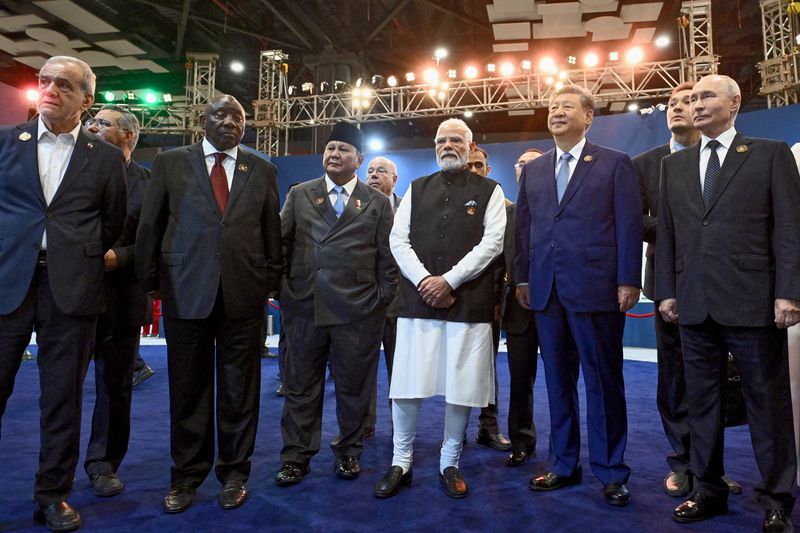
According to Russia’s state-run RIA Novosti and other foreign media outlets on the 12th local time, Indian Prime Minister Narendra Modi, whose country holds the chair, announced on the opening day of the 18th BRICS Summit at the Bharat Mandapam International Convention Centre in New Delhi, “The 2026 New Delhi Declaration has been adopted unanimously, without objections from any member state.”
In their joint declaration, BRICS leaders stated, “We express deep concern over the continued escalation of tensions in the Middle East and West Asia,” adding, “While recalling the existing positions of the respective countries, we call for the exercise of maximum restraint and urge all parties to avoid actions that could further worsen the situation.” Amid diverging interests among members, including Iran and the United Arab Emirates, over the armed conflict between the United States and Iran, the bloc appears to have reached the lowest common denominator of preventing further escalation rather than directly assigning responsibility to any particular country.
The declaration also warned of growing global nuclear threats, stating that nuclear safety measures and security principles must be observed even during armed conflicts.
On the economic front, the members condemned unilateral coercive measures, including sanctions, that violate international law and expressed serious concern over the growing use of unilateral tariff and non-tariff measures that run counter to World Trade Organization (WTO) rules. The remarks were interpreted as targeting the tariff offensive by the administration of U.S. President Donald Trump. Chinese President Xi Jinping also stressed in his speech, “We must reject all forms of protectionism and uphold the authority of the United Nations.”
Calls to reform the Western-led international order also grew louder. At the opening ceremony, Modi said, “The current system of global cooperation is a pyramid structure in which decision-making power is concentrated in the hands of a few,” and called for reform of the United Nations Security Council (UNSC). Russian President Vladimir Putin likewise backed expanding the representation of Global South countries, including those in Asia, Africa, and Latin America, on the UNSC.
Discussions also continued on “de-dollarization” to reduce the dominance of the dollar. Iranian President Masoud Pezeshkian called for the creation of alternative financial instruments to counter pressure from Western sanctions, while member states agreed to continue developing practical solutions for cross-border payments.
However, foreign media outlets noted that clear divisions and complex calculations among members lie beneath their united front against the West. The New York Times (NYT) assessed that the summit had “provided China, India, and Russia with a ‘table for dialogue with Iran’ that Washington does not have,” while also pointing to internal divisions, including tensions with the UAE, which was recently targeted by Iranian missile attacks. In a bilateral meeting with Pezeshkian, Modi also delivered a pointed message, saying, “Freedom of navigation and commerce must be guaranteed,” apparently mindful of the Strait of Hormuz, a key route for India’s energy imports.
[email protected] Park Ji-hyun Reporter