Jung Hyung-don Tells Overzealous Parents Who Reported Child Abuse Because Their Children Were Asked to Try Kimchi: “Homeschool Them”
- Input
- 2026-09-12 18:00:00
- Updated
- 2026-09-12 18:00:00
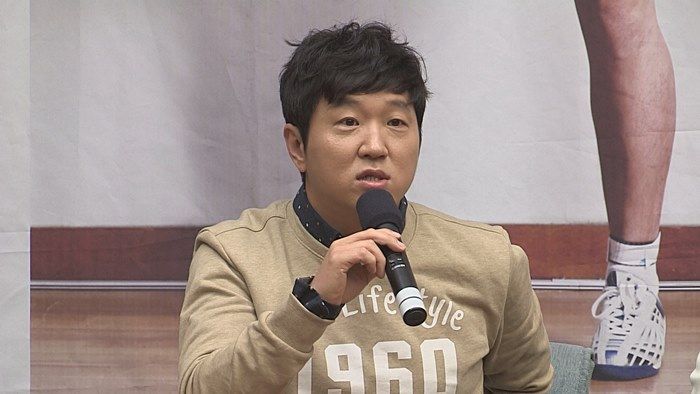
[Financial News] Broadcaster Jung Hyung-don shared his candid views on malicious complaints from some parents.
On the 11th, a video titled “Jung Hyung-don’s Masterful Dressing-Down That Leaves Hwang Je-seong Unable to Say a Word!” was uploaded to the YouTube channel “Today, Hwang Je-seong.”
In the video, Jung Hyung-don brought up the issue of complaints from parents, saying, “I can’t reveal the source.”
Jung Hyung-don said, “For example, suppose there are squid-and-peanut snacks and Choco Boy snacks. When you’re handing them out, there might not be any Choco Boy snacks left. But if a child goes home and says, ‘Actually, I wanted to eat Choco Boy snacks,’ the phone rings immediately.” He continued, “They say, ‘My child likes Choco Boy snacks, so why did you give them squid-and-peanut snacks and make it hard for the child to swallow?’”
He added, “Sometimes teachers encourage younger students to try a variety of foods by asking them to try kimchi once.” But, he said, “A child-abuse report comes in immediately.”
Jung Hyung-don said, “I’m not trying to say that things were better in the past and worse now.” He added, “If it has reached the point of becoming a social problem, we need to think about it at least once.”
He continued with his candid remarks: “If you’re that worried, don’t send your children to school. Homeschool them.” He emphasized, “School is not a place for education alone. It is where children grow into decent human beings.” He added, “If all you want is education, don’t send them to school. Keep them under your wing.”
According to the Ministry of Education’s survey for the 2024 academic year, 3,925 cases, or 92.7%, of the 4,234 cases reviewed by Regional Committees for the Protection of Teachers’ Rights were recognized as actual infringements on educational activities.
The most common types of infringement on teachers’ rights by students were intentionally disrupting educational activities by refusing to comply with legitimate student guidance (32.4%), followed by insult and defamation (26.0%).
The Korean Teachers and Education Workers Union (KTU) and other groups urged the government and the National Assembly to establish institutional measures to prevent repeated and malicious complaints at an early stage and to hold those responsible for infringing on educational activities meaningfully accountable.
[email protected] An Ga-eul Reporter