IEA: “Strait of Hormuz Unlikely to Reopen This Year” — A ‘Lost Era’ Extending Into Next Year
- Input
- 2026-09-13 03:00:00
- Updated
- 2026-09-13 03:00:00
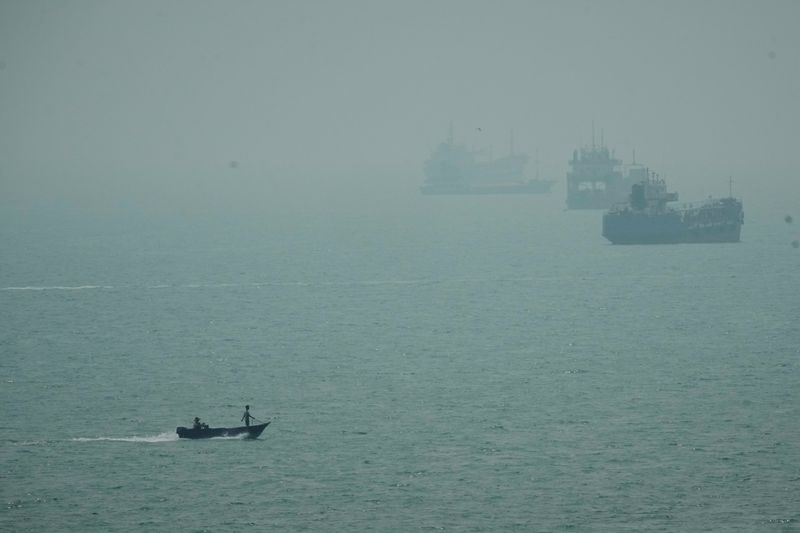
The International Energy Agency (IEA) has forecast a decline in oil demand. It has abandoned expectations that the Strait of Hormuz will reopen this year and anticipates that global oil demand will fall this year and next. The agency projects that oil demand will enter a “lost era.”
The forecast comes as Iran effectively controls the Strait of Hormuz, while the Houthi rebels in Yemen, backed by Iran, are strengthening their control over the nearby Bab-el-Mandeb Strait. The Bab-el-Mandeb Strait links the Red Sea with the Indian Ocean and also serves as a gateway to the Suez Canal.
“Lost Era”
In its monthly oil market report released on the 11th (local time), the IEA forecast that global oil demand would fall by 2.5 million barrels per day this year. The decline is 900,000 barrels per day greater than last month’s forecast of a decrease of about 1.6 million barrels per day.
Until last month, the IEA had expected the Strait of Hormuz to reopen before the end of the year. However, it abandoned that expectation as hostilities between the United States and Iran escalated.
The report projected that oil consumption would be curbed as prices for refined products, particularly diesel, surged.
As negotiations between the United States and Iran remain deadlocked, passage through the Strait of Hormuz and the Bab-el-Mandeb Strait is becoming increasingly difficult. Oil exports from Gulf countries have consequently continued to face disruptions. On the 11th, the Houthi rebels attacked Saudi Arabia’s East-West pipeline, known as Petroline, forcing it to halt operations and blocking an alternative route around the Strait of Hormuz.
The IEA expects oil demand to increase next year, but only to 2.6 million barrels per day—just 100,000 barrels more than last year. It therefore forecast that “2026–2027 will effectively be a ‘lost era’ in terms of oil-demand growth.”
Refineries Operating at Their Limits
The IEA identified rising prices for refined products, particularly diesel, as the main factor curbing oil consumption. Refineries in Gulf countries have been hit by attacks from Iran and the Houthi rebels, disrupting operations. Shipping restrictions have also made it difficult to transport refined products, prompting refineries to reduce output. In Eastern Europe, meanwhile, Ukraine’s attacks on Russian refining facilities have severely affected supply.
Additional production capacity has already reached its limits. The IEA said refined-product prices would continue to rise, assessing that “with refineries operating at full capacity, options for preventing further supply disruptions are limited.” It added that higher refined-product prices would be unavoidable over the coming months.
Renewable energy is also cited as a factor driving down oil demand. Tamas Varga, an analyst at PVM Oil Associates, told CNBC that the spread of renewable energy is absorbing some oil demand and that oil demand has become more price-elastic than it was 35 years ago, during the 1990 Gulf War.
Declining Supply
Oil supply is also declining.
The IEA said global oil production fell by 1.6 million barrels per day in August to just over 100 million barrels per day. For the year as a whole, it forecast that oil supply would decline by 5.7 million barrels per day and that production in the Gulf region would not recover until next year or later.
The report also noted that Russia’s oil exports fell by 410,000 barrels per day in August to their lowest level in eight years, or since 2018, as its energy infrastructure came under Ukraine’s “relentless attacks.”
Meanwhile, according to the IEA, 320 million barrels from strategic petroleum reserves (SPR) had been released by the end of August. After a decision in March to release 400 million barrels, only about 80 million barrels of the pledged volume remains. Analysts say this means the oil market’s buffer is thinning, increasing the risk that oil prices could rise more sharply if additional supply disruptions occur.
[email protected] Song Kyung-jae Reporter