[Exclusive] Government Takes Cautious Approach to Abolishing 'PASS ID' Service, Will First Revamp QR Verification
- Input
- 2026-09-13 17:53:30
- Updated
- 2026-09-13 17:53:30
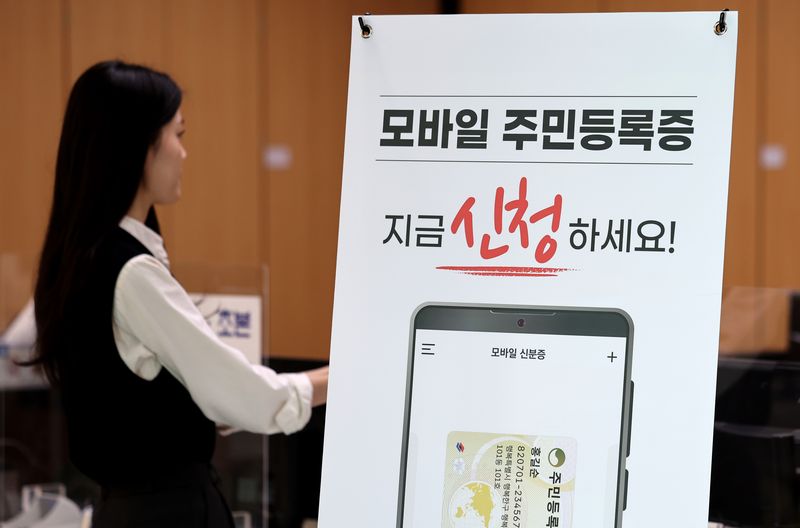
[Financial News] The Ministry of the Interior and Safety (MOIS) has decided to prioritize improving on-site ID verification procedures rather than immediately deciding whether to abolish the ID verification service in the telecommunications companies' PASS app. MOIS recently met directly with SK Telecom, KT, and LG Uplus for the first time to hear their views. The telecom companies emphasized that forged and altered IDs result not from a technical flaw in PASS itself, but from the practice of visually checking IDs on site. As controversy continues over the possible abolition of PASS IDs, which are used by 13.8 million people, the government appears to be taking a more cautious stance.
■ "The problem is not PASS, but visual inspection"—Three telecom companies voice concerns According to industry sources on the 13th, MOIS met with executives from SK Telecom, KT, and LG Uplus on the afternoon of the 10th to hear their views on how to revamp the PASS ID verification service. This was the first time MOIS and the three telecom companies had met directly to discuss whether to retain or abolish PASS IDs. The three companies had previously met with the Korean National Police Agency in August to present their views.
The three telecom companies explained in detail that the recent cases of forged and altered IDs were not caused by a security vulnerability in PASS itself. PASS IDs are designed to verify authenticity when the QR code displayed on the screen is scanned by a reader. However, at some locations, including restaurants and bars, staff often visually inspect only the smartphone screen without conducting QR-code verification.
MOIS has recently considered abolishing or scaling back the PASS ID verification service and consolidating ID verification under the government-managed Mobile ID. The ministry determined that the safety of private-sector ID verification services needed to be reassessed after cases emerged in which ID images were forged or altered using advances in artificial intelligence (AI) technology.
However, critics have pointed out that even if ID verification were consolidated under the government's Mobile ID, forged and altered IDs would be difficult to prevent at the root if staff continued to visually inspect screens without verifying authenticity through QR codes or other means. If the problem lies in how IDs are checked on site rather than in the service itself, abolishing private-sector services alone cannot be a solution.
■ Confusion for 13.8 million users... Government to prioritize QR verification The fact that 13.8 million people use PASS IDs is another factor the government must consider. There are growing concerns that abolishing a service with such a large established user base would inevitably cause inconvenience for users and confusion at locations where IDs are checked. PASS allows users to register remotely using an existing physical ID, whereas the government's Mobile ID requires users to visit a Community Service Center or Driver's License Examination Center, or obtain a new physical ID with an embedded IC chip.
Several industry officials who participated in developing the PASS app said, "Even if people use the government app, forged and altered IDs cannot be prevented if the practice of visually checking only the screen without verifying the QR code continues," and agreed, "It is difficult to understand why a private-sector service would be abolished and replaced with a government service when the problem is not technical."
As public sentiment over the possible abolition of the PASS app's ID verification service has worsened more than expected, MOIS has also been unable to conceal its embarrassment. An MOIS official took a cautious stance, saying, "We have not already decided to abolish the PASS app's ID verification service; we were only reviewing the possibility."
Accordingly, the focus is expected to shift toward improving on-site ID verification methods rather than immediately deciding whether to retain or abolish PASS IDs. MOIS and the three telecom companies reportedly agreed at the meeting to first work together to reduce the practice of visually checking Mobile ID screens alone and ensure that IDs are verified through QR codes.
The PASS ID verification service was introduced in 2019 by the three telecom companies and the Ministry of Science and ICT after going through a regulatory sandbox. It has attracted more users by allowing people to verify their identities without carrying a physical ID and by reducing unnecessary exposure of personal information.
An industry official noted, "It is extremely difficult to generate traffic on a single app at the level of PASS," adding, "Even if it is not highly profitable right now, it is an intangible asset that could evolve by combining with AI or blockchain technology." The official emphasized, "The government pursued this together with companies and even completed the necessary legal amendments, so suddenly discontinuing a major service would mean losing one of the pillars of corporate growth."
[email protected] Hong-jip Yoon Reporter