“The Night Midnight Charlie Came” ... The 20-Year-Old Who Guarded B-26s, Now a 95-Year-Old Veteran <1950, Memories of the Living 4>
- Input
- 2026-09-14 20:59:33
- Updated
- 2026-09-14 20:59:33
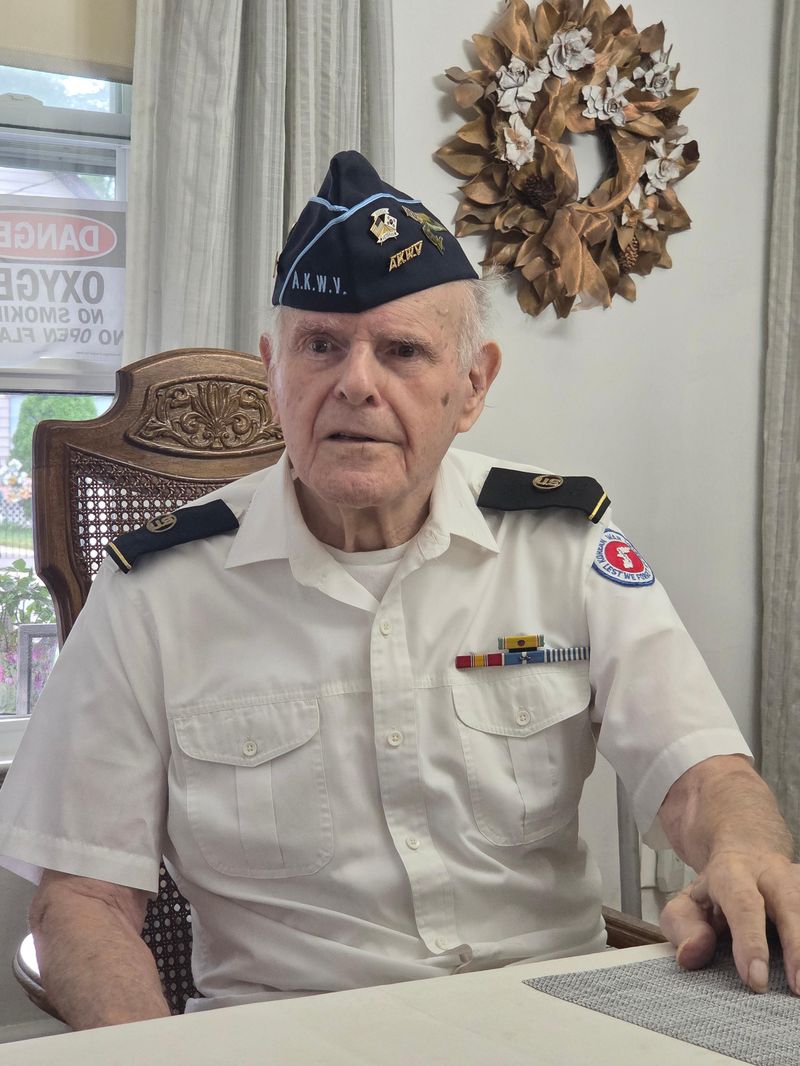
Around midnight, the sound of a small propeller plane could be heard over the pitch-black skies of Gimpo Airfield. It is a name that Korean War veteran Homer Vanides still remembers nearly 75 years later.
A small, single-engine North Korean aircraft flew through the darkness and dropped small bombs on the Gimpo runway. Its target was not American soldiers. It was the runway. The aim was to crater it and prevent U.S. fighter and reconnaissance aircraft from taking off.
“At night, we could hear an airplane coming. It was a very small single-engine plane. It flew over the runway and dropped small bombs. They were trying to keep our planes from taking off.”
Vanides remembered the aircraft as “Midnight Charlie.” In official USAF histories, North Korean nighttime raiders of this kind are generally referred to by the nickname “Bedcheck Charlie.” Official USAF records also show that slow-flying North Korean light aircraft infiltrated the areas around Seoul and Gimpo, prompting Gimpo’s air guidance and control unit to respond.
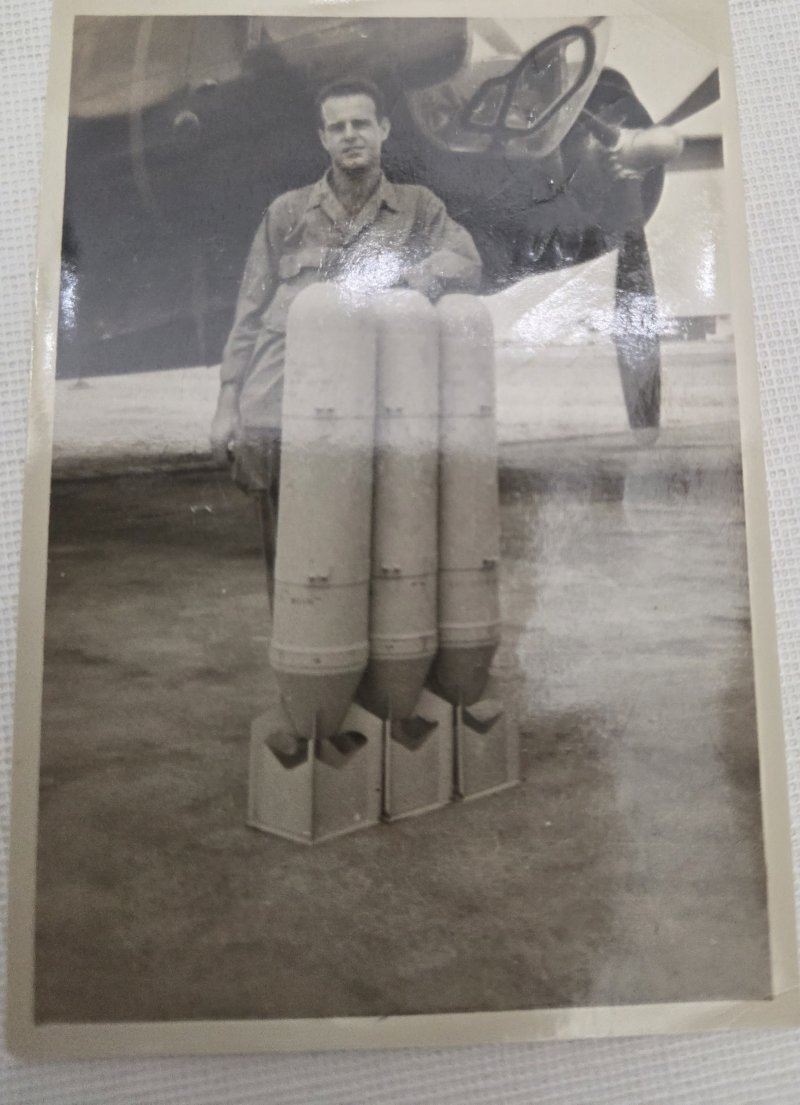
Vanides was the man who guarded the U.S. military’s B-26 Invaders on the very Gimpo runway targeted by those aircraft. He needed few words to explain his mission.
“My job was to keep the B-26s flying.”
A young man joins the three-year-old USAF
Vanides, whom we met in Englewood, New Jersey, was born in 1931. He now has difficulty walking without assistance. When he speaks for long, his voice begins to weaken. But he changed when the conversation turned to the Korean War. His daughter, sitting beside him, expressed concern several times.
“Dad, you need to save your voice.”
But he showed little inclination to stop talking.
As soon as the reporter sat down, he began discussing Gimpo in 1951 and the B-26s he had maintained. When he mentioned having photographs of the aircraft, he tried to get up, saying he would bring them himself. His daughter and others hurried to stop him when he rose, despite having difficulty walking.
The same thing happened when his medals and commendations came up.
“I have some. I’ll show them to you.”
Once again, he tried to stand. His desire to show what he had done in Korea seemed to outweigh his physical pain. Pride was also evident on the face of his daughter, who watched him from beside him.
Vanides first put on a military uniform on October 16, 1950. At the time, the USAF itself was a newly established military service.
The USAF officially became an independent branch after separating from the Army on September 18, 1947. Vanides enlisted just over three years later. During the interview, his family explained that he had been “one of the new members of the early Air Force,” and Vanides nodded.
“Early Air Force.”
He was, in effect, an airman from nearly the first generation of the USAF.
The Korean War was also the first major war faced by the USAF, which had been established only three years earlier. Vanides received basic military training at Lackland Air Force Base in San Antonio, Texas. In January 1951, he moved to Sheppard Air Force Base for training in aircraft and engine maintenance.
Then, in November of that year, he headed to Korea.
To Gimpo in November 1951 ... “I was in Korea exactly one year”
Vanides recalled leaving San Francisco, crossing the Pacific to Japan, and then traveling on to Korea. His destination was Gimpo Air Base.
He remembered his period of service in Korea clearly.
“It was from November 1951 to November 1952. I was in Korea exactly one year.”
He was in his early 20s at the time.
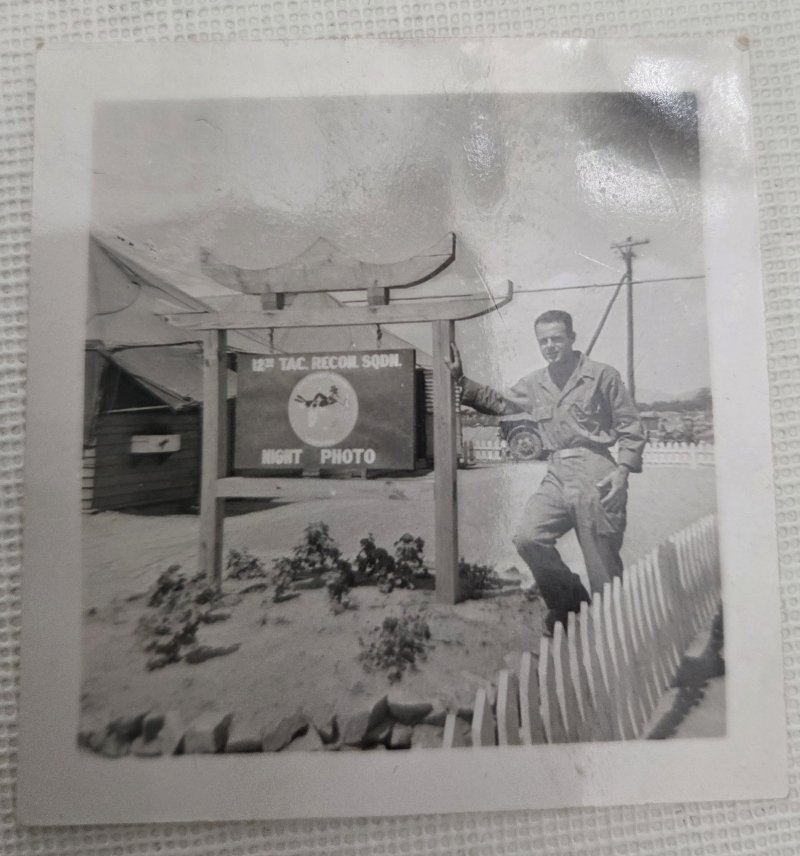
He was assigned to the 12th Tactical Reconnaissance Squadron. USAF records confirm that the squadron operated RB-26s from Gimpo during the Korean War. Official records also show that Robert Beasley, who later became a USAF general, was assigned to the squadron at Gimpo in November 1951 and flew 50 combat missions as an RB-26 navigator.
Vanides was the crew chief and aircraft mechanic responsible for these planes on the ground.
“I was a mechanic. I was a B-26 mechanic.”
B-26s that photographed enemy territory and returned
Vanides’s unit was tasked with visually confirming the movements of North Korean forces.
“Our unit took pictures of the enemy.”
B-26s on reconnaissance missions flew into North Korean territory. According to Vanides, missions began when reports came in that “a lot of trucks were gathered” or that “a lot of soldiers could be seen” in a particular area.
The aircraft flew to the area and took photographs.
“The plane went and took pictures, then came back. And we looked at those pictures.”
If the photographs revealed troops, vehicles, military facilities, or other targets, the information led to the next operation.
“If we determined that something was there, we sent bombers to bomb it.”
Vanides himself did not fly in the reconnaissance aircraft. His battlefield was the Gimpo runway where the B-26s departed and returned.
When an aircraft landed after completing its mission, he inspected the airframe first. He checked for bullet marks and mechanical problems. If anything was wrong, he repaired it and made the aircraft ready to fly again.
“That was my job.”
During the interview, he pointed to an aircraft in a photograph.
“That is the plane I was responsible for.”
For that moment, strength returned to his voice.
Gimpo, once occupied by North Korean forces ... Life began in tents
When Vanides arrived in November 1951, Gimpo had already endured several rounds of fighting.
He recalled that “North Korean forces occupied the base twice, and we took it back.”
The facilities were not intact. Still, there was a fence, tents had been erected, and there was a dining hall.
“It was like moving into a base that had already been built. Some places were damaged, but there were tents, places to sleep, and places to eat.”
At first, even proper shower facilities were unavailable.
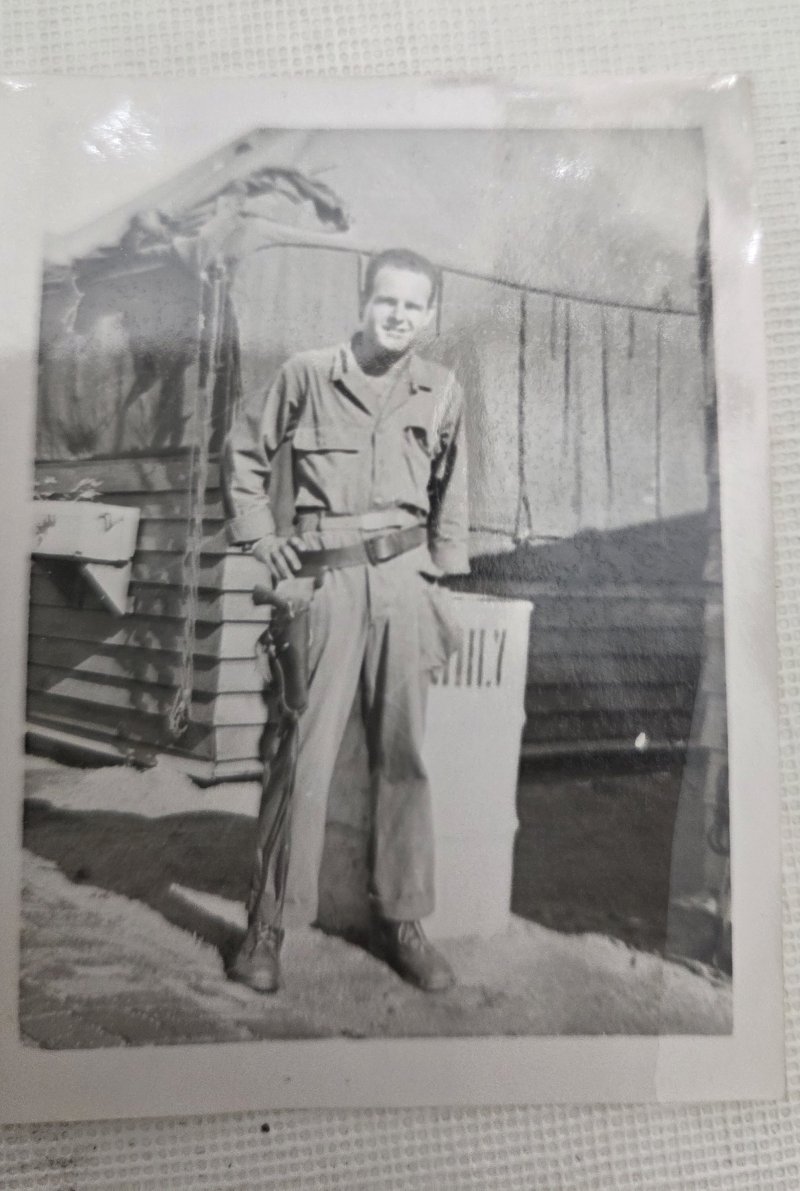
“One person in our tent filled a basin with water outside and washed himself. We thought it was funny, so we took a picture.”
Living conditions improved over the following months. Toilets and showers were installed. Sheets were placed on the cots inside the tents, and stoves were provided to keep out the cold.
“Later, it felt like being at home.”
He also socialized with Koreans working at the base.
“The Korean people were very kind. The women who worked at the base helped us a lot, too.”
Gimpo, where Turkish, Greek, and British troops rested
Gimpo was a military base from which reconnaissance and fighter aircraft launched, but it was also a place where United Nations troops coming down from the front could briefly forget the war. Vanides remembered Turkish, Greek, and British troops.
“People who were fighting at the front came down to rest for about a week.”
It was R&R, or rest and recuperation. Soldiers temporarily removed from the trenches and field life at the front could lie in beds at Gimpo. There were sheets, warm meals, and even soccer.
“They really enjoyed it.”
After a week, they returned to the front. For Vanides, the time he spent with them remained a pleasant memory amid the war.
“Where is your helmet?” ... Going to the front to find a friend
Vanides did not take part in ground combat himself.
“I did not fight in combat.”
But once, he went close to the front line. He had heard that a friend was serving there and decided to visit him.
He obtained a pass in Seoul and climbed into the back of a military truck.
After they had traveled some distance, a soldier asked him a question.
“Where is your helmet?”
Vanides did not understand what he meant.
“What helmet?”
Only after hearing the soldier’s reply did he realize where he was going.
“We are entering enemy territory now.”
The friend he met at the front was a cook. A grenade hung inside the tent where he lived, and insects were everywhere.
It was completely different from the war Vanides saw at Gimpo.
“It was terrible. It was really terrible.”
After spending several hours with his friend, Vanides returned to Gimpo.
“There was nothing standing in Seoul”
The Seoul he remembered from the Korean War was a wasteland. One day, he climbed to a high place and looked down over the city.
Seventy-five years later, the word he repeatedly used to describe the scene was “mess.”
“It was a complete mess. It was really a mess.”
Buildings had collapsed. He also remembered the civilians he encountered in the streets.
“Their clothes and homes were all a mess.”
He summed up Seoul at the time in one sentence.
“Nothing standing.”
“There was nothing standing.”
He also remembered that many people had fled south to escape the war.
“It seemed that many people went south.”
He paused briefly, then said:
“It was really heartbreaking.”
Korea seen again 57 years later ... “Beautiful, beautiful”
Even after leaving Korea in November 1952, the ruined Seoul remained in his mind for a long time.
After completing his service in Korea, he returned to the United States and resumed B-26-related work at Shaw Air Force Base in South Carolina.
He was honorably discharged on October 15, 1956. Having enlisted on October 16, 1950, he served in the USAF for just under six years.
Then, in 2008, he returned to Korea with other Korean War veterans. It was his first visit in 57 years.
When asked how he felt, the word Vanides repeated was the opposite of the one he had used to describe wartime Seoul.
“Beautiful.”
Then he said it again.
“Beautiful, beautiful. Absolutely beautiful.”
“It was truly beautiful.”
Buildings and shops had appeared where nothing had stood during the war.
“I couldn’t see anything that was broken. The buildings and shops had all been rebuilt.”
For Vanides, Korea’s development was not an economic growth figure in a statistic. It was the experience of someone who had seen the ruins with his own eyes and looked upon the same country again 57 years later.
“The Korean people did a really good job.”
“You go first” repeated seven times in an elevator
Yet what surprised him most in Korea in 2008 was neither the buildings nor the city’s development. It was the people.
When he walked down the street wearing his Korean War veteran’s cap, Koreans bowed their heads. Some saluted. Then they said:
“Thank you for your service.”
Once, he got off an elevator with a Korean woman.
When the doors opened, Vanides said:
“You go first. Ladies first.”
The woman shook her head.
“No. You go first.”
He yielded again, and the woman refused again.
“You go first.”
“We repeated that seven times.”
In the end, Vanides exited first. He remembered that it was because he was wearing his veteran’s cap.
“I was wearing that cap.”
Even more surprising were the children.
“Ten-year-olds and five-year-olds alike said, ‘Thank you for your service.’”
He smiled.
“Those children weren’t even born during the war.”
Then he added:
“And yet they thanked us.”
Remembering continued after the war ended
For Vanides, the Korean War did not end when he left Korea in 1952. After leaving the military, he remained actively involved in veterans’ activities.
He served as commander of American Legion Post 78 in Englewood, New Jersey, and participated in Veterans of Foreign Wars (VFW) Post 170 and the Korean War Veterans Association (KWVA) Post 170. He also served for a time as chaplain of the KWVA.
In Teterboro, New Jersey, he participated in an exhibit recreating a Mobile Army Surgical Hospital (MASH) from the Korean War.
“We built a MASH hospital.”
They erected tents and arranged them like an actual field hospital. They brought in medical equipment from the period and recreated scenes of treating and operating on patients.
“People could come inside and walk around to see it.”
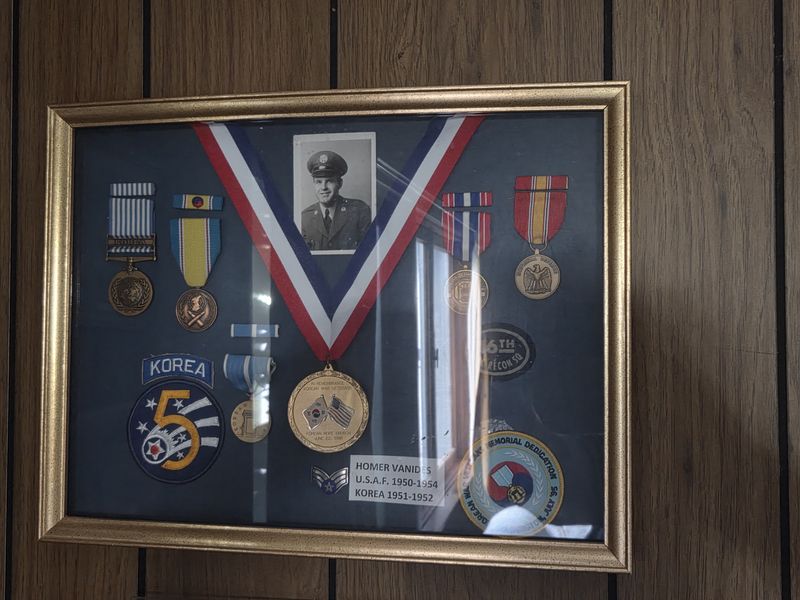
For this work, he received the Distinguished Service Medal and the Special Achievement Award in 2000.
For his service in the Korean War, he received the Korean Service Medal, United Nations Service Medal, and National Defense Service Medal. He also received various letters of appreciation and commendations from the VFW, Disabled American Veterans (DAV), and the New Jersey National Guard.
He visited Walter Reed Army Medical Center to comfort wounded service members and volunteered at a New Jersey veterans’ nursing home, serving Thanksgiving meals to resident veterans.
Even after returning from the war, he lived for decades as a “veteran.”
Three months after losing the wife he spent 70 years with
The past few months have been difficult for Vanides. He lost his wife, Helen, whom he married in June 1956 and with whom he spent nearly 70 years, just three months ago.
His health has also deteriorated significantly. He can no longer walk on his own and cannot speak for as long as he once could. As a result, he has been unable to attend the veterans’ gatherings he loved so much.
“I miss those people.”
He said it was frustrating when he could not get the words out properly.
Even so, he welcomed reporters from Korea. As soon as he sat down, he began talking about the Korean War.
One of the things Vanides had been most proud of throughout his life was his service in the Korean War.
What best showed that pride was neither his medals nor his commendations. It was the Korean War veteran’s cap resting on his head.
“I wear this cap every day.”
He emphasized “every day” in English.
“Every single day.”
Even on days when he does not leave the house, the cap remains by his side.
Vanides said he once worried that people would forget the Korean War. As the generation that experienced the war firsthand gradually passes away, that concern has grown.
But one remark from a five-year-old he met in Korea in 2008 still remains in his memory.
“Thank you for your service.”
[email protected] Reporter Lee Byung-chul Reporter