"Up to 12%? I Want to Return to Deposits and Savings" vs. "But They Say Savings Still Mean a Loss" [The World of Retail Investors]
- Input
- 2026-09-13 05:00:00
- Updated
- 2026-09-13 05:00:00
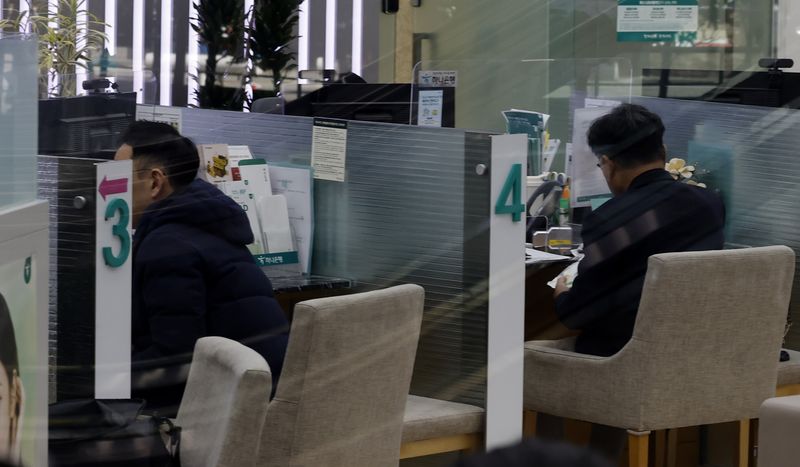
[Financial News] "Honestly, given the situation right now, I think deposits may be the better option."That is what office worker A, 41, who has recently lost interest in stocks, said. A said, "With the KOSPI Composite Index moving sideways recently, people in our group chat have been talking less about stocks. A friend even shared information about a high-interest special promotional savings product instead of stocks the other day." A added, "I did not sign up because installment savings still feel like a loss when inflation is taken into account, but I could sense that everyone had grown tired of stocks."
As Deposit Rates Rise and Stocks Stagnate, Is a 'Reverse Money Move' Coming?
As the KOSPI Composite Index has moved sideways around the 7,000 level, retail investors have begun weighing deposits and installment savings against stocks. During the bull market, the prevailing view was that "deposits and installment savings are hopeless, and stocks are the only answer." But after extreme KOSPI volatility triggered a sharp market decline, the continued sideways movement has drawn some investors toward stability.
The Bank of Korea (BOK) raised its benchmark interest rate to 3.0% on the 27th of last month, pushing up rates on deposit and installment savings products offered by commercial banks. On the 10th, Woori Investment Securities introduced a one-year (365-day) fixed-term deposit with an annual interest rate of 3.95% for individuals before tax. Customers who subscribed through a non-face-to-face channel would receive an additional 0.10 percentage point preferential rate, bringing the maximum annual rate to 4.05%. Deposit products offering rates in the 4% range have thus emerged. High-interest special promotional installment savings products are also flooding the market, offering base rates of 2% to 3% annually plus preferential rates based on transaction records. One product, KB Card Sswidam Savings, offers a maximum annual rate of 12%.
Against this backdrop, bank time-deposit balances, which had plunged early in the year, rose sharply in July and August. Last month, the balance of time deposits at the five major commercial banks increased by nearly 20.3 trillion won in a single month, surpassing 1,000 trillion won.
By contrast, retail investors have been pulling money from the stock market. According to the Korea Exchange (KRX) on the 11th, retail investors recorded net sales of 14.707 trillion won in KOSPI stocks over the eight trading days since the beginning of this month. Securities deposits and trading value have also fallen to their lowest levels of the year. Investor deposits recovered to 103 trillion won on the 9th, when the KOSPI Composite Index regained the 7,000 level, but the monthly average has remained below 100 trillion won.
Considering Real Returns... Are Deposits and Savings Really a Loss?
The core argument that deposits are a losing proposition centers on "real returns." At an annual interest rate of 3.85%, the actual after-tax rate is only about 3.26% after deducting the 15.4% tax on interest income. Once inflation is taken into account, some argue that the real return is effectively only about 0.2% to 0.4% annually.
However, voices are gradually growing that question whether holding stocks is the right choice when no one knows when the KOSPI Composite Index will rise. With the prolonged conflict in the Middle East driving oil prices and interest rates higher at the same time, and macroeconomic conditions deteriorating, deposits and installment savings with no risk of loss could become a more attractive option as safe-haven assets.
Ryujin Lee, a researcher at KB Securities, forecast, "For now, rather than a large-scale withdrawal of existing investment funds, we expect the inflow of new funds through deposit withdrawals and leverage to gradually moderate." Lee added, "Although household time-deposit balances only turned upward in August, we believe the increase in household deposits could strengthen somewhat from then on. Ultimately, as the effects of monetary tightening are reflected in households' money-move decisions, the pace of household fund inflows into the stock market could also slow compared with before."
[email protected] Hee-sun Kim Reporter