‘30%–40% Rule’ Emerges as a Hurdle in JTBC Sale, Complicating Rehabilitation M&A Calculations [fnMarketWatch]
- Input
- 2026-09-14 15:35:50
- Updated
- 2026-09-14 15:35:50
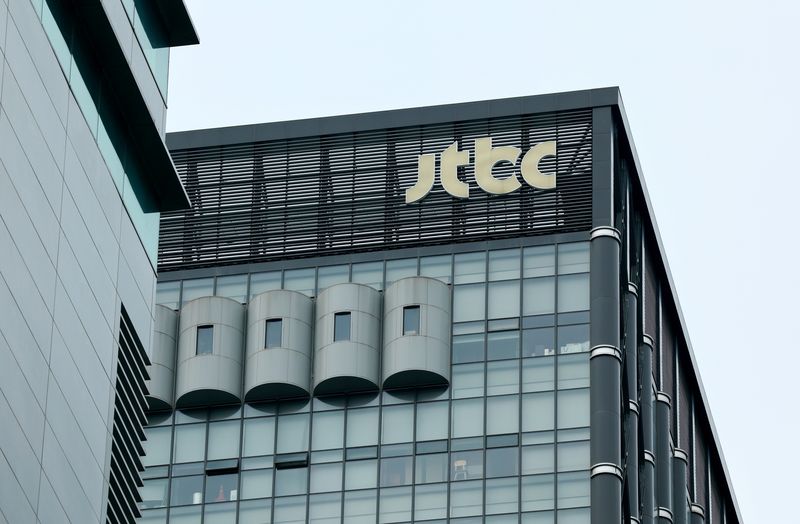
[Financial News] The sale of JTBC, a general programming channel that has entered corporate rehabilitation proceedings, is facing circumstances in which the standard formula for acquiring a company under rehabilitation cannot be applied as is. Even if a new investor injects substantial funds to repay rehabilitation claims and normalize management, it must also comply with the shareholding restrictions under the Broadcasting Act that apply to general programming channels. How to resolve the mismatch between the required investment and the equity stake that can be acquired has emerged as a key variable in designing the transaction structure.■The rehabilitation M&A formula and ‘ownership restrictions on general programming channels’According to investment banking (IB) and rehabilitation industry sources on the 11th, the Seoul Bankruptcy Court ended JTBC’s autonomous restructuring support (ARS) proceedings on the 28th of last month and decided to commence rehabilitation proceedings. JTBC also officially announced that day its plan to normalize management through an expedited sale. The deadline for submitting a rehabilitation plan is January 29 next year.
The rehabilitation industry views JTBC’s viability as a going concern and the question of whether its current controlling shareholder structure will remain as separate issues. Even if its going-concern value exceeds its liquidation value, the company can remain in operation by finding a new owner through M&A. Sources believe JTBC is likely to pursue a sale through “pre-approval M&A,” in which it finds a new acquirer before the rehabilitation plan is approved. In a typical pre-approval M&A involving a company under rehabilitation, existing shareholders’ holdings may be reduced through a capital reduction, followed by a third-party allotment of paid-in capital increase to a new investor. The new investor injects funds to repay rehabilitation claims and normalize operations, securing management control in return.
JTBC must also take into account the ownership restrictions under the Broadcasting Act that apply to general programming channels. Under the current Broadcasting Act, shares in a general programming channel operator may not, in principle, be owned in excess of 40% when holdings by related parties are combined. A 30% cap applies to large companies and their affiliates, corporations operating daily newspapers or news agencies, and similar entities.
A rehabilitation industry official said, “In a typical rehabilitation M&A, an investor can inject substantial funds and structure the deal to acquire an equivalent equity stake. JTBC must also comply with the Broadcasting Act’s shareholding restrictions, so it is important to determine how to bridge the gap between the required investment and the equity stake that can be acquired.”■“The money is needed, but the equity stake is restricted”...structuring is keyAccordingly, the key issue in the JTBC sale is expected to go beyond simply asking “who will offer how much.” It will be how to secure an investor’s management control and investment incentives within the limited ownership structure.
In rehabilitation proceedings, new funding can generally be combined with adjustments to the financial structure, including debt-to-equity conversions and reductions of existing rehabilitation claims. Once the amount of debt becomes clearer through the filing and examination of claims after the proceedings begin, the amount of new funding required and the M&A structure for JTBC are also expected to take shape more clearly.
The participation of multiple investors in the form of a consortium could also be an option for the transaction structure. However, because the holdings of investors deemed related parties are aggregated, the ownership limit cannot be circumvented by formally distributing shares among affiliates. Even when multiple independent investors participate, the ownership restrictions under the Broadcasting Act and related licensing and approval issues must be reviewed together, based on the actual investor composition, shareholder agreements, and the manner in which management control is exercised.
The investor’s valuation of the company is another variable. If an investor emerges that places a high strategic value on the broadcasting channel and its news and entertainment production capabilities, sports broadcasting rights, and content distribution network, a gap could arise between the company valuation used in the rehabilitation proceedings and the transaction price formed in the actual M&A market.
Ultimately, the success of JTBC’s M&A will depend on whether a transaction structure can be created that complies with the Broadcasting Act’s ownership restrictions, secures the new funding needed for rehabilitation, and at the same time allows the investor to exercise stable management control.[email protected] Hyun-jung Kim Reporter