"Has the Gangnam No-Loss Rule Ended?" As Prices Plunge by 900 Million Won, 'This Area' Soars 13%
- Input
- 2026-09-11 11:26:46
- Updated
- 2026-09-11 11:26:46
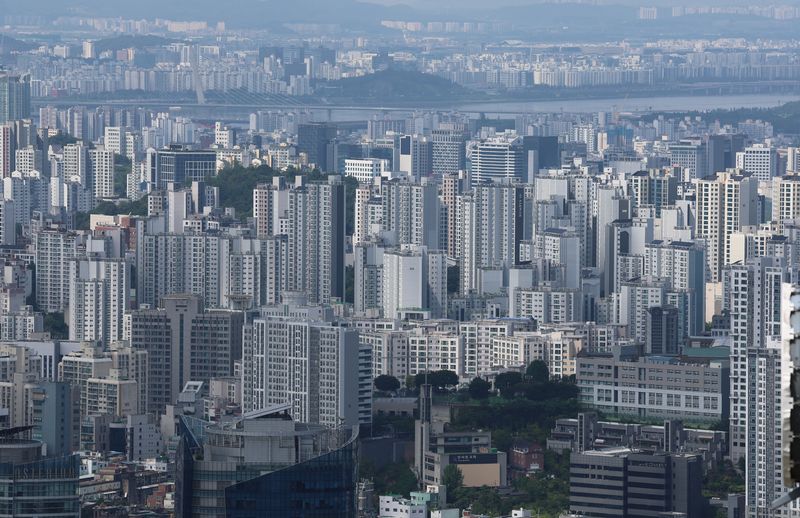
[Financial News] The three Gangnam-area districts—Gangnam, Seocho, and Songpa—symbols of Seoul’s high-priced apartment market, have all turned downward after being hit by uncertainty over tax reforms and tighter lending regulations. By contrast, Seoul’s outer and mid- to lower-priced areas, including Gangbuk, Seongbuk, and Dobong, are seeing end-user buyers concentrate there because of their relatively lower financing burden. Some have posted double-digit gains, highlighting a clear polarization and rotation in Seoul’s housing market.
Even Songpa Turns Down 0.02%... The Three Gangnam-Area Districts Enter a Weak Market
According to the weekly apartment price trends for the first week of September, as of September 7, released by the Korea Real Estate Board (KREB) on the 11th, apartment transaction prices in Songpa District fell 0.02% from the previous week. This marked the first decline in 21 weeks, since the third week of April. Following Gangnam-gu (-0.35%) and Seocho District (-0.30%), which had already posted declines for five consecutive weeks, Songpa District also turned lower, bringing all three Gangnam-area districts into a weak market.
Major redevelopment complexes in the Gangnam area have seen a series of transactions at prices several hundred million won below their peaks. The 161.9-square-meter unit at Hanyang 3-cha in Apgujeong-dong, Gangnam-gu, traded for 6.85 billion won on the 20th of last month, down 900 million won from its record high of 7.75 billion won in January. A 111.38-square-meter unit at nearby Sinhyeondae also changed hands for 6.65 billion won, 850 million won below its peak. Gangnam-gu’s cumulative gain this year has been just 1.08%, far below the 10.24% recorded during the same period last year.
The downturn in the Gangnam area is attributed to concerns over the tax burden on high-priced homes and single-home owners who do not reside in their properties under the August 3 tax reform plan, combined with limits on mortgage loans, including a maximum of 200 million won for homes priced above 2.5 billion won. Tax-saving bargain listings from elderly long-term owners have entered the market, while homeowners in Songpa seeking to move to the Han River belt, including Apgujeong and Banpo-dong, have lowered their asking prices, leading to a series of declining transactions.
Seongbuk Soars 13%, Guro 11%... Seoul’s Affordable Outer Areas Rise Sharply
By contrast, mid- to lower-priced areas relatively unaffected by the regulations are showing the opposite trend.
Seongbuk District, a mid-tier outer area of Seoul, recorded a cumulative apartment price gain of 13.52% this year, ranking first among Seoul’s 25 autonomous districts. That was nearly eight times the 1.73% increase recorded during the same period last year. Guro District (11.06%), Gangseo District (11.01%), and Seodaemun District (10.93%) also posted double-digit cumulative gains. On a weekly basis, Gangbuk District (0.46%), Dobong District (0.43%), and Seodaemun District (0.43%) led price growth, significantly exceeding Seoul’s overall average of 0.20%.
This spillover effect is attributed to renters without homes, exhausted by the jeonse shortage, turning to purchases of mid- to lower-priced homes. Another factor is that financing the purchase of apartments priced at 1 billion won or less is relatively easier.
Nam Hyuk-woo, a researcher at Woori Bank’s real estate research institute, said, "Tax reforms that strengthen owner-occupancy requirements, including a reduction in the long-term holding deduction rate, are putting strong pressure on owners of high-priced homes to sell. Meanwhile, financial support targeting people without homes, including expanded management of aggregate lending and eased policy-backed loans, has been announced. As a result, the rotating market in which major areas of Seoul’s outer districts and southern Gyeonggi Province priced at 1 billion won or less drive the market is likely to continue for the time being."
[email protected] Moon Young-jin Reporter