KAIST-Lotte Complete the LOTTE x KAIST R&D CENTER, Expanding Research Cooperation for a Sustainable Future
- Input
- 2026-09-13 09:00:00
- Updated
- 2026-09-13 09:00:00
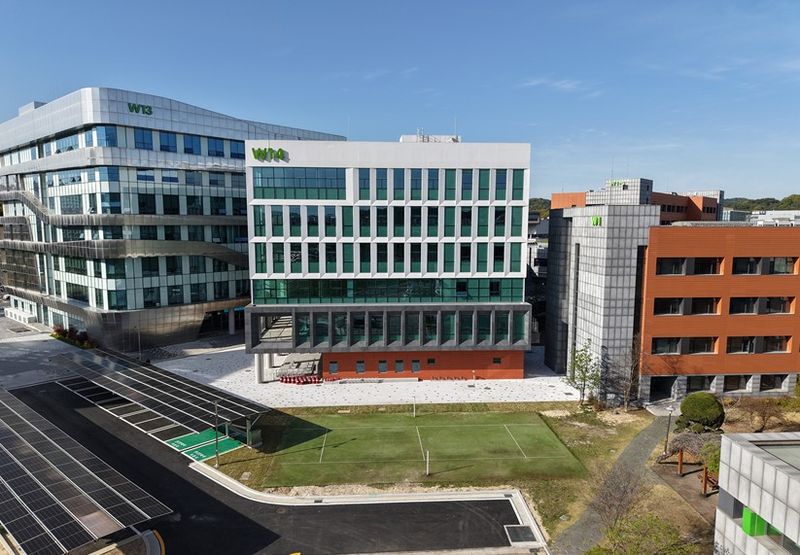
[Financial News] A new industry-academia cooperation hub has opened at the Korea Advanced Institute of Science and Technology (KAIST), where universities and companies will work together from research and development through commercialization to address sustainability challenges facing humanity, including climate change and carbon neutrality.
KAIST announced on the 13th that it held a completion ceremony for the LOTTE x KAIST R&D CENTER on the 11th at its main campus in Daejeon. Shin Dong-bin, chairman of Lotte Group, Lotte Group officials, senior KAIST administrators, and professors and officials from the Department of Chemical and Biomolecular Engineering attended the event.
The LOTTE x KAIST R&D CENTER was established with a 10 billion won construction donation from Lotte Group, along with funds raised by KAIST’s Department of Chemical and Biomolecular Engineering. It will operate as an industry-academia research hub covering the entire R&D process, from basic and fundamental research on future technologies to experimentation, prototype production, and technology commercialization.
The center connects the university’s research capabilities with the company’s industrial and commercialization experience in a single space, presenting a new model of “transboundary collaboration” that goes beyond the conventional boundaries of industry-academia cooperation. The plan is to establish a cooperative system in which universities and companies jointly identify and research future challenges, then connect the results to industry and commercialization.
The center has one basement level and six above-ground floors, with a total floor area of approximately 4,298 square meters, or about 1,300 pyeong. Open research areas and collaboration spaces have been arranged organically so that researchers can freely interact and conduct joint research across disciplinary and organizational boundaries.
The center will conduct research in three major areas with the goal of creating a sustainable future society. The first is “Bio-Sustainability.” Researchers will develop sustainable biotechnologies based on systems metabolic engineering that can replace conventional fossil resources, including biofuels and bioplastics. The second is “Carbon-Neutral Energy, Materials and Processes,” which focuses on developing core technologies in energy, materials, and processes needed to realize a carbon-neutral society, including green hydrogen, renewable energy, and batteries. The final area is “Advanced Food and Healthcare.” Researchers will explore new technological solutions for a healthy and sustainable future society by studying advanced technologies in future food and healthcare.
The center includes collaborative research spaces jointly used by Lotte and KAIST researchers, as well as Shin Dong-bin Hall for communication and interaction among researchers. KAIST plans to expand an open industry-academia cooperation ecosystem centered on the facility, in which researchers and companies work together from identifying challenges through R&D, demonstration, and commercialization.
Shin Dong-bin, chairman of Lotte Group, said, "I hope the R&D center will establish itself as a hub for industry-academia cooperation that creates greater possibilities beyond the boundaries between schools and companies." Choongsik Bae, president of KAIST, said, "By combining KAIST’s research capabilities with Lotte’s industrial and commercialization capabilities, we will connect ideas and technologies from laboratories to real value in industrial settings and work together to create new growth engines for South Korea and solutions for a sustainable future."
[email protected] Yeon Ji-an Reporter