"Wegovy and Mounjaro Clearly Work, So Why Is It So Difficult to Get a Prescription?" The Prescribing Environment for GLP-1 Obesity Medications Under Scrutiny
- Input
- 2026-09-11 09:31:17
- Updated
- 2026-09-11 09:31:17
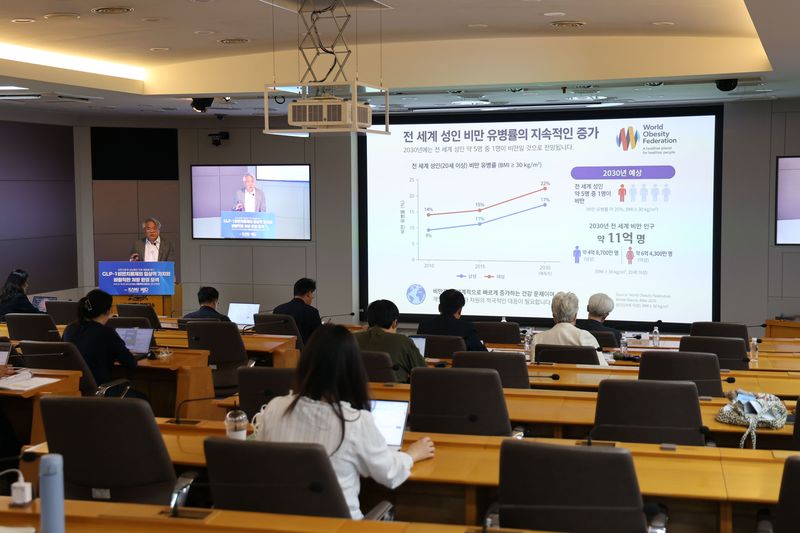
[Financial News] Wegovy and Mounjaro not only help patients lose weight but also reduce the risk of cardiovascular disease. Yet patients in South Korea are not receiving proper prescriptions.
GLP-1 obesity medications offer broad benefits, including improvements in metabolic risk factors in addition to weight loss, and are changing the treatment paradigm for metabolic diseases. However, experts said South Korea has yet to establish a prescribing environment that adequately supports their use as disease treatments or ensures patient access. They cited limitations in safety monitoring because the drugs are not covered by national health insurance, socioeconomic disparities in access, and restrictive reimbursement criteria.
Experts also suggested that establishing a management system at the prescription stage should take priority, as current regulations alone are not sufficiently effective in preventing misuse for purposes unrelated to treatment. Drawing on examples from countries with public coverage, they proposed a phased, South Korean approach that would include prescription support linked to the Drug Utilization Review service, limited coverage for high-need groups, and support for verified telemedicine and hybrid care.
The Korean Association of Medical and Bio Journalists and the Korean Society for the Study of Obesity held a symposium titled "Exploring the Clinical Value of GLP-1 Obesity Medications and a Desirable Prescribing Environment" on the 10th at Lee Kun-hee Hall at the Seoul National University Cancer Research Institute in Seoul. The event highlighted the treatment effects of GLP-1 obesity medications and discussed issues surrounding their prescription in South Korea.
The first presenter, Park Jung-hwan, a professor of endocrinology and metabolism at Hanyang University Hospital, spoke on "The Clinical Value of GLP-1 Obesity Medications—Changes in the Obesity Treatment Paradigm." Park explained that semaglutide, the active ingredient in the obesity and diabetes drug Wegovy, and tirzepatide, the active ingredient in Mounjaro, had demonstrated significant effects not only on weight loss but also on reducing the risk of cardiovascular disease in large-scale clinical studies.
According to the presentations, the FLOW study of 3,533 adults with type 2 diabetes and chronic kidney disease found that patients who received semaglutide 1.0 mg had a 24% lower risk of major kidney disease events than those who received a placebo. Their risk of death from cardiovascular causes was also 29% lower. In the STEP TEENS trial, in which adolescents aged 12 to 17 with obesity received semaglutide for 68 weeks, 73% of patients lost at least 5% of their body weight. Their body mass index (BMI) and waist circumference decreased, while risk factors for cardiovascular and metabolic diseases, including glycated hemoglobin and blood lipid levels, also improved. Park added that diabetes treatment is likewise moving toward an integrated approach that considers the kidney- and heart-protective effects of semaglutide (Ozempic).
However, Park pointed out, "Most GLP-1 obesity medications are used without insurance coverage, which limits safety monitoring based on real-world data, and there is also a lack of structural approaches to socioeconomic factors such as low educational attainment and income." He added, "Even GLP-1 diabetes medications containing the same active ingredients have limited reimbursement criteria, so the reality is that they are not being used sufficiently in patient care." Park also stressed the importance of providing balanced information, saying, "Despite the various benefits of GLP-1 obesity medications, media reports tend to focus only on some side effects. If exaggerated reports about side effects increase unnecessary anxiety, patients may miss opportunities to receive appropriate treatment."
Lee Sang-yeol, a professor of endocrinology and metabolism at Kyung Hee University Hospital, explored ways to apply overseas cases in South Korea under the theme "The Effectiveness of Current Regulatory Discussions and Desirable Alternatives." Lee said the number of completed DUR checks for GLP-1 obesity medications in South Korea rose approximately 15.7-fold, from 21,457 in December 2024 to 337,026 in May 2026. However, he pointed out that the current data structure does not make it possible to determine "who received the prescription and on what clinical grounds."
Lee emphasized that preventing the misuse and abuse of GLP-1 obesity medications requires responses tailored to different types of misuse, including prescriptions that do not meet approved indications, prescriptions for groups vulnerable to safety risks, prescriptions issued with insufficient medical information, and prescriptions issued without medical consultation or through illegal distribution. He noted that regulations focused solely on controlling distribution and care channels have limitations in determining whether a patient has clinical obesity or meets the approved indications. Rather than simply tightening regulations, he said, priority should be given to establishing a management system that records and evaluates clinical appropriateness at the prescription stage.
Drawing on the eligibility criteria, prescribing conditions, treatment-response reassessments, and data-management practices of countries such as the United Kingdom, France, and the United States, Lee proposed gradually establishing a management system in South Korea based on prescribing evidence and data. The system would include prescription support linked to DUR, with records and alerts based on BMI, comorbidities, and age; phased insurance coverage focused on high-need groups; and support for verified telemedicine and hybrid care. Lee emphasized, "The solution to the misuse of obesity medications lies not in the strength of regulation but in how management is designed." He added, "Going forward, we should shift from regulations that 'block' to regulations that 'manage,' and evaluate them based on whether patients are receiving safe and sustainable treatment."
The subsequent panel discussion included Shin Hyun-young, a professor of family medicine at Seoul St. Mary's Hospital, The Catholic University of Korea; Cho Eun-young, president of the Korean YWCA Federation; Choi Ji-hyun, a reporter for The Hankyoreh; and Jung Ho, a director of the Pharmaceutical Management Division at the Ministry of Food and Drug Safety. They discussed ways to create an appropriate prescribing environment for obesity medications.
Shin said, "Relying solely on obesity medications to manage weight can be a shortcut to failure. It is important to change one's lifestyle with the help of experts and receive appropriate medication only when it is truly necessary." She added, "We need to improve society's perception of lookism and further promote campaigns involving the government, experts, and the public to support healthy weight management."
Cho emphasized, "Before blaming consumers for the misuse of obesity medications, we must first create a healthcare environment in which they can make informed choices." She added, "Regulatory performance should be assessed not by how much prescribing has declined, but by how well treatment is guaranteed for patients who need it, while taking both safety and equity of access into account. Ensuring that patients are not excluded from treatment because of their economic or geographic circumstances is the most important task in protecting the public's right to health."
[email protected] Medical Correspondent Jung Myung-jin Reporter