Hyundai Motor Group Vice Chair Jang Jae-hoon: “The Next 10 Years Will Determine the Scale of the Hydrogen Industry... Predictable Policies and Investment Must Move Forward Together”
- Input
- 2026-09-10 20:22:56
- Updated
- 2026-09-10 20:22:56
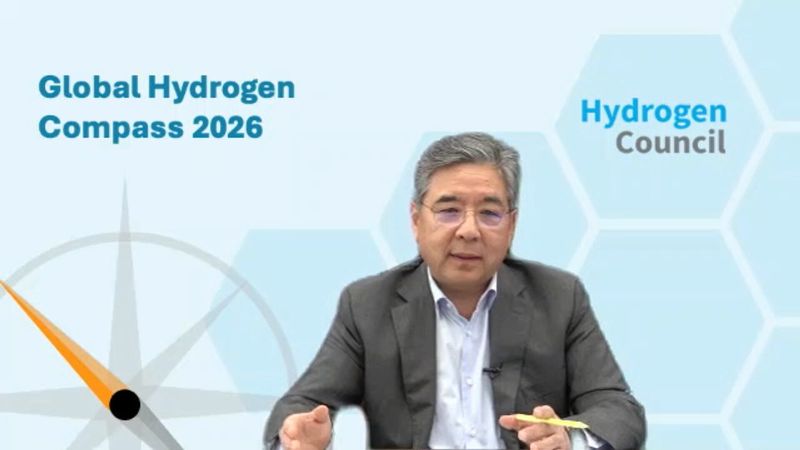
On the 10th, Jang attended the Global Hydrogen Compass 2026 online event hosted by the Hydrogen Council and made the remarks. The Global Hydrogen Compass is a report on global hydrogen industry trends published by the Hydrogen Council. It analyzes hydrogen projects, investment, and policies worldwide, and presents future challenges based on insights from industry leaders.
Jang assessed, “Geopolitical tensions and rising electricity demand driven by artificial intelligence (AI) are increasing the importance of energy security, resilience, and industrial competitiveness. Accordingly, hydrogen’s strategic role is also expanding.”
He emphasized, “Hydrogen can go beyond serving as a means of decarbonization and connect the power, industrial, mobility, and digital infrastructure sectors, contributing to stronger energy security and industrial competitiveness.” He added, “Long-term, consistent policies can encourage corporate investment, infrastructure expansion, and demand creation, leading to the market’s self-sustaining growth.”
Jang also said that the competitiveness of hydrogen ecosystems is diverging depending on how individual countries respond through policy. He suggested, “Competitive hydrogen ecosystems are taking root in countries that adopt hydrogen solutions suited to their circumstances and support them through policy.” He added, “As the next 10 years will determine whether the hydrogen industry achieves full-scale growth, clear policy signals supporting demand creation and a sustainable institutional environment are needed.”
According to the report, cumulative investment in clean hydrogen projects that have reached a final investment decision (FID) exceeds $130 billion, while more than 570 projects have passed the FID stage. Operating clean hydrogen production capacity stands at approximately 1.7 million tons per year, nearly double the previous year’s level.
The report estimates potential clean hydrogen demand that could be secured by 2030 at 11 million tons. Of this amount, approximately 6 million tons has been confirmed under current policies. The report analyzed that securing the remaining 5 million tons will require new policies and consistent implementation of existing ones.
Citing domestic hydrogen clusters in Ulsan and Cheongju as examples, Jang said, “The focus of the discussion has now shifted from whether hydrogen is effective to how quickly each country can build a hydrogen ecosystem.” He added, “We must identify the areas where hydrogen can create the greatest value, build an ecosystem around them, and demonstrate its effectiveness.”
He continued, “The hydrogen industry must grow beyond individual projects into an ecosystem in which production, demand, infrastructure, and policy are organically connected.” His remarks reflected the view that when policy supports industry investment and scaling efforts, they can lead to economies of scale and the creation of new markets.
Meanwhile, Hyundai Motor Group plans to expand its hydrogen applications into power generation, industry, and water electrolysis based on its accumulated experience in hydrogen mobility. It will also participate in building a hydrogen ecosystem with global partners.
[email protected] Kim Dong-chan Reporter