[Editorial] Rising Inflation and Growing Uncertainty Call for Proactive Action
- Input
- 2026-09-10 18:08:29
- Updated
- 2026-09-10 18:08:29
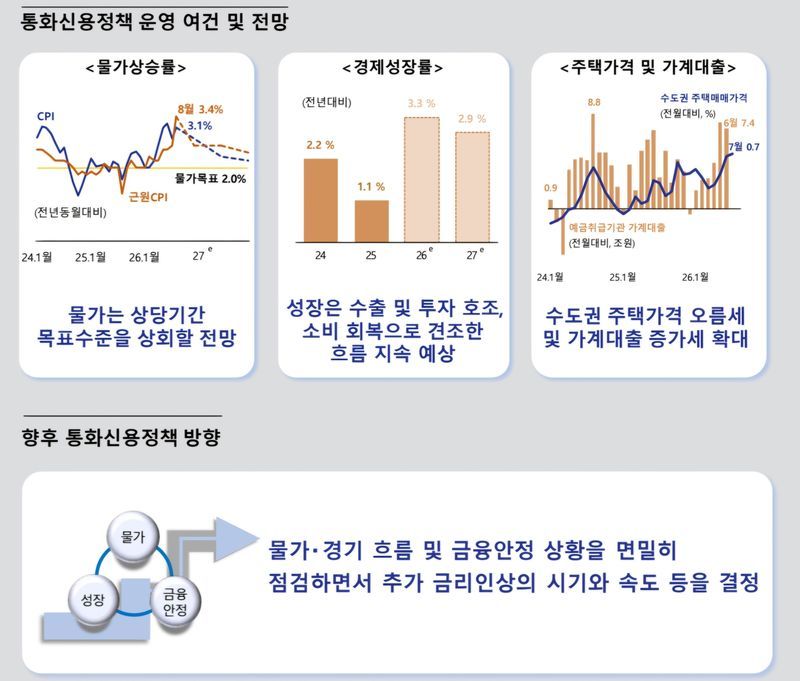
In fact, inflation trends are becoming increasingly troubling. The consumer inflation rate stood at 3.1% last month, well above the Bank of Korea's target of 2.0%. Core inflation, which reflects underlying trends, also rose to the mid-3% range. The inflation rate that policymakers had sought to keep in the 2% range is moving beyond their control. More concerning are the factors that could drive inflation higher. As military tensions in the Middle East rose again, international oil prices surpassed $100 per barrel.
If the fallout from the war in the Middle East persists, import prices and raw-material costs could rise together, putting pressure on prices across the Korean economy. Even grocery prices ahead of Chuseok are already showing troubling signs. As the holiday approaches, supply-and-demand imbalances could further increase the burden of prices felt by ordinary households.
There are other factors that could put upward pressure on inflation. In its Monetary Policy Report released on the 10th, the BOK pointed to these risks. It said renewed tensions in the Middle East would add to inflationary pressure and that price increases above the target level would continue for a considerable period. Rising oil prices and surging raw-material costs could increase companies' cost burdens. If these factors affect inflation, they could determine the timing and pace of additional rate hikes.
The recently plunging exchange rate has also been identified as a factor that could affect inflation both directly and indirectly. The BOK also noted that exchange-rate volatility could increase depending on changes in the Federal Reserve System's monetary-policy stance. The won-dollar exchange rate, which had been expected to remain entrenched in the 1,500-won range, unexpectedly fell sharply to the 1,330-won range. This can be interpreted as the result of dollar selling by companies benefiting from the export boom.
The problem is that the exchange-rate trend could change at any time. Exporters are selling the dollars they have been holding, but that trend cannot continue indefinitely. If the exchange rate rises sharply again, higher import prices for raw materials and energy would directly fuel greater upward pressure on inflation. Exchange-rate stability matters for more than inflation alone. While some economic actors may benefit from sharp fluctuations, others may suffer losses. Some companies could suddenly incur foreign-exchange losses and face unexpected funding shortages. Small and medium-sized enterprises are particularly vulnerable to exchange-rate volatility.
The Korean economy currently appears to be in good shape, with overall growth rates running high. However, the three variables of inflation, interest rates, and exchange rates could become intertwined and push the economy into a swamp of uncertainty. This is a time for a carefully calibrated policy mix so that measures aimed at stabilizing one area do not heighten instability in another.
The government and the BOK must make price stability their top priority, carefully monitor domestic and external risk factors—including the possibility of renewed exchange-rate volatility—and manage them proactively to prevent market anxiety from spreading. In addition to addressing inflation through interest rates, they should strengthen monitoring and management of factors distorting prices in the market.