[Editorial] What Seoul Needs to Become One of the World’s Top Three Cities
- Input
- 2026-09-10 18:08:25
- Updated
- 2026-09-10 18:08:25
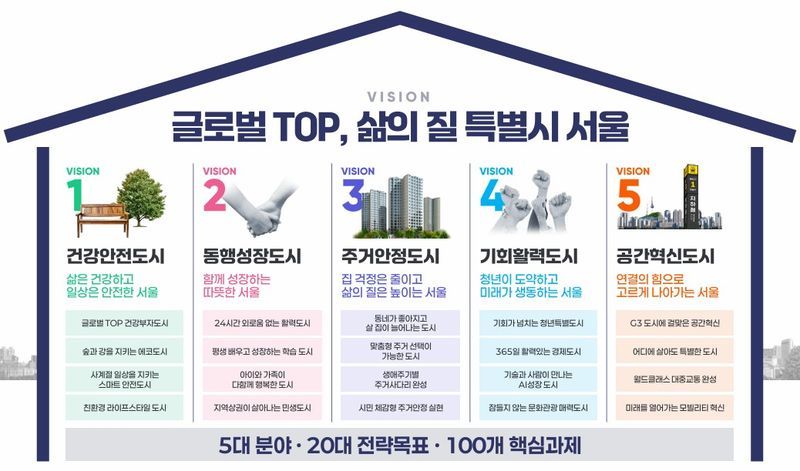
With more than 600 years of history and a population approaching 10 million, Seoul has already grown into a global city that stands alongside the world’s leading cities. Developing the capital and representative city of the Republic of Korea into an even more livable and beautiful place is not merely the responsibility of the Seoul Metropolitan Government; it is also a national task.
As a city rich in cultural assets and historic sites, as well as natural assets such as the Hangang River and Bukhansan, Seoul is valued even more highly by foreign visitors. However, because much of the city was destroyed during the Korean War and its population then grew rapidly, Seoul was built hastily over a short period. It therefore has no shortage of areas that need improvement if it is to become a world-class city.
For Seoul to become one of the world’s top three cities as the face of the Republic of Korea, it must first make the living environment more pleasant, as the Seoul Metropolitan Government has stated. Transportation conditions should be improved so that every corner of the city is easily accessible, and large and small parks should be created throughout Seoul so that people feel like walking and running wherever they go.
In that regard, Yongsan Park must be preserved at all costs, and every effort should be made to secure land for parks. In particular, the only way to create sufficient ground-level space in central areas is to build taller structures. Seoul should look to global cities that have increased their capacity to accommodate residents by constructing numerous skyscrapers while maintaining beautiful skylines.
Even as the population declines, the number of households is increasing, making the housing shortage more severe. With little land left for new housing in Seoul, there is no alternative to increasing floor area ratios and promoting high-rise development. The latest announcement also includes measures to increase housing supply, and these challenges must be carefully considered. Redevelopment is necessary, but the entire city cannot simply be covered with apartment buildings. Maintaining low-rise residential neighborhoods while allowing high-rise apartments in designated areas would preserve the city’s visual appeal.
As an international city visited by tens of millions of people from around the world each year, Seoul also has many areas that need improvement. Seoul is both Korea’s gateway and the country’s leading tourist city. It must provide sufficient infrastructure so that foreign visitors can eat, enjoy themselves, and travel without inconvenience. Signs, including transportation information boards, should also be redesigned to meet global standards befitting a global city.
Above all, Seoul must work to become an environmentally friendly city. Few cities in the world possess natural surroundings comparable to Seoul’s. While preserving the environment as much as possible, the city should create spaces where residents and foreign visitors staying temporarily can rest in nature. Seoul will qualify as one of the world’s top three cities only when residents and foreign tourists can come together to enjoy activities and leisure. There is no need to hesitate to adopt the operating practices of leading cities in Europe, Japan, and elsewhere.