"We Will Do Our Best to Convert Jeju into a Disease-Free Area"... Korea Forest Service Mobilizes All-Out Efforts to Control Pine Wilt Disease
- Input
- 2026-09-10 17:01:11
- Updated
- 2026-09-10 17:01:11
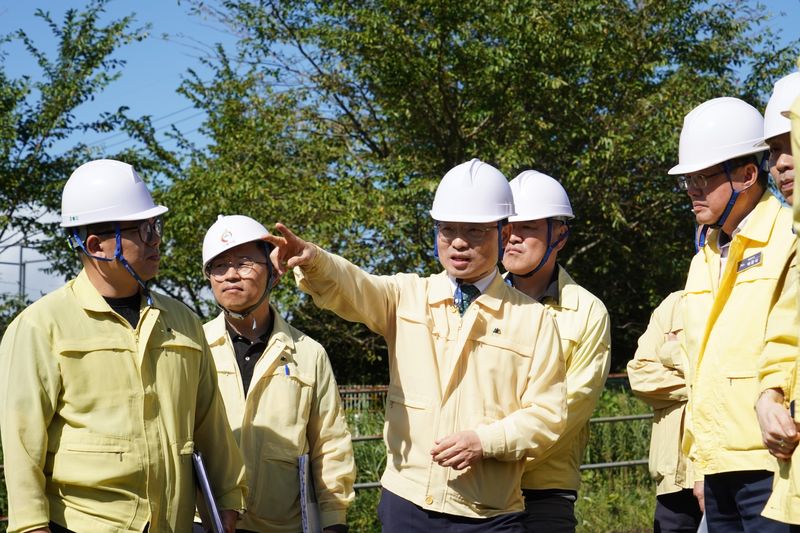
Park toured the local control project site and received a briefing from officials. Participants exchanged views on tailored control measures that take Jeju’s distinctive climate and terrain into account, as well as multifaceted containment strategies to prevent the disease from spreading to nearby areas.
Park assessed, "In 2014, Jeju had as many as 540,000 affected trees, but after mobilizing the full capabilities of relevant agencies, we have achieved meaningful results, reducing the number to between 20,000 and 30,000 today." He added, "We must not become complacent about our achievements. Please once again bring all available resources together for surveillance and control activities so that we can achieve our ultimate goal of converting Jeju into a pine-wilt-disease-free area."
Pine wilt disease is caused by nematodes measuring about 1 millimeter in size. They live on insect vectors, such as Japanese pine sawyers and Monochamus saltuarius, and enter pine trees when the insects feed on new pine shoots. The disease is fatal, as infected pine trees can dry out and die completely after their channels for transporting water and nutrients become blocked. Consequently, even a single infected tree left untreated can rapidly spread the disease throughout surrounding forests. Intensive surveillance and timely control work in autumn and winter, when vector activity slows, are therefore considered crucial to success.
[email protected] Kim Won-jun Reporter