KEMCO’s Management-Control Dispute Spills Into the U.S., Raising Questions Over Continuity of Critical-Minerals Investments
- Input
- 2026-09-10 19:59:03
- Updated
- 2026-09-10 19:59:03
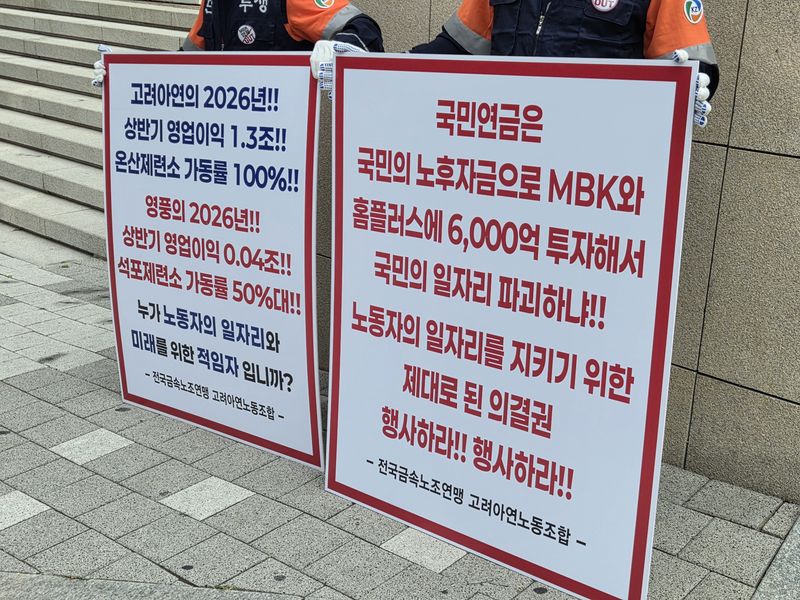
[Financial News] As KEMCO expands into critical minerals as well as semiconductor and defense-industry materials, its two-year management-control dispute has emerged as a variable affecting future investments and business initiatives. Because critical-minerals supply-chain projects require large-scale, long-term investment and involve multiple stakeholders, including the government and customers, prolonged management uncertainty could undermine business continuity, observers say.
According to industry sources on the 10th, the management-control dispute between KEMCO and Youngpoong and MBK Partners has continued since September 2024 through legal battles over general meetings of shareholders, voting rights, and the issuance of new shares. KEMCO estimates that around 30 lawsuits and injunction applications have been filed in connection with the dispute.
The dispute has also expanded to Project Crucible, an integrated smelter in Tennessee that KEMCO is pursuing with the U.S. government and others. In December last year, MBK Partners and Youngpoong opposed KEMCO’s issuance of new shares to a joint venture for Project Crucible through a third-party allotment and applied for an injunction to block the issuance. That same month, the Seoul Central District Court dismissed the application, finding that there was a business need to pursue the project, strategic partnerships, and financing.
The dispute later spread to the United States. MBK Partners hired three U.S. lobbying firms to conduct government-relations activities, while MBK Partners and Youngpoong hosted a reception for local figures in Nashville, Tennessee, on July 9. KEMCO filed a complaint in August, alleging that the organizers used the project’s name and signage without consulting the company, misleading attendees about who was behind the event, and accusing them of violating the Unfair Competition Prevention Act and obstructing business. MBK Partners and Youngpoong maintain that, as the largest shareholders, their outreach to stakeholders in the United States was legitimate. Project Crucible is a long-term undertaking requiring a total investment of $7.4 billion, including financing costs. KEMCO aims to begin test operations for some processes in 2029 and bring the entire facility online in 2030. Given the involvement of multiple stakeholders, including the U.S. government, state governments, and local communities, concerns are growing that a prolonged management-control dispute could increase uncertainty in external communications and decision-making.
New businesses, including germanium and gallium production and the integrated smelter in the United States, will also take several years to progress from facility construction to commercial production. Analysts say consistency and execution in investment plans are crucial because investment spending, raw-material procurement, government support, and long-term supply contracts must be pursued continuously.
An industry official said, "As KEMCO expands from its existing smelting capabilities into materials for strategic industries such as semiconductors and defense, its prolonged management-control dispute could inadvertently become a factor that hampers growth. Because a critical-minerals supply chain cannot be built in a short period, what matters is who can continue the investments now under way in a stable and consistent manner, drawing on the technology and production base accumulated over decades."
[email protected] Kim Mi-hee Reporter