Five Tourism Zones Centered on Regional Airports Selected to Drive Growth in Regional Inbound Tourism
- Input
- 2026-09-10 16:59:28
- Updated
- 2026-09-10 16:59:28
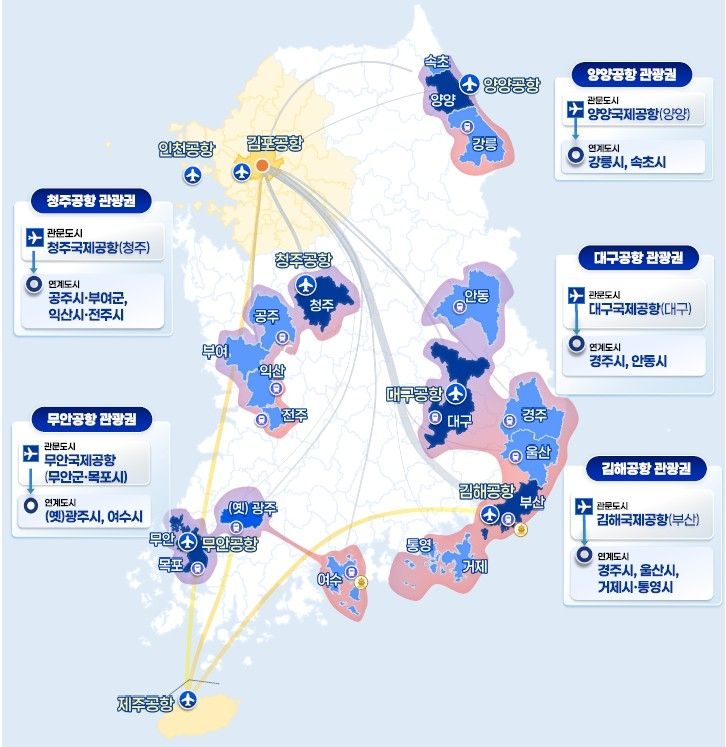
The Ministry of Culture, Sports and Tourism (MCST) announced on the 10th that it had selected five tourism zones centered on regional airports to promote inbound tourism in regions across Korea.
The five tourism zones are Gimhae International Airport (Busan–Gyeongju–Ulsan–Geoje and Tongyeong), Daegu International Airport (Daegu–Gyeongju–Andong), Cheongju International Airport (Cheongju–Gongju and Buyeo County–Iksan and Jeonju), Yangyang International Airport (Yangyang County–Gangneung–Sokcho), and Muan International Airport (Muan County and Mokpo–former Gwangju–Yeosu). The Gimhae and Daegu airport tourism zones will be jointly developed, with Gyeongju serving as the link between them.
The MCST plans to establish a regional tourism ecosystem by connecting nearby tourism cities through regional airports as gateways. The system will cover the entire visitor journey, from entry and transportation to stays and experiences. The ministry will also pursue overseas marketing for each tourism zone, attract foreign visitors through regional airports and ports, improve transportation and payment convenience, and develop specialized content.
To this end, the government plans to invest a total of 93.5 billion won, including 65.9 billion won in national funds and 27.6 billion won in local funds, based on the government's 2027 budget proposal. It will also draw up a mid- to long-term plan for 2027–2030 to develop super-regional tourism zones involving multiple local governments and connect regional airports with tourism in the Seoul metropolitan area and Jeju.
Choi Hwi-young, Minister of Culture, Sports and Tourism, said, "There are limits to ushering in an era of 30 million inbound tourists under an entry structure centered on the Seoul metropolitan area. By establishing a 'golden route' for inbound tourism centered on regional airports, we will usher in an era of 30 million arrivals and 5 million arrivals through regional airports in 2029."
[email protected] Jeong Sun-min Reporter