CWMDC Convenes Amid Trump’s Warning of ‘57 North Korean Nuclear Weapons’; ‘Biological and Chemical Threats’ Behind the Nuclear Curtain Also Require Vigilance
- Input
- 2026-09-10 16:57:41
- Updated
- 2026-09-10 16:57:41
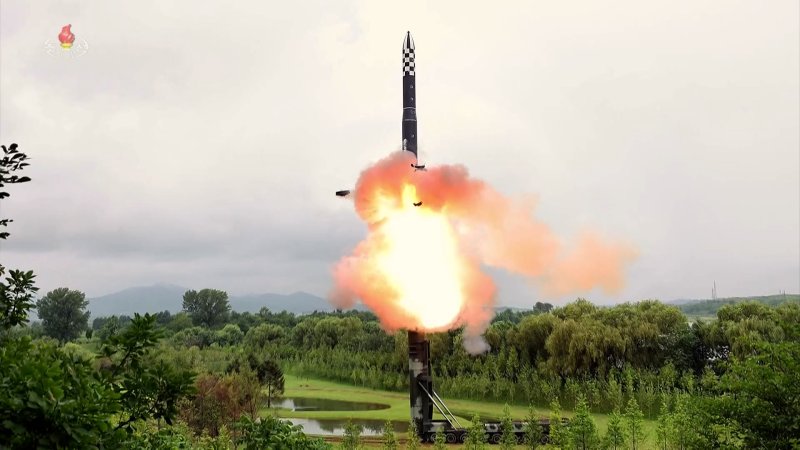
The central focus of the meeting was to establish and verify follow-up measures for bringing last year’s “Information-Sharing Arrangement on North Korean WMD” to an operational level. As various assessments of North Korea’s nuclear arsenal emerge during each U.S. administration’s transition period, President Trump’s recent reference to “57 North Korean nuclear weapons” has created political pressure for South Korean and U.S. intelligence authorities to monitor North Korea’s concealed nuclear-material production infrastructure more closely. European security think tanks have also strongly criticized North Korea’s nuclear alliance policy and declared that they will not accept its status as a nuclear-armed state. Against this backdrop, the meeting was assessed as reinforcing the threadbare but essential combined defense posture needed to close gaps in the allies’ surveillance infrastructure targeting North Korea.■ Responding to the World’s Third-Largest Chemical and Biological Weapons Threat Hidden Behind the Nuclear Curtain Through ‘Adaptive Shield’The hidden issue that deserves attention at this CWMDC is North Korea’s formidable ability to operate chemical and biological weapons, concealed behind its nuclear arsenal. North Korea is currently estimated to possess the world’s third-largest chemical weapons stockpile, after the United States and Russia. It is believed to maintain between at least 2,500 tons and as much as 5,000 tons of chemical agents, including the deadly nerve agent VX and sarin. If these weapons were loaded onto missile and long-range artillery warheads in a contingency, the entire Korean Peninsula could suffer irreversible damage.
This is why the South Korean and U.S. militaries placed cooperation in consequence management at the forefront of the meeting, focusing on responses to variant biological threats such as COVID-19 and on ensuring the alliance’s combined operational environment. The two sides agreed to strengthen their practical capabilities for responding to biological threats through the regular chemical, biological, radiological and nuclear response exercise Adaptive Shield, conducted under scenarios involving a North Korean chemical or biological provocation.
It is particularly encouraging that the Republic of Korea Armed Forces Chemical, Biological and Radiological Defense Command and the U.S. consequence-management unit, the Joint Task Force-Civil Support (JTF-CS), agreed to fully activate personnel and technical exchanges. The move reflects a firm determination to establish institutional infrastructure for removing residual contamination and minimizing damage after a North Korean ballistic-missile strike, while maintaining wartime operational functions. The overwhelming coordination system of the South Korea-U.S. alliance, aimed at completely offsetting North Korea’s asymmetric threats, has begun operating.
[email protected] Lee Jong-yoon Reporter