Minister Nominee Lee So-young: "Need to Adjust the Pace of Strengthening KOSDAQ Delisting Criteria"
- Input
- 2026-09-10 16:10:11
- Updated
- 2026-09-10 16:10:11
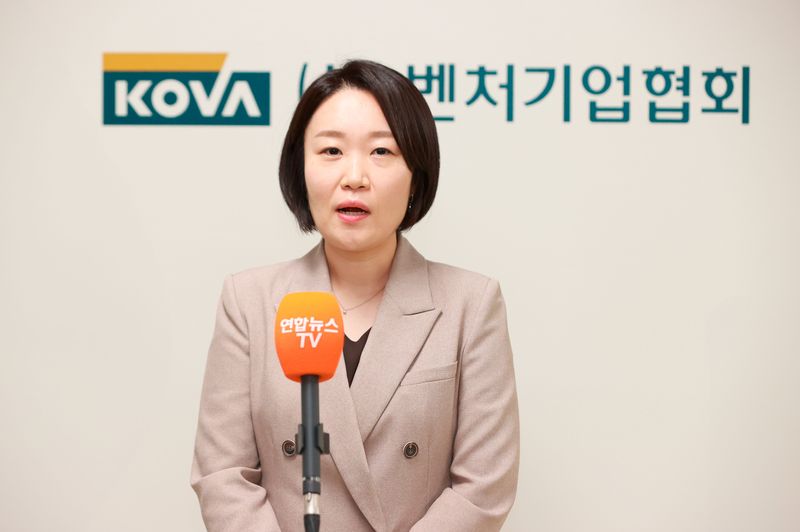
Lee So-young, the nominee for Minister of SMEs and Startups, pointed out that the pace of the financial authorities' push to strengthen delisting criteria for the KOSDAQ market and introduce a "promotion and demotion system" needs to be adjusted. She also expressed her intention to actively reflect the Ministry of SMEs and Startups' voice in capital market policies that have been driven by the financial authorities.
After holding a tea meeting with startup and venture-related associations and organizations at KOVA on the morning of the 10th, the nominee met with reporters and stated, "If I become the minister, I will be a minister who speaks out on the KOSDAQ market and a Minister of SMEs and Startups who voices his opinion on the capital market."
The government is strengthening delisting criteria to expedite the removal of financially troubled listed companies in order to enhance the credibility of the KOSDAQ market. The venture industry has strongly opposed the reform plan to use market capitalization as the criterion for KOSDAQ delisting.
The nominee pointed out, "There are aspects that need to be reviewed, such as whether the speed and method of strengthening standards, which began in January of this year, are at a level the market can handle, and whether measures to protect existing shareholders are being sufficiently considered." While agreeing with the general direction that distressed companies need to be reorganized, the intention is to examine whether the market—including small and medium-sized enterprises, venture companies, and existing investors—can bear the burden.
She emphasized, "While the Financial Services Commission (FSC) may have policies prepared as the ministry overseeing the financial market, the Ministry of SMEs and Startups must also actively voice its opinions on what concerns SMEs and venture companies and what is needed to protect investors in existing listed companies," adding, "I will also discuss this with the chair of the FSC if necessary."
She also pointed out that capital market policies, including those for KOSDAQ, should not be designed solely from a financial market perspective. "It is true that until now, capital market policies, including those for KOSDAQ, have been decided and managed by the FSC from a financial market perspective rather than from a corporate perspective," the nominee said. "In particular, since KOSDAQ is such an important market for small and medium-sized enterprises and venture companies, policies cannot be formulated solely from a financial market perspective."
In response to the criticism that her legislative activities conflict with the venture and startup industry, she countered, "The three amendments to the Commercial Act were normalization measures aimed at restoring market confidence, which had been referred to as the 'Korea Discount,' and since small and medium-sized enterprises and venture companies can raise growth funds more easily once the KOSDAQ market becomes sound and confidence is restored, they are ultimately in the same direction and have the same value."
Regarding regulatory issues, which are the biggest pending concern for the venture and startup sectors, she promised, "It is no exaggeration to say that there are no tasks the Ministry of SMEs and Startups can solve alone, but I will not leave companies attempting new things to struggle in isolation." This reiterated the determination she had previously expressed on her first day of work after being nominated as a ministerial candidate on August 31, stating, "I will ease unreasonable regulations with the mindset of a Minister of Regulatory Reform."
She refuted the allegations surrounding her regarding real estate gap investment and conflicts of interest. She stated that she found it difficult to agree with the term "gap investment," saying that the apartment in Seodaemun-gu, Seoul, was a newlywed home where she actually lived after marriage.
Regarding the conflict of interest controversy raised over her participation in an environmental group's anti-coal-fired power movement while serving as a member of the Electricity Market Surveillance Committee under the Korea Power Exchange (KPX) in 2018, she argued, "Activities with civic groups for public interest purposes do not constitute a private interest under the Conflict of Interest Prevention Act."
[email protected] Lee Ju-mi Reporter