$350 Billion and Even Troop Deployment? The United States’ Endless ‘Bill’
- Input
- 2026-09-10 14:57:11
- Updated
- 2026-09-10 14:57:11
“We should go in primarily in a noncombat role and make a show of our contribution.”
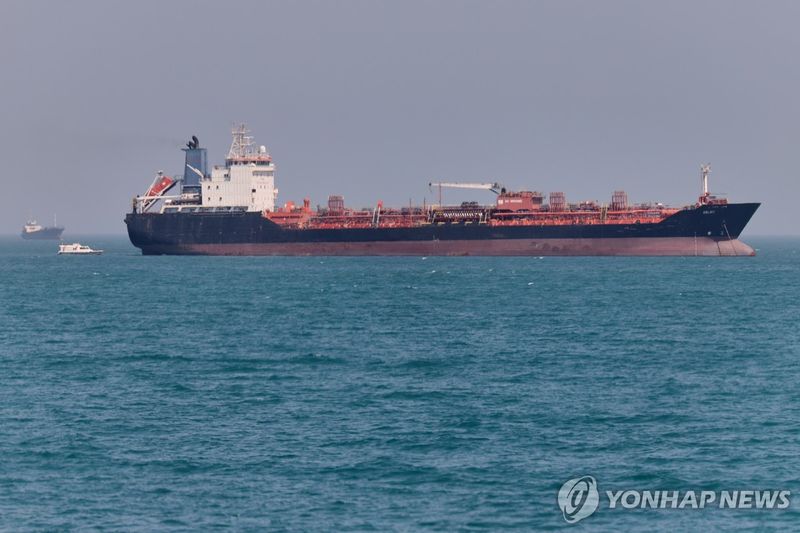
Yoon Sang-hyun, a People Power Party lawmaker, made the remark on the 10th in response to the United States’ request for a deployment to the Strait of Hormuz, saying, “We should have gone sooner.” He also raised the issue of investment in the United States, saying, “Isn’t it $200 billion plus $150 billion?” As troop deployment has emerged as a bilateral issue following the massive investment, debate over the “cost of the alliance” is intensifying in political circles.
Speaking on a radio program that day, Yoon said, “Isn’t this happening because U.S. President Donald Trump keeps pressuring and attacking us, and now we are saying we will go?” He added, “In the end, it is too late.” However, he argued for a noncombat contribution, such as moving the Cheonghae Unit to waters outside the Strait of Hormuz, saying, “Deploying combat troops is out of the question.”
Cheong Wa Dae distanced itself from a deployment decision. Sung Ki-hong, Cheong Wa Dae’s senior secretary for public relations and communication, called reports that the government had settled on a deployment “reports that are getting too far ahead of the facts.” He added that “if it is not a troop deployment, technical support could also be possible,” saying that various options were under review.
The government’s concerns are deepening. A Ministry of National Defense fact-finding team sent to the United Arab Emirates (UAE) to assess conditions for a deployment to the Strait of Hormuz returned home that day. Its findings are expected to be reported to the National Security Council (NSC). As Seoul and Washington negotiate specific investment projects in the United States, demands for a contribution in the security sphere have now been added.
Yoon emphasized that the Strait of Hormuz is “an economic and energy-security lifeline, through which 70% of our crude oil and about 20% of our natural gas come,” asking, “What can they say if we want to protect our own ships and oil tankers?” He argued that South Korea needs to play a certain role not only in response to the United States’ demands but also to protect its own energy security.
On the other hand, worsening relations with Iran would pose a burden. The head of Iran’s judiciary abruptly canceled a visit to South Korea that had been scheduled for next week. Although it has not been confirmed whether the possible deployment was the direct reason, Iran has publicly warned that South Korea’s potential military participation “will come at a price.”
[email protected] Kim Kyung-min Reporter