Budget for Key Future-Industry Components to Rise from 11.6 Billion Won to 62 Billion Won as Government Expands Support for Ultra-Innovative Economy
- Input
- 2026-09-10 15:00:00
- Updated
- 2026-09-10 15:00:00
[Financial News] The government will significantly expand support for future-industry components, including sensors and actuators—the key components of humanoid robots—as well as secondary batteries for humanoid robots. It plans to increase the related budget from 11.6 billion won this year to 62 billion won next year, supporting projects from technology development through field demonstrations.
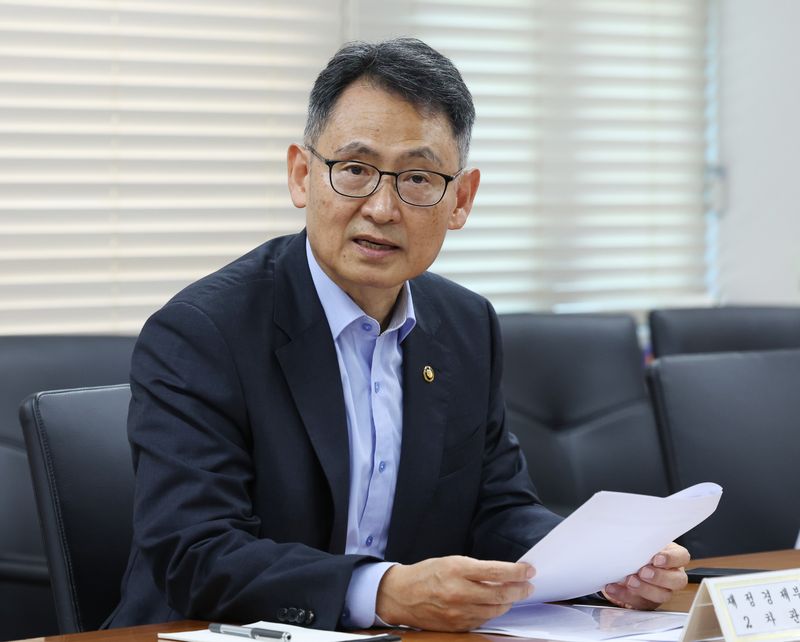
On the 10th, Heo Jang, the second vice minister of the Ministry of Economy and Finance, visited ROBOTIS in Gangseo District, Seoul. He inspected the development and utilization of humanoid robots, actuators, and other key components for future industries, and held a meeting with company representatives.
The visit was arranged to explain the direction of efforts to foster key future-industry components and the main support measures in the government's 2027 budget proposal, while also hearing opinions from the industrial sector.
Through its “Second-Half 2026 Economic Growth Strategy,” announced in July, the government designated sensors, actuators, and secondary batteries for humanoid robots as new tasks under the Ultra-Innovative Economy Leading Project. The initiative aims to foster first-place products capable of leading global markets and secure new growth engines for the Korean economy.
Accordingly, the proposed budget for next year includes 62 billion won for these three key components. This is more than five times the 11.6 billion won allocated this year. The government plans to support technology development to improve the performance and reliability of key components, while also funding field demonstrations so that the technologies can be tested and refined in actual operating environments.
Heo inspected the development and utilization of key components, including actuators, while watching a demonstration of a humanoid robot. At a subsequent meeting with company representatives, he explained the direction of support under major budget programs and listened to the difficulties companies face during technology development and commercialization.
Heo said, “The Ultra-Innovative Economy Leading Project is designed to help Korean companies create first-place products, lead global markets, and translate that success into a rebound in our economy’s potential growth rate. We will actively support the private sector through the 2027 budget proposal so that key future-industry components, including sensors, actuators, and secondary batteries for humanoid robots, can establish themselves as new growth engines.”
[email protected] Chan-mi Kim Reporter