Jeju Produces 9 Out of 10 Racehorses, Making a Bid to Attract KRA Headquarters
- Input
- 2026-09-10 14:17:35
- Updated
- 2026-09-10 14:17:35
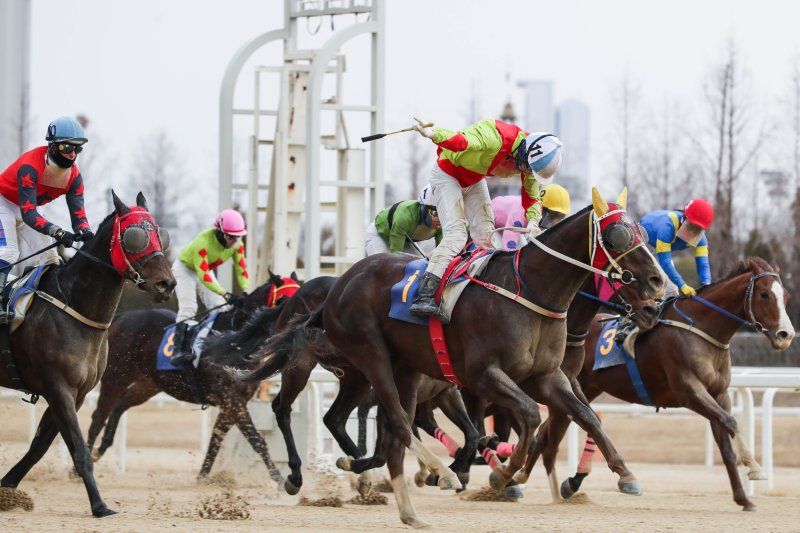
【Financial News Jeju = Jung Yong-bok】 Jeju has made an aggressive bid to attract the Korea Racing Authority (KRA) headquarters by highlighting its industrial base, which produces more than nine out of every 10 domestically bred racehorses. The strategy is to bring horse production and training together with the KRA’s policy and research functions in one region, linking the relocation to stronger national competitiveness in the horse industry.
According to Jeju Special Self-Governing Province on the 10th, the province plans to designate the KRA as a key target ahead of the government’s second phase of relocating public institutions to regions outside the capital area. It will intensively explain the need to move the headquarters to the government and the KRA.
Jeju’s strongest argument is its overwhelming production base in the domestic horse industry.
According to Jeju Special Self-Governing Province, Jeju has 14,876 horses, or 54.7% of the national total. The province produces 1,021 domestically bred racehorses, accounting for 91.5% of the country’s total. In other words, more than nine out of every 10 racehorses bred in South Korea are born in Jeju. The number of recreational horseback riders is also approximately 230,000, representing 45.7% of the national total.
Jeju has made the concentration of an industry base spanning horse racing, riding, and tourism—from horse production and training to related services—the central rationale for attracting the KRA.
The KRA not only operates horse racing but also supports horse improvement and breeding, production, training, and distribution. It also conducts research and development, trains professionals, and promotes horseback riding. Although the KRA’s policy and management functions are currently separate from the country’s largest horse-production site, Jeju believes that relocating the headquarters would allow production, disease, and training data from the field to be directly connected to policy and research.
The fact that the KRA already operates facilities in Jeju is another part of the province’s case. The KRA runs Let's Run Park (Jeju Racecourse) and Jeju Ranch in Jeju. If the headquarters were relocated, existing facilities and organizations could be used to create a stronger foundation than elsewhere for linking production and training with racing, research, and policy.
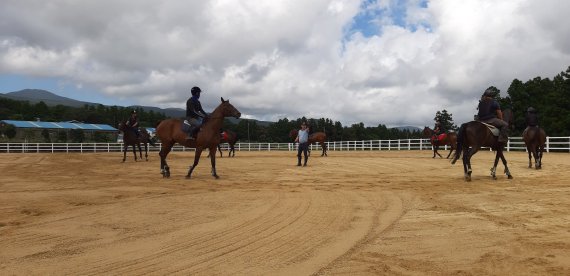
Jeju is also putting its education and research infrastructure at the forefront. Jeju National University (JNU)’s Department of Veterinary Medicine, Cheju Halla University’s Department of Equine Studies, and Seogwipo Industrial Science High School train professionals in related fields. Jeju Special Self-Governing Province believes that connecting the KRA with these educational institutions could expand joint research, field training, and customized workforce development.
The research agenda would extend beyond equine diseases, quarantine, reproduction, and breeding. Jeju plans to include an industry-academia-research cooperation model that would test digital technologies in the field, including artificial intelligence (AI)- and data-based health management and analysis of production and training information.
The plan also aligns with the government’s principles for the second phase of relocation. Rather than dispersing public institutions remaining in the capital area across multiple regions, the government has proposed concentrating functionally related institutions around existing innovation cities and connecting them with local industries and universities. This is why Jeju is emphasizing an industry-linkage rationale that brings together the horse-industry field, universities, and research functions, rather than simply arguing that the region should receive one more public institution.
Several hurdles remain before the headquarters can actually be relocated. Since the government plans to finalize the institutions subject to relocation and the placement plan in the fourth quarter of this year, it has not yet been determined whether the KRA will be included in the final list.
Because the government is emphasizing concentration around innovation cities, Jeju must also determine how to connect existing facilities such as Let's Run Park (Jeju Racecourse) and Jeju Ranch with Jeju Innovation City in its detailed attraction plan.
The regional economic impact is another major argument presented by Jeju. A 2023 issue study by the Jeju Research Institute estimated that relocating the KRA to Jeju would generate a production-inducement effect of 65.1 billion won, a value-added-inducement effect of 31.6 billion won, and an employment-inducement effect equivalent to 505 jobs. The increase in local tax revenue was estimated at approximately 4.235 billion won.
However, these figures are estimates calculated using the research model at the time. The actual impact could vary depending on the scale of the relocation, the settlement of employees, and local procurement and consumption.
Jeju Special Self-Governing Province plans to continue visits and meetings with government ministries and the KRA, along with province-wide efforts to attract the headquarters. Last month, Wi Seong-gon, governor of Jeju Special Self-Governing Province, met with Kim Yun-duk, Minister of Land, Infrastructure and Transport, and directly proposed relocating the KRA to Jeju.
Yang Je-yoon, head of Jeju Special Self-Governing Province’s Planning and Coordination Office, said, "Combining the headquarters’ policy and research capabilities with the country’s largest horse-industry base could strengthen both the institution’s functions and the national horse industry’s competitiveness. We will persuade the government and relevant agencies with a concrete relocation rationale based on industry-academia-research cooperation and the use of existing facilities."
[email protected] Jung Yong-bok Reporter