Jeju Strengthens the 'Virtuous Cycle' of Medical Care: University Hospitals for Critically Ill Children, Local Clinics for Stable Patients
- Input
- 2026-09-10 14:07:32
- Updated
- 2026-09-10 14:07:32
[Financial News Jeju = Reporter Jeong Yong-bok] Jeju National University Hospital is strengthening its care coordination system by connecting pediatric and adolescent patients with severe, emergency or rare diseases to specialized care at the university hospital, while ensuring that patients whose condition has stabilized after treatment receive continued care at local hospitals and clinics. This approach concentrates limited specialized pediatric medical resources on critically ill patients while enhancing continuity of care with local medical institutions.
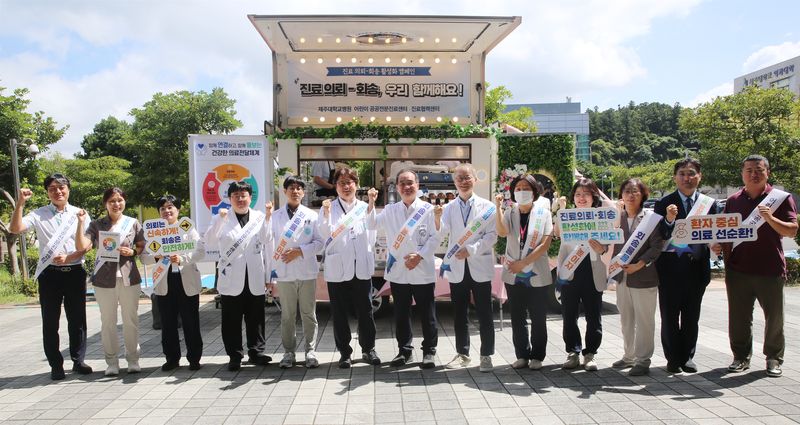
According to Jeju National University Hospital on the 10th, the Children's Public Specialized Medical Center and the Clinical Cooperation Center conducted a campaign at the hospital the previous day to promote outpatient referrals and transfers.
Jeju National University Hospital President Jang Won-young, Planning and Coordination Office Director Park Gyeong-gi, medical staff from the Children's Public Specialized Medical Center, and personnel from the Clinical Cooperation Center and Nursing Department participated.
Medical referrals and transfers are a system in which local hospitals and clinics send patients requiring more specialized treatment to higher-level medical institutions, while patients who have completed intensive treatment are connected back to local medical institutions for continued care.
Jeju National University Hospital is focusing on expanding specialized care for severe, emergency, rare and complex pediatric and adolescent patients, while referring patients whose condition has stabilized or who can be managed by local medical institutions back to hospitals and clinics.
The aim is to divide roles among medical institutions so that patients who need specialized care can receive appropriate medical services, since university hospitals may have less capacity to provide specialized treatment to critically ill patients if they continue to treat even mild cases.
Particularly in Jeju, an island region, severely ill pediatric patients may face the burden of traveling to medical institutions outside the province for specialized care. This makes it especially important to maintain local capacity for treating critically ill children and establish a care coordination system linking the university hospital with local hospitals and clinics.
The campaign, held under the theme of a 'patient-centered virtuous cycle of healthcare,' informed medical staff at Jeju National University Hospital about the procedures for and importance of referrals and transfers.
The hospital plans to continue awareness-raising activities to improve access to and capacity for treating critically ill patients and to ensure continuity of care with local medical institutions through appropriate referrals of stable and mild patients.
Jeju National University Hospital's Children's Public Specialized Medical Center was designated by the Ministry of Health and Welfare (MOHW) in October 2023. Since then, it has improved pediatric and adolescent treatment spaces and established and operated a care environment for critically ill and emergency patients, as well as children with cancer and rare diseases.
The role of public specialized medical centers is also closely connected to the local pediatric healthcare delivery system. The key is to establish a structure in which the center treats patients requiring specialized care and, after intensive treatment is completed, works with local hospitals and clinics to provide follow-up care.
Kang Hyun-sik, director of the Children's Public Specialized Medical Center at Jeju National University Hospital, said, "We will strengthen cooperation with hospitals and clinics so that pediatric and adolescent patients requiring specialized treatment receive care in a timely manner, while patients whose condition has stabilized continue to receive care in the local community," adding, "We will build a patient-centered virtuous cycle of healthcare."
[email protected] Jeong Yong-bok Reporter