Chuseok Lawn-Trimmer Accident Warning: 84.3% “Never Wear Protective Equipment”
- Input
- 2026-09-10 12:00:00
- Updated
- 2026-09-10 12:00:00
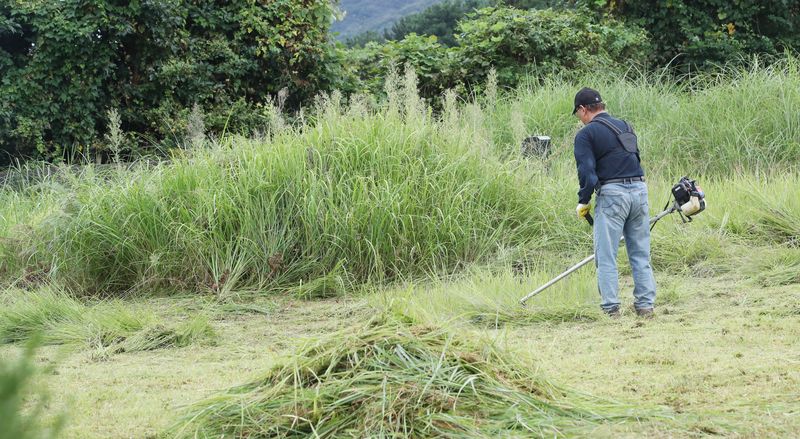
[Financial News] As the use of lawn trimmers increases ahead of Chuseok for grass-cutting work, 84.3% of lawn-trimmer operators were found to wear no appropriate protective equipment, such as safety helmets or face protection. Lawn-trimmer accidents most commonly involved cuts or puncture wounds from the blades, while nearly half of all injuries affected the legs and feet.
The Ministry of the Interior and Safety (MOIS) said on the 10th that lawn-trimmer use is expected to increase ahead of Chuseok, including for grass-cutting work, and urged people to follow safety rules such as wearing personal protective equipment and clearing the surrounding area before starting work.
According to the Rural Development Administration (RDA)’s “2025 Survey on Occupational Injuries Among Farmers,” lawn-trimmer accidents accounted for 14.3% of injury accidents involving agricultural machinery. Cultivators had the highest share at 25.0%, followed by lawn trimmers. Tractors accounted for 13.6%, while power tillers accounted for 9.0%.
The low rate of protective-equipment use is a concern. Among survey respondents, 84.3% said they “never wear” appropriate protective equipment, such as safety helmets or face protection, when operating a lawn trimmer. Only 6.0% said they “always wear” protective equipment.
By accident type, cuts and puncture wounds were the most common at 38.3%. Injuries caused by “being struck by flying or falling objects,” including lawn-trimmer blades or objects thrown up during work, accounted for 27.6%. Falls and slips made up 17.2%, injuries caused by excessive force or movement accounted for 11.3%, and entanglement in rotating machinery accounted for 5.6%.
The legs and feet were the most frequently injured body parts, accounting for 49.0% of cases. They were followed by the spine at 14.9%, the face and head at 12.7%, and the wrists at 9.8%. The government explained that stones and branches, as well as the lawn-trimmer blade itself, can be thrown at high speed and injure operators or bystanders. Protecting the face and lower body is therefore particularly important.
MOIS instructed users to first remove stones, branches, trash and other debris from grassy areas or around graves before beginning work. During operation, no one else should be allowed to approach within 15 meters. It also recommended wearing face protection or safety goggles, knee pads, safety shoes, safety helmets and gloves, as well as long clothing.
A protective cover should be fitted to the lawn trimmer, and users should check that the blade is securely fastened before starting work. MOIS recommended using relatively safer blades, such as circular or string blades, rather than dual blades, which are more likely to propel objects when they strike stones or other materials. In the survey, dual blades accounted for 86.1% of blade use, followed by string blades at 8.2% and circular blades at 5.4%. Bent or worn blades should be replaced immediately.
When grass or foreign material becomes caught in the blade, users must not touch it while the lawn trimmer is running. They must first turn off the power or engine and remove the material with gloved hands.
Ha Jong-mok, director general of MOIS’s Prevention Policy Bureau, said, "As lawn-trimmer use increases for grass-cutting work ahead of Chuseok, please wear protective equipment for each part of the body and, above all, make safety your top priority while working."
[email protected] Lee Bo-mi Reporter